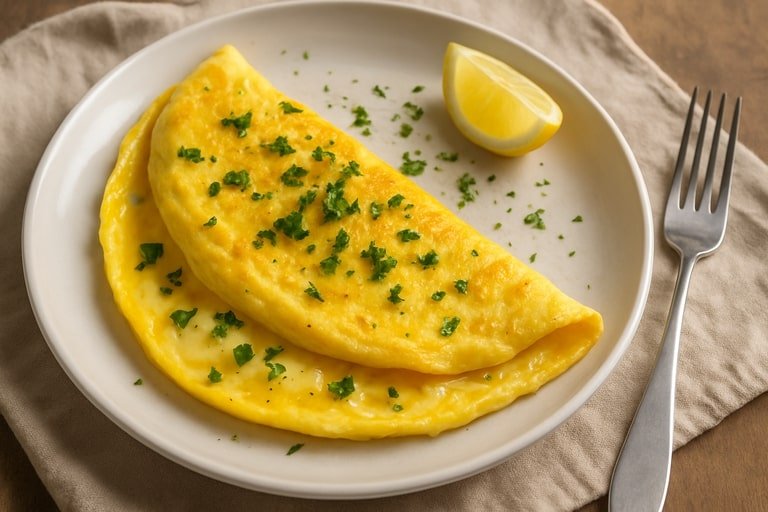
An omelette recipe embodies the essence of culinary precision, where simplicity and technique converge to create a dish that is universally loved yet deceptively challenging to perfect. The very act of transforming eggs into a structured yet delicate form requires a cook to balance heat, timing, and intuition.
From the moment eggs are cracked into a bowl, whisked with just enough vigor to introduce air, and seasoned with a restrained hand, the process becomes less about rote instruction and more about understanding the living nature of ingredients. Eggs, being rich in protein and fat, respond instantly to heat, coagulating into curds that may be tender or tough depending on how they are handled. Thus, a true omelette recipe is less a static formula and more an invitation to engage directly with the science of cooking.
The mastery of heat is where most cooks encounter their greatest challenge. Too much intensity and the surface becomes browned and leathery, while too little results in a mass that refuses to set. Experienced cooks know to preheat the pan gently, allowing butter to melt slowly without browning, creating a non-stick environment that enhances flavor while preserving tenderness.
The beaten eggs are poured in at the precise moment when the butter foams but has not yet colored, ensuring that the mixture spreads evenly across the surface. From here, gentle stirring with a fork or spatula controls the formation of curds, ensuring that the final product achieves the ideal contrast between a creamy center and a just-set exterior. This delicate balance makes an omelette recipe both approachable and endlessly fascinating.
The fillings chosen to complement an omelette illustrate its adaptability across cultures and contexts. A purist may insist on a plain French-style roll with no visible browning, served with nothing more than fine herbs. Yet countless variations exist that transform the dish into a hearty meal: cheese melting into the folds, sautéed mushrooms adding umami depth, fresh spinach delivering vibrancy, or cured meats imparting savoriness.
Each choice alters the nutritional balance and flavor profile, allowing an omelette recipe to move fluidly between light breakfasts, robust lunches, and even elegant dinners. The inclusion of fillings, however, demands restraint—overloading not only disrupts the delicate fold but also overwhelms the essence of the eggs themselves.
Cultural diversity further enriches the omelette’s role in global cooking. In Japan, tamagoyaki demonstrates how sugar and dashi can be layered into rolled eggs that balance sweet and savory. In Spain, tortilla de patatas proves how potatoes and onions, slowly cooked, transform eggs into a dish with heft and rustic charm. In Iran, kuku sabzi displays a verdant mixture of herbs bound together with eggs, celebrating seasonality and abundance. Each of these traditions stems from the same principle—eggs set in a pan—yet interprets it uniquely, underscoring the universal appeal of the omelette recipe while revealing its astonishing versatility.
Nutrition plays a vital role in why omelettes remain central to modern diets. Eggs supply high-quality protein, vitamin D, and essential minerals, making them an efficient source of nourishment. When prepared with vegetables, the omelette delivers a balanced profile of macronutrients and fiber, supporting wellness without unnecessary processing.
For those mindful of calories, modifications such as using only egg whites or reducing added fats ensure that the dish fits comfortably within dietary goals. Meanwhile, athletes and those seeking protein-rich meals turn to omelettes for recovery and sustained energy. This adaptability ensures that the omelette recipe never falls out of favor, even as food trends shift.
The sensory experience of eating an omelette reveals the skill invested in its creation. The moment the fork cuts into its tender surface, steam rises carrying aromas of butter and herbs, while the first bite conveys both richness and lightness. Texture plays a critical role here: an omelette should not be dry or crumbly, but smooth and cohesive, with fillings seamlessly integrated. When properly executed, the dish provides not only nourishment but also a moment of indulgence, reminding diners that simple ingredients, treated with respect, can produce profound satisfaction.
From a historical perspective, the omelette occupies a symbolic place in professional kitchens. Culinary instructors often test students on their ability to produce a French omelette, regarding it as a benchmark of technical competence. The reasoning is clear: mastering this dish demonstrates control over heat, timing, and movement—all fundamental to cooking as a discipline. Beyond the classroom, the omelette continues to function as a litmus test of skill, where even seasoned chefs revisit the basics to refine their technique. Thus, the omelette recipe remains both a practical tool for nourishment and a philosophical lesson in precision.
For home cooks, the appeal of omelettes lies not only in their taste but also in their accessibility. Few dishes require so little equipment—a pan, a spatula, and a few eggs—yet yield such gratifying results. The process of learning to cook an omelette often marks a milestone in culinary independence, a rite of passage that instills confidence in handling heat, seasoning, and presentation. Families often pass down personal variations, embedding cultural and emotional value into what might otherwise seem a simple recipe. This intergenerational continuity reinforces the dish’s importance, making it both timeless and personal.
Modern gastronomy continues to reinterpret the omelette in innovative ways. Chefs experiment with foams, sous-vide preparations, or the addition of global spices, bringing new life to an ancient tradition. These adaptations prove that even the most classic of recipes can evolve while maintaining their essence. In cafés, omelettes now appear alongside avocado, quinoa, or artisanal cheeses, aligning with contemporary demands for freshness and creativity. Such reinventions ensure that the omelette recipe remains relevant not only as a staple but also as a platform for culinary expression.
The role of sustainability cannot be overlooked in discussions about omelettes. Choosing locally sourced eggs, seasonal vegetables, and ethically produced dairy reinforces the idea that cooking connects us to broader ecological systems. By considering origin and quality, an omelette becomes more than nourishment; it becomes a statement of values. For conscious cooks, this dimension transforms the omelette recipe into a tool for expressing respect not just for tradition but also for the planet.
Ultimately, the power of an omelette lies in its paradoxical nature: it is both basic and refined, familiar and endlessly variable. It teaches discipline through simplicity and rewards creativity through adaptability. Whether executed as a flawless French cylinder, a rustic golden half-moon, or a globally inspired reinterpretation, the omelette proves that mastery emerges not from complexity but from devotion to detail. This is why the omelette recipe endures, inspiring cooks and satisfying diners across centuries and cultures.
Omelette recipes for fluffy perfection and variation
The pursuit of fluffiness in omelette recipes reveals a fascinating interplay of science, artistry, and intuition, where every decision—from whisking to folding—determines whether the dish achieves the desired lift and tenderness. Achieving that airy texture requires a thoughtful approach to preparation, beginning with the selection of eggs.
Fresh eggs provide stronger structure and richer flavor, ensuring the dish begins with quality. Whisking plays a decisive role here: introducing enough air to lighten the mixture, but not so much as to create instability. The rhythm of whisking should be steady, creating a uniform blend that holds potential energy waiting to be released in the pan. Seasoning at this stage with salt influences protein structure, further shaping how the omelette sets once heat is applied.
The cooking vessel itself becomes an extension of technique. A well-seasoned non-stick pan or a small, heavy skillet allows for even distribution of heat, preventing hotspots that can lead to uneven texture. Butter, when foamed at the right moment, not only flavors but also signals readiness, its sizzle providing auditory cues to the cook.
Once the eggs meet the pan, the transformation begins instantly. Gentle agitation in the first moments allows curds to form, breaking the surface tension and preventing large, rubbery clumps. These small movements, when executed with patience, create a lattice of soft curds that trap air and moisture, producing a fluffy consistency that distinguishes an exceptional omelette from a mediocre one.
Filling choices again influence outcome. Cheese, when used sparingly, melts into the folds, contributing creaminess without weighing down the texture. Vegetables like peppers or zucchini should be pre-cooked, ensuring that excess moisture does not compromise the lift of the eggs. Even herbs, finely chopped, can brighten flavor while preserving the dish’s lightness. Overfilling remains the most common mistake, where ambition undermines balance, leaving the omelette heavy and resistant to folding. Here, restraint proves as vital as creativity, reminding cooks that simplicity often delivers the most refined result.
Cultural interpretations of fluffy omelettes highlight diversity of approach. In France, the baveuse style emphasizes a barely set center, showcasing creaminess. In the American diner tradition, omelettes are often folded around hearty fillings, achieving loft by whipping air into the eggs more vigorously. In Asia, fluffiness sometimes results from beating yolks and whites separately before folding them together, a technique that creates layers of airiness. Each tradition underscores the universality of striving for tenderness, while also affirming that no single omelette recipe can claim absolute authority.
The science of fluffiness lies in protein denaturation. As heat is applied, proteins unfold and link together, creating a network that traps water and air. Too much heat accelerates coagulation, forcing out moisture and collapsing the delicate structure. Mastery therefore requires gentle control, often cooking over medium-low heat, allowing the eggs to set slowly and evenly. This patience yields a creamy interior and a tender bite, qualities that mark professional execution. Understanding this science empowers cooks to replicate results consistently, turning what seems like guesswork into predictable artistry.
Texture, however, is not merely about science but also about sensory experience. The visual appeal of a golden surface, the aroma of butter mingling with eggs, and the first bite that reveals cloud-like softness all contribute to the perception of quality. This sensory symphony elevates the omelette from simple sustenance to culinary pleasure, proving that attention to detail transforms everyday ingredients into memorable meals. The dish thus becomes not just food but also a performance, where the cook orchestrates multiple elements toward a singular goal of fluffiness.
Nutrition again remains central. Fluffy omelettes provide satiety without heaviness, making them ideal for those seeking balance in their diets. Incorporating leafy greens, lean proteins, or plant-based alternatives into fillings enhances nutritional diversity, ensuring the dish delivers both pleasure and wellness. Modern diets, increasingly focused on whole foods, find resonance in omelette recipes, where freshness and simplicity align with healthful eating. The dish therefore sustains its role not only in tradition but also in forward-looking lifestyles.
Beyond home kitchens, the fluffy omelette carries symbolic weight in professional settings. Judges in culinary competitions often scrutinize texture as a measure of skill, while restaurants rely on consistency to uphold reputation. The ability to produce fluffiness reliably distinguishes a seasoned cook from a novice, as it demands both knowledge and sensitivity. This symbolic role further elevates the omelette’s significance, making it not just a dish but also a standard of excellence.
Adaptations to achieve fluffiness continue to evolve. Some chefs experiment with carbonated water added to eggs, while others employ steam or ovens to introduce loft. These innovations testify to the creativity inherent in cooking, where tradition inspires experimentation. Yet even with these advancements, the core principle remains the same: balance heat, air, and timing to produce a tender, cloud-like result. In this respect, every omelette recipe connects the past to the present, blending heritage with innovation.
The act of teaching someone to cook a fluffy omelette reinforces its role as a gateway skill. Parents guiding children, instructors mentoring students, or chefs training apprentices all use this dish as a medium for conveying lessons in patience, care, and observation. The success of a learner in producing fluffiness becomes a moment of pride, demonstrating growth in both technical and personal confidence. Thus, the dish transcends nourishment, embodying lessons that extend into broader aspects of life.
Ultimately, the pursuit of fluffiness underscores why omelette recipes continue to captivate cooks worldwide. The dish embodies paradoxes—simple yet demanding, humble yet refined, traditional yet evolving—that make it endlessly fascinating. To achieve fluffiness is to master a balance of science and artistry, proving that true culinary excellence often arises from the most unassuming of ingredients.
Omelette recipe with classic French omelette tradition
The omelette recipe within French culinary tradition represents far more than a breakfast staple; it is an emblem of discipline, restraint, and centuries-old craft passed down through kitchens where mastery is measured not by extravagance but by precision. At its foundation lies a deceptively simple formula: eggs, butter, salt, and technique.
Yet from this simplicity emerges a dish revered in both home kitchens and Michelin-starred restaurants, carrying with it the weight of cultural identity and professional expectation. Unlike rustic versions found elsewhere, the French omelette is not about filling volume or browned surfaces; it seeks refinement through uniformity. A smooth, pale exterior without blemish, folded neatly into a cylinder, reveals the hand of a cook who understands not only heat and timing but also patience and respect for detail. This approach makes the omelette recipe a rite of passage in French gastronomy, where its execution becomes a silent testament to a chef’s competence.
The influence of Auguste Escoffier and other pioneers of French haute cuisine ensured that the omelette became more than a household dish; it became part of the codified repertoire of professional kitchens. Culinary schools across France and beyond have long regarded it as a fundamental test, where students are judged not on complexity of ingredients but on finesse of technique.
This is because the French omelette demands complete control: eggs must be beaten until just homogenized, butter must foam without browning, and the cook must stir constantly while maintaining an unwavering awareness of texture. A single moment of inattention results in curds that are too large or surfaces that betray patches of color, flaws that undermine the very essence of refinement. Through this, the omelette recipe teaches humility, reminding even advanced chefs that perfection requires discipline.
The French omelette differs from the Spanish tortilla or the Japanese tamagoyaki not only in form but also in philosophy. Where Spain embraces substance through potatoes and onions, producing a hearty wedge to be shared, and Japan layers sweetness into careful rolls, France prioritizes subtlety. The French version resists adornment, preferring to highlight the flavor of fresh eggs and delicate herbs.
Chives, tarragon, or parsley may appear, but only as whispers of green against a yellow backdrop, never overwhelming the dish’s purity. This minimalism underscores a cultural belief that restraint demonstrates greater mastery than excess. For those learning the French omelette, this principle can feel counterintuitive, as the temptation to add fillings or allow caramelization is strong. Yet restraint proves its reward in elegance, where the simplicity of the ingredients magnifies the refinement of the technique.
Execution hinges on movement. While rustic omelettes are often left to set before being folded, the French style demands constant stirring with a fork or spatula, creating a fine curd structure that yields a creamy interior. Just before complete setting, the cook shifts from stirring to shaping, tilting the pan and coaxing the mixture into a unified fold.
The final action of sliding the omelette onto a plate while simultaneously folding it over itself requires dexterity and confidence, leaving behind a seamless surface. This choreography, practiced countless times in professional training, transforms an omelette recipe from a household routine into a performance, where every gesture communicates experience and assurance.
Nutritionally, the French omelette holds appeal not for its abundance but for its balance. Butter supplies richness, but the overall composition remains moderate in calories, while eggs deliver protein and essential vitamins.
Herbs not only enhance aroma but also contribute antioxidants, subtly reinforcing the dish’s wellness profile. In a world where indulgence and health often conflict, the French omelette quietly demonstrates that balance is achievable without sacrifice. Its role in French households, where it often appears as a quick supper paired with salad and bread, proves that elegance and simplicity need not be mutually exclusive.
Historically, omelettes in France were more than sustenance; they were moments of comfort and celebration. Accounts exist of Napoleon being served an omelette in a village inn, an event that gave rise to the annual omelette géante in Bessières, where townspeople gather to cook a massive version in his honor.
These cultural touchpoints remind us that the omelette recipe carries symbolic weight, linking the personal act of cooking to national identity. It is no coincidence that the dish has persisted in French culture, celebrated both in its refined form and in communal gatherings, reflecting its versatility in both private and public life.
The French omelette also demonstrates the pedagogical power of cuisine. Instructors teaching apprentices emphasize not only technique but also mindfulness. The requirement to stir constantly fosters attentiveness, while the need to fold at precisely the right moment cultivates timing. Students quickly learn that success cannot be rushed; it comes only through practice, patience, and repeated failure.
In this sense, the omelette becomes a metaphor for growth: each attempt builds awareness, each mistake provides feedback, and each success brings confidence. This educational dimension explains why the omelette recipe remains central in culinary training, shaping chefs not only as technicians but also as thoughtful practitioners of their craft.
Modern adaptations of the French omelette continue to respect tradition while embracing innovation. Some chefs enrich the mixture with crème fraîche for added silkiness, while others fold in fine truffle shavings to transform the dish into luxury. Yet even these embellishments honor the underlying principle: the omelette must remain delicate, seamless, and cohesive.
Contemporary bistros often pair the dish with seasonal accompaniments—microgreens, artisanal cheeses, or smoked salmon—bridging the gap between tradition and modern taste. Despite these evolutions, the essential integrity of the French omelette remains unchanged, testifying to the strength of a tradition that can adapt without losing identity.
In professional gastronomy, the French omelette carries symbolic authority. A chef’s ability to execute it flawlessly becomes a silent résumé, signaling competence in fundamentals. Diners may not consciously analyze the curd structure or surface smoothness, yet they sense refinement in every bite. For this reason, the omelette recipe remains a benchmark: chefs judged capable of such precision are trusted to execute more complex tasks, while those who struggle reveal gaps in foundational skills. This symbolic role extends the influence of the French omelette beyond breakfast or supper, elevating it to a standard of excellence.
The sensory qualities of a French omelette further underscore its artistry. The aroma of butter envelops the diner before the first bite, while the visual purity of a pale yellow cylinder evokes refinement. Cutting into the surface reveals a soft, moist interior, a texture that melts on the tongue while delivering the flavor of fresh eggs enriched by butter. This sensory harmony elevates the experience, showing how simplicity, when executed with care, produces results that rival the most elaborate of dishes. The omelette recipe thus embodies the paradox of French cuisine: elegance born not from abundance but from restraint.
Ultimately, the French omelette’s enduring power lies in its ability to embody tradition, discipline, and artistry in equal measure. It connects cooks to centuries of culinary heritage, challenges them to master fundamentals, and rewards both skill and restraint.
Whether prepared in a family kitchen for a quick meal or in a fine restaurant as a test of precision, the French omelette remains timeless. Its legacy continues not because of complexity but because of the clarity of its values: respect for ingredients, discipline in execution, and elegance in simplicity. Through this, the French omelette recipe affirms its place as one of the great achievements of global gastronomy, a dish that teaches, nourishes, and inspires across generations.
Among the simplest and most versatile dishes in the culinary world, few rival the universal appeal of the omelette. Made with eggs, cooked quickly in a pan, and often filled with endless combinations of ingredients, it has become a symbol of both everyday efficiency and refined technique. The enduring popularity of the omelette recipe lies in its adaptability: equally suitable for a rushed breakfast, an elegant brunch, or even a light dinner. Its charm is proof that great food often begins with the most basic ingredients.
The foundation of every omelette recipe is, of course, the egg. Eggs provide the structure, texture, and flavor that define the dish. Whisked until smooth and seasoned lightly with salt and pepper, they are poured into a hot pan and allowed to set. From this base, infinite variations arise, with fillings ranging from cheese and herbs to meats, vegetables, or seafood. The beauty of the omelette lies in its simplicity, where technique elevates ordinary ingredients into a dish that feels timeless.
Cooking technique is what separates an average omelette from a perfect one. Gentle heat ensures that the eggs cook evenly without becoming rubbery, while a nonstick pan and a touch of butter or oil prevent sticking. Some chefs prefer to stir the eggs constantly for a tender, custard-like texture, while others let the base set before folding it over. A well-executed omelette recipe emphasizes precision and attentiveness, showing how mastery of simple steps creates remarkable results.
Cultural variations reveal the global journey of this dish. In France, the omelette is famously soft, slightly runny inside, and often filled with herbs or cheese. In Spain, the tortilla española is a hearty version with potatoes and onions, thicker and more substantial. In Japan, tamagoyaki is sweetened, layered, and rolled into a delicate rectangular shape. These diverse approaches prove that the omelette recipe is not confined to one tradition but instead adapts beautifully to reflect different culinary identities.
Fillings transform the omelette into a personalized meal. Classic versions highlight cheese, mushrooms, spinach, or ham, while modern interpretations experiment with smoked salmon, roasted vegetables, or international flavors such as curry, salsa, or kimchi. The flexibility of the omelette recipe ensures it can be tailored to dietary needs, preferences, or whatever ingredients are available in the refrigerator. This adaptability is part of what makes the dish endlessly exciting.
Texture is another element that defines success. A good omelette should be tender and moist, never dry or overcooked. The folding technique helps trap heat and create layers that feel soft yet structured. Cheese melting inside creates creaminess, while vegetables add bite and contrast. The omelette recipe teaches the importance of balance — between firmness and delicacy, richness and freshness — in crafting a dish that satisfies on every level.
Nutrition adds to its appeal. Eggs are a powerhouse of protein, vitamins, and minerals, making omelettes both filling and nourishing. When combined with vegetables, lean meats, or healthy fats, they become part of a balanced meal that supports modern health goals. Low in cost and high in value, the omelette recipe offers a way to eat nutritiously without complexity, proving that wholesome meals can also be quick and delicious.
Restaurants and cafés elevate omelettes into culinary statements. Brunch menus often feature gourmet versions with truffle, lobster, or artisanal cheeses, while casual diners serve hearty, no-frills versions paired with toast and potatoes. Fine dining chefs use the omelette to showcase technique, presenting delicate creations that highlight precision. This range demonstrates the universal respect for the omelette recipe, which can be both humble and luxurious.
Digital culture has reinforced its popularity. Food blogs and social media platforms overflow with colorful omelette creations, inspiring home cooks to experiment with fillings and techniques. Tutorials help beginners master the basics, while advanced recipes push boundaries with inventive flavor combinations. The omelette recipe thrives in this space because it is accessible to novices yet endlessly adaptable for experts, ensuring its presence across all levels of cooking.
Emotional resonance strengthens its legacy. For many, omelettes recall childhood breakfasts, lazy weekend mornings, or moments of comfort at home. The aroma of eggs cooking in butter evokes nostalgia, while the taste offers reassurance and satisfaction. Preparing one for a loved one often feels like a gesture of care, reinforcing the idea that food is about connection as much as nourishment. The omelette recipe endures because it carries both flavor and feeling.
Practicality ensures its role in everyday life. Omelettes can be prepared in minutes, require only a pan and whisk, and adapt to whatever ingredients are available. They can be scaled for one or many, served plain or elaborate, eaten at breakfast or dinner. Leftovers can be repurposed into sandwiches or wraps, minimizing waste. The omelette recipe proves that practicality and creativity can coexist seamlessly in a single dish.
Ultimately, omelettes thrive because they embody the essence of cooking itself: transformation of simple ingredients into something greater. They bridge cultures, adapt to modern lifestyles, and remain a timeless symbol of nourishment and comfort. Whether soft and French, hearty and Spanish, or delicate and Japanese, the omelette recipe reflects both heritage and individuality. It is more than a dish — it is a canvas for creativity, a connection to memory, and a reminder that the best meals often come from the simplest beginnings.
The omelette has earned its place as one of the most versatile dishes in global cuisine. With roots in countless cultures and a reputation for both speed and satisfaction, it is a dish that can be humble or refined. The enduring popularity of the omelette recipe lies in its simplicity: eggs, whisked and cooked with a touch of fat, folded gently around a variety of fillings. From rustic breakfasts to elegant restaurant plates, the omelette adapts effortlessly, proving that a dish built on basic ingredients can carry endless creativity.
At the foundation of every omelette recipe is technique. Eggs must be whisked thoroughly to incorporate air, ensuring fluffiness. The pan must be preheated just enough to prevent sticking without overcooking the surface. Butter remains the most popular fat, prized for its flavor and smoothness, but oils such as olive or avocado lend distinctive touches. The art lies in knowing when to stir, when to let the mixture settle, and when to fold. Mastery of these small details separates ordinary omelettes from memorable ones.
Cultural interpretations highlight the global journey of this dish. In France, omelettes are delicate, often finished slightly runny in the center for creaminess. In Spain, the tortilla de patatas layers eggs with potatoes and onions, creating a hearty meal. In Japan, tamagoyaki layers sweetened egg into a rolled block that requires precision. Each version reflects local tastes, but all rely on the same core principle: transforming eggs into something greater than their sum. This universality is why the omelette recipe resonates everywhere.
Fillings allow infinite variation. Cheese remains the classic addition, melting into creamy pockets within the egg. Vegetables like mushrooms, spinach, peppers, and tomatoes bring freshness, while meats such as ham, bacon, or chicken add richness. More adventurous cooks experiment with seafood, herbs, or international flavors like curry, salsa, or kimchi. The omelette recipe provides a blank canvas, limited only by imagination. Its adaptability ensures it never grows boring, even when eaten daily.
Texture is central to the dish’s success. The best omelettes are tender, moist, and evenly set, avoiding dryness or toughness. Some cooks prefer a custard-like softness, achieved by low heat and constant stirring, while others enjoy a firmer version folded neatly over its fillings. Cheese can create gooeyness, while fresh herbs add lightness. A well-prepared omelette demonstrates the balance between precision and instinct, showing how much artistry lies in such a simple recipe.
Nutrition adds to its appeal. Eggs provide high-quality protein, vitamins, and minerals, making omelettes a nourishing choice for any meal. When combined with vegetables and lean proteins, they become part of a balanced diet that supports modern health goals. The omelette recipe proves that fast food doesn’t have to mean unhealthy food; it can be wholesome, filling, and packed with nutrients, all while remaining affordable.
Restaurants and cafés showcase the omelette as both comfort and sophistication. Casual diners serve generous versions with potatoes and toast, while upscale brunch spots highlight gourmet fillings like smoked salmon, truffle, or goat cheese. Fine dining chefs often use the omelette to showcase technique, preparing delicate creations that highlight precision and skill. This range demonstrates the respect chefs and diners alike have for the omelette recipe, which can move seamlessly between rustic and refined settings.
Digital culture has only amplified the dish’s presence. Social media is full of tutorials demonstrating how to achieve perfect folds, silky textures, or creative presentations. Viral trends have introduced omelette hacks using cream cheese, soy sauce, or even avocado, sparking curiosity among global audiences. The omelette recipe thrives online because it is approachable for beginners yet offers limitless challenges for seasoned cooks, making it an enduring favorite for digital storytelling.
Emotional resonance is another reason for its timeless appeal. For many, omelettes are tied to childhood breakfasts, quick college meals, or comforting late-night snacks. The sound of eggs sizzling in a pan and the aroma of butter evoke nostalgia and warmth. Sharing an omelette with family or friends becomes more than just nourishment; it is a gesture of care. The omelette recipe endures because it connects us to memories as much as it satisfies hunger.
Practicality cements its role in everyday cooking. Omelettes cook in minutes, require minimal equipment, and adapt to whatever ingredients are available. They can be scaled up to feed a crowd or scaled down for a single serving. Leftovers fit easily into sandwiches or wraps, minimizing waste. This efficiency makes the omelette recipe a cornerstone of home kitchens, particularly for those seeking meals that combine speed, affordability, and satisfaction.
Innovation continues to keep the dish relevant. Chefs experiment with fusion fillings, from Mediterranean flavors like feta and olives to Asian-inspired additions like sesame oil and scallions. Health-conscious diners turn to egg whites or plant-based alternatives for lighter versions. Even street vendors around the world reinterpret omelettes with local flair, proving that reinvention never detracts from tradition. The omelette recipe remains dynamic precisely because it welcomes new ideas while honoring its timeless foundation.
Ultimately, omelettes endure because they represent the essence of good cooking: simplicity elevated by skill, tradition balanced with creativity, and nourishment intertwined with memory. They can be plain or luxurious, familiar or innovative, quick or elaborate. Every culture, every cook, and every kitchen has its own take, yet the dish remains instantly recognizable. The omelette recipe is more than instructions — it is an invitation to create, to share, and to savor one of the world’s most enduring culinary treasures.
The omelette is one of the most celebrated egg dishes in the world, admired for its speed, versatility, and ability to suit any occasion. Whether served as a quick breakfast, an elegant brunch, or a light dinner, it always delivers satisfaction. The enduring popularity of the omelette recipe lies in its simplicity: whisked eggs poured into a hot pan, cooked gently, and folded with care. Yet within that simplicity lies endless room for variation, making it a timeless staple in kitchens everywhere.
At the core of the omelette recipe is the egg, transformed by heat into tender curds or smooth layers. The process requires little equipment, but success depends on attention to detail. Eggs should be beaten until consistent, then seasoned lightly to enhance flavor. Butter in the pan adds richness and ensures the eggs don’t stick, though oil can be used for lighter results. Mastery of these basics creates a reliable foundation for experimentation, proving that even the simplest dishes demand technique.
Cooking style defines the character of an omelette. Some prefer a French approach, where eggs are stirred constantly until creamy and folded into a soft roll. Others enjoy the classic diner style, firm enough to hold generous fillings and golden on the outside. Still others opt for rustic versions, where the eggs are slightly browned for a deeper flavor. The omelette recipe is adaptable to all these methods, making it one of the most customizable dishes in the culinary world.
Fillings showcase creativity and personal taste. Cheese remains a universal favorite, melting into gooey layers that enrich the eggs. Vegetables like spinach, mushrooms, and peppers add freshness, while meats such as ham, bacon, or chicken bring heartiness. Herbs provide brightness, while global influences introduce flavors such as curry, salsa, or kimchi. The omelette recipe is a canvas for endless possibilities, limited only by imagination and the cook’s mood.
Cultural variations highlight the dish’s universal reach. In Spain, the tortilla española thickens the formula with potatoes and onions, creating a hearty, satisfying version. In Japan, tamagoyaki layers sweetened eggs into a rolled, elegant block. In Iran, kuku sabzi fills an omelette with herbs for a vibrant green dish. Each interpretation respects local traditions while following the same essential principle. The omelette recipe’s strength lies in its ability to travel across cultures while remaining instantly recognizable.
Texture makes the difference between good and great. A successful omelette should be moist and tender, never dry or rubbery. Achieving this balance depends on heat control — too high and the eggs toughen, too low and they lose structure. The folding technique locks in fillings and creates layers that feel light yet satisfying. The omelette recipe teaches patience, timing, and respect for ingredients, demonstrating how technique transforms simplicity into excellence.
Nutrition contributes to the dish’s popularity. Eggs deliver high-quality protein and essential vitamins, while fillings expand nutritional value. Vegetables add fiber and antioxidants, lean meats provide additional protein, and cheese offers calcium. Health-conscious cooks adapt the omelette recipe with egg whites or plant-based alternatives, proving it can satisfy modern wellness goals while still feeling indulgent. Its affordability and accessibility ensure it remains a practical option in every household.
Restaurants have long used omelettes to showcase both comfort and sophistication. Casual diners serve hearty versions packed with fillings, while brunch cafés elevate them with smoked salmon, goat cheese, or truffle oil. Fine dining chefs often demonstrate precision with delicate French-style omelettes, showing that the dish can be both rustic and refined. This duality ensures that the omelette recipe maintains respect across all levels of dining.
The digital era has further boosted its popularity. Food blogs and video tutorials make the process approachable, guiding beginners through techniques while inspiring experts with innovative twists. Viral trends experiment with unusual fillings, folded designs, or even layered presentations. The omelette recipe thrives in this space because it is both visually appealing and endlessly adaptable, ensuring it remains relevant in the online food culture.
Emotional resonance strengthens its identity. For many, the smell of eggs cooking in butter recalls childhood breakfasts, lazy weekend mornings, or moments of comfort shared with family. Preparing an omelette often feels personal, a quick yet meaningful way to nourish oneself or others. The omelette recipe endures because it is more than food — it is memory, care, and connection in a form that is universally understood.
Practicality cements its place in everyday cooking. Omelettes can be made in minutes, tailored to whatever ingredients are available, and scaled up or down with ease. They suit solo meals, family breakfasts, or large gatherings. Leftovers repurpose well in sandwiches or wraps, ensuring nothing is wasted. The omelette recipe proves that convenience and creativity can coexist, making it indispensable for modern kitchens.
Ultimately, omelettes endure because they represent the essence of cooking itself: transformation, creativity, and nourishment. They bridge tradition and innovation, offering endless variety while remaining rooted in simplicity. From French cafés to home kitchens, the omelette recipe continues to inspire, satisfy, and adapt. Every fold, every filling, every cultural interpretation reinforces its timeless appeal, ensuring that this humble dish remains one of the most beloved in the world.