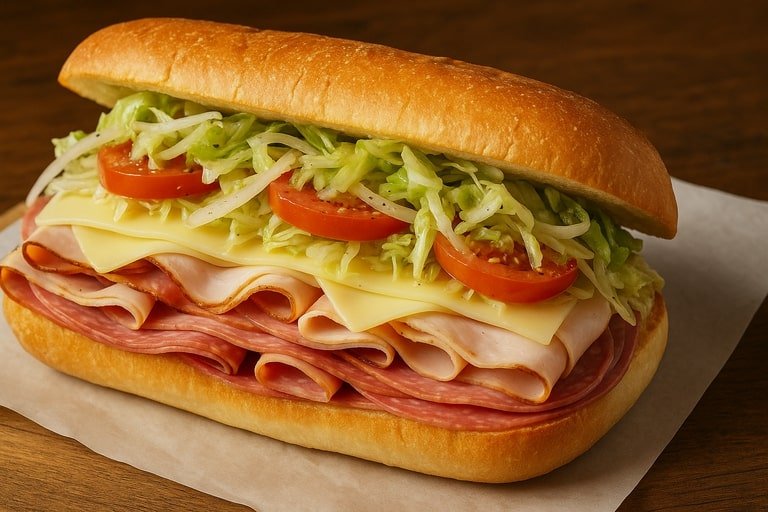
The grinder sandwich occupies a special place in the history of American deli culture, carrying with it a reputation for size, substance, and satisfaction. Unlike lighter sandwiches, the grinder sandwich is built on the idea of layers—bread with structure, meats with depth, cheeses with character, and vegetables that add brightness and crunch. Understanding its craft begins with recognizing that it is not just about piling ingredients but about creating harmony between textures and flavors. A grinder sandwich is not only a meal; it is a showcase of balance, where each bite delivers cohesion and satisfaction rather than chaos.
The foundation is always the bread. Hoagie rolls, Italian loaves, or sub rolls form the base of grinder sandwiches, chosen not merely for convenience but for their ability to withstand hearty fillings without collapsing. The crust provides structure, the interior offers softness, and when toasted lightly, the roll becomes a canvas for both strength and flavor. A grinder sandwich recipe without proper bread falls short, as the bread defines the eating experience from the first bite to the last. Bakers and chefs alike know that the bread must contribute flavor as much as texture, complementing the fillings rather than simply holding them.
Meats provide the soul of grinder sandwiches. Salami, ham, turkey, or roast beef, often layered generously, form the protein core. The combination of cured and roasted meats allows for contrast: salami introduces spice, turkey offers mildness, roast beef contributes richness. The layering is deliberate, alternating thickness and intensity to create a bite that evolves across the palate. This balance of flavors is what separates a thoughtful grinder sandwich recipe from a careless one. It is not abundance alone but arrangement that matters, ensuring each mouthful feels composed and satisfying.
Cheese integrates meat and bread, offering both cohesion and contrast. Provolone, mozzarella, or American cheese each lend distinct personalities. Melted slightly, cheese creates a creamy layer that binds, while unmelted slices add structure and flavor. The grinder sandwich is an exercise in moderation here: too much cheese overwhelms, too little leaves gaps. Experienced sandwich makers know to place cheese strategically, ensuring it melts where warmth is applied and supports texture where cold balance is required. This careful orchestration distinguishes craft from mere assembly.
Vegetables elevate grinder sandwiches, providing freshness against richness. Lettuce, tomato, onion, and peppers introduce crunch, moisture, and acidity that cut through meats and cheeses. The order of layering matters: lettuce provides a barrier to moisture, tomato adds juiciness without soaking bread when placed carefully, onions sharpen flavor, and peppers introduce vibrancy. Each element contributes, yet none dominates, proving again that balance defines the grinder sandwich. The fresh bite ensures that indulgence remains satisfying rather than overwhelming, a reminder that heaviness without relief diminishes appeal.
Condiments and dressings complete the grinder sandwich recipe, transforming it from good to memorable. Mayonnaise, oil and vinegar, mustard, or seasoned spreads each bring dimension. A drizzle of oil enhances mouthfeel, vinegar brightens, mayonnaise adds richness, and mustard sharpens. Applied correctly, condiments unify flavors rather than compete. Excess risks sogginess; too little creates dryness. Expertise lies in application, spreading evenly and pairing appropriately with fillings. This final step demonstrates that small details elevate, reminding us that mastery lies not in excess but in precision.
The grinder sandwich also carries cultural weight. Emerging from Italian-American communities, it reflects both tradition and adaptation. Italian subs, hoagies, and grinders share lineage, yet local variations distinguish them. In New England, grinders often reference toasted versions with emphasis on robust bread and hearty meats. The sandwich thus reflects geography and heritage, embodying immigrant contributions to American food culture. Understanding its origins deepens appreciation, as the grinder is more than convenience—it is history layered into bread.
Homemade grinder sandwich preparation allows personalization. Cooks can tailor ingredients to preference, substituting leaner meats, artisanal cheeses, or fresh vegetables. Even plant-based variations maintain essence when handled thoughtfully, replacing meats with roasted vegetables or plant proteins while preserving balance and structure. What matters is not strict adherence to tradition but respect for its principles: hearty bread, layered components, balance of richness and freshness. By following these fundamentals, home cooks elevate the grinder sandwich recipe beyond imitation into authentic expression.
Technique extends beyond assembly to presentation. Cutting the grinder sandwich diagonally enhances eating comfort, exposing layers and making portions manageable. Wrapping in paper or foil allows flavors to meld, particularly when served warm. Even resting briefly after assembly can improve cohesion, as ingredients settle and condiments absorb. These practices, though small, demonstrate professionalism, reinforcing the grinder sandwich as a crafted meal rather than a hasty snack.
In today’s culinary scene, the grinder sandwich remains adaptable. Modern chefs experiment with global influences, introducing kimchi, aioli, or specialty cured meats to reinvent tradition while preserving essence. These variations expand the sandwich’s reach, proving its relevance across cultures and preferences. Yet no matter the adaptation, the grinder sandwich continues to symbolize substance, craft, and satisfaction. Its enduring popularity stems from this versatility, bridging nostalgia with innovation.
Ultimately, the grinder sandwich is more than bread and filling. It is a study in balance, culture, and technique. From bread to condiments, each choice shapes the experience, demanding attention to both detail and whole. When executed with care, it delivers not just flavor but fulfillment, embodying the principle that food crafted with respect and balance transcends utility. The grinder sandwich, whether enjoyed in a deli, at home, or reinvented in a modern kitchen, endures as a testament to the art of layering and the satisfaction of thoughtful preparation.
Grinder Sandwiches and the Evolution of Deli Tradition
Grinder sandwiches tell the story of adaptation, migration, and regional pride. While the term may vary—sub, hoagie, hero—the grinder occupies a unique niche within New England, where toasted versions became hallmarks. The sandwich’s evolution demonstrates how cultural exchange shapes food identities, blending Italian immigrant influences with American abundance. It is not just sustenance but narrative, representing the journey of flavors across oceans and decades. The grinder sandwiches we encounter today are products of history as much as recipes, embodying resilience of tradition amid modern reinvention.
Bread defines the character of grinder sandwiches in regional contexts. Crusty Italian loaves dominate in Northeastern versions, while softer rolls prevail elsewhere. In toasting, New England grinders achieve signature crispness, a trait distinguishing them from cousins in other states. Bread is not neutral—it anchors interpretation, aligning sandwich identity with local preference. The grinder sandwich thrives because its adaptability respects both cultural roots and contemporary desires, offering familiarity while welcoming variation.
Meat choices also reflect geography and heritage. Italian-American delis emphasize cured salami, mortadella, and capicola, while mainstream versions may highlight turkey or ham. This diversity underscores how grinder sandwiches evolve with community demands. Protein selections narrate both tradition and practicality, as delis source regionally while maintaining ties to ancestry. A grinder sandwich, therefore, becomes a culinary document, recording the influences and preferences of its makers and eaters alike.
Cheeses provide further differentiation. Provolone dominates classic Italian grinders, while cheddar or American cheese appears in broader deli culture. Melting cheese transforms grinder sandwiches into indulgent comfort foods, while unmelted slices preserve clarity and bite. The choice of cheese reflects not only taste but also cultural identity, revealing how minor decisions alter perception. Cheese mediates between tradition and innovation, preserving the grinder’s capacity for reinvention without erasing its roots.
Vegetables anchor grinder sandwiches in seasonality and freshness. Crisp lettuce, ripe tomatoes, and raw onions cut richness with brightness, while pickled peppers introduce heat and acidity. Each component represents culinary dialogue, balancing indulgence with restraint. Grinder sandwiches succeed because they unite contrasts: soft with crunchy, rich with fresh, sharp with smooth. This equilibrium mirrors broader deli tradition, where abundance is tempered with nuance, ensuring satisfaction without excess.
Condiments amplify heritage and context. Oil and vinegar dressings dominate classic grinders, a nod to Italian roots. Mayonnaise or mustard reflect American deli influence. These additions reveal cultural negotiation, where authenticity bends to accommodate local tastes. Grinder sandwiches endure because they welcome these negotiations, thriving not through rigidity but through flexibility. They reflect both old-world heritage and new-world adaptation, proving food’s role as bridge between cultures.
The deli tradition elevates grinder sandwiches from meal to institution. Delis represent community hubs, where food sustains social bonds and identity. Ordering a grinder sandwich at a neighborhood deli is not simply transactional—it is ritual, a reaffirmation of belonging. Sandwiches become shorthand for shared history, reminding communities of their roots while nourishing their present. Grinder sandwiches endure precisely because they operate within this cultural framework, where food carries weight beyond sustenance.
Homemade grinder sandwiches extend this tradition into personal spaces. Families replicate deli experiences in kitchens, adapting fillings to taste while honoring structure. This domestic translation ensures continuity, allowing grinder sandwiches to remain relevant across contexts. Homemade versions may innovate more freely, yet their essence persists: hearty bread, balanced fillings, satisfying cohesion. By preparing grinder sandwiches at home, individuals participate in a lineage of adaptation and preservation, sustaining deli culture outside its original environment.
Modern interpretations push boundaries, embracing global influence. Korean-inspired grinders with gochujang aioli, Mediterranean versions with hummus and olives, or plant-based grinders featuring seitan reflect the dish’s versatility. These adaptations prove grinder sandwiches are not static relics but evolving frameworks, open to reinvention without losing core identity. Their adaptability ensures they remain relevant in contemporary food culture, resonating with new generations while honoring old ones.
Science explains the grinder sandwich’s enduring appeal. Flavor balance satisfies multiple palate receptors simultaneously, while structural design ensures practicality. The act of biting through layers engages texture, aroma, and taste harmoniously. Nutritional balance—carbohydrate, protein, fat, freshness—offers both indulgence and satiety. Grinder sandwiches are not accidents of abundance but carefully engineered experiences, refined over decades to deliver consistent satisfaction.
In conclusion, grinder sandwiches embody more than food. They encapsulate culture, migration, adaptation, and innovation. Their journey from immigrant tables to deli counters and home kitchens illustrates resilience of tradition amid modern change. They endure because they balance indulgence with freshness, heritage with adaptability, substance with craft. Grinder sandwiches stand as a testament to food’s capacity to preserve history while embracing evolution, ensuring their place in culinary tradition remains secure.
Grinder Sandwich Recipe for Italian Sub Lovers
A grinder sandwich recipe oriented toward Italian sub lovers highlights the deep connections between these traditions. Both share lineage through Italian-American culture, but subtle distinctions separate them. The grinder, often toasted and robust, emphasizes structure and intensity. The Italian sub, typically cold, highlights delicacy and layering finesse. Understanding these nuances enriches appreciation, proving that terminology reflects not mere semantics but culinary identity. A grinder sandwich recipe crafted with Italian sub principles combines heritage with indulgence, satisfying both authenticity and appetite.
Bread defines success. The hoagie roll or Italian loaf remains central, chosen for its ability to absorb condiments while maintaining structural integrity. For grinder sandwiches aligned with Italian sub tradition, bread may be brushed with oil and lightly toasted, enhancing texture without losing softness. The bread’s flavor—nutty, wheaty, or neutral—shapes perception, framing fillings in either subtle or pronounced ways. Bread remains not just vessel but participant, determining whether the grinder sandwich recipe resonates as authentic.
Meats ground this recipe in Italian heritage. Capicola, mortadella, salami, and prosciutto layer flavor, contrasting spice, fat, and saltiness. These selections distinguish the grinder sandwich from broader deli variations, tethering it firmly to Italian roots. Layering demands precision: stronger meats dispersed carefully, milder cuts filling gaps, ensuring balance. Excessive intensity risks monotony, while thoughtful arrangement produces symphony. This orchestration is artistry, where heritage informs practice and tradition guides taste.
Cheese supports identity. Provolone dominates, its sharpness cutting richness while melting into harmony with meats. Unlike generic cheese choices, provolone asserts cultural fidelity. Its presence defines the grinder sandwich recipe as distinctly Italian-influenced, ensuring coherence between bread, meat, and condiment. Cheese here is not optional garnish but critical participant, embodying authenticity while elevating balance.
Vegetables bridge indulgence with freshness. Lettuce and tomato anchor flavor, while onion sharpens and peppers invigorate. Italian sub influence encourages the inclusion of pickled peppers, introducing acidity and heat that lift richness. Placement maintains structure—lettuce lines, tomato central, onion scattered, peppers punctuating. These additions preserve balance, reminding us that indulgence requires counterpoint. A grinder sandwich recipe without vegetables risks heaviness; with them, it achieves vitality.
Condiments distinguish authenticity further. Oil and vinegar dressings, seasoned with oregano, salt, and pepper, honor Italian-American tradition. Unlike mayonnaise-driven deli versions, this combination preserves cultural fidelity. The drizzle brightens and binds, elevating grinder sandwiches into reflections of heritage. Precision ensures balance—too much overwhelms, too little underwhelms. This dressing, applied thoughtfully, connects layers into unified whole, securing both identity and satisfaction.
The grinder sandwich recipe for Italian sub lovers reflects cultural resilience. Immigrant families preserved flavors while adapting to American abundance, creating sandwiches that balanced heritage with availability. This duality defines grinder sandwiches today: they are both authentic and adaptive, grounded in roots while open to interpretation. Every bite reflects history, migration, and adaptation, reminding us that food is both cultural memory and present pleasure.
Homemade preparation reinforces this duality. Families replicate Italian sub flavors while tailoring to preference. Bread may be baked locally, meats sourced from specialty markets, vegetables from gardens. Adaptation does not betray tradition but sustains it, ensuring relevance across contexts. Homemade grinder sandwiches affirm continuity, keeping cultural threads alive through practice. Every recipe prepared at home sustains lineage, turning kitchens into spaces of preservation and reinvention.
Modern interpretations embrace flexibility. Some incorporate artisanal cheeses, others global condiments. Yet the essence remains unchanged: bread, meat, cheese, vegetables, condiments balanced deliberately. Innovation thrives precisely because foundation is secure. A grinder sandwich recipe rooted in Italian sub tradition welcomes variation without losing soul, proving its capacity to adapt while preserving essence.
Science supports its popularity. Balanced macronutrients satisfy physiology, layered textures stimulate senses, and aromatic condiments enhance experience. These sandwiches succeed not only culturally but nutritionally, delivering satisfaction that resonates across contexts. Their enduring popularity testifies to design efficiency, cultural depth, and sensory brilliance. Grinder sandwiches remain relevant precisely because they align heritage with human need.
In conclusion, the grinder sandwich recipe for Italian sub lovers illustrates how tradition and adaptation coexist. Rooted in heritage yet open to reinterpretation, it embodies both authenticity and versatility. Bread, meats, cheese, vegetables, condiments—all converge into balance, producing sandwiches that resonate beyond taste. They are cultural symbols, sensory delights, and crafted experiences. In every bite lies history, identity, and satisfaction, securing their place in both deli counters and home kitchens for generations to come.
Among the many staples of American deli culture, the grinder sandwich occupies a special place as both a nostalgic favorite and a platform for endless creativity. Known for its sheer size, layered fillings, and crusty bread that can withstand even the heartiest combinations, the grinder is more than just food — it is an experience.
Its origins stretch back to the Italian-American communities of New England, where working-class families embraced the idea of a portable yet satisfying meal that could power them through long days. Today, this sandwich has transcended its regional roots and become a symbol of bold, no-nonsense eating that resonates across the country.
The grinder sandwich is distinguished by its structure. At its base is a sturdy loaf, traditionally Italian bread or a French roll, chosen for its ability to remain crisp on the outside while yielding a soft interior that absorbs flavors without collapsing. Into this vessel go layers of cold cuts, cheeses, fresh vegetables, and condiments, stacked in a way that balances richness with freshness. The appeal lies not just in taste but in the tactile pleasure of biting into something both crunchy and tender. That contrast is what sets the grinder apart from simpler sandwiches, making it a category of its own rather than just another variation on a sub or hoagie.
Cultural associations enrich its story further. While the grinder sandwich shares similarities with cousins like the hero, the hoagie, or the po’boy, it retains a personality shaped by its New England roots. Local delis perfected the balance between meats and dressings, often adding a drizzle of oil and vinegar that heightened the flavors.
This attention to proportion gave the grinder a reputation for reliability: wherever you ordered one, you knew you’d get a meal that was filling, flavorful, and worth savoring slowly. It became a favorite not just for workers on lunch breaks but also for families seeking an affordable meal that could be shared and enjoyed together.
The adaptability of the grinder sandwich is part of its enduring charm. Traditional versions lean heavily on Italian meats such as salami, ham, and capicola layered with provolone cheese and crisp lettuce, tomatoes, onions, and peppers. Yet modern interpretations stretch the boundaries, incorporating roasted vegetables, grilled chicken, spicy sauces, or even plant-based proteins. The grinder has evolved from a deli counter classic into a canvas for culinary experimentation, reflecting broader shifts in dining habits while still preserving its identity as a sandwich of substance.
Flavor balance remains critical. A grinder sandwich done poorly can overwhelm with saltiness or collapse under excessive moisture. Done well, it is a symphony of textures and tastes: savory meats, tangy dressings, sharp cheeses, and the refreshing crunch of vegetables.
The bread, often toasted lightly, adds another dimension by warming the cheese and creating a sturdier base. Every bite tells a story of careful assembly, a reminder that even comfort food benefits from craftsmanship. This is why grinders continue to inspire loyalty among those who grew up eating them and intrigue among new generations discovering them for the first time.
The grinder sandwich has also found new life in pop culture and social media. Food bloggers and influencers celebrate its bold size and aesthetic appeal, posting photos of towering creations that make audiences crave one instantly. Viral trends have highlighted unique twists, from spicy grinder salads stuffed into loaves to indulgent baked versions smothered in cheese. This visibility has not only introduced the grinder to people who may never have encountered it before but also positioned it as a comfort food perfectly suited for the digital age — photogenic, customizable, and irresistibly shareable.
Health-conscious diners have reinterpreted the grinder sandwich in lighter forms. Whole-grain breads, lean proteins, and yogurt-based dressings replace traditional ingredients, proving that the grinder can adapt without losing its essence. Vegan and vegetarian versions now appear on menus, showcasing roasted eggplant, marinated tofu, or hummus alongside fresh greens. These evolutions demonstrate the versatility of the grinder, showing that it is not limited to indulgence but can also serve as a balanced, nourishing choice when prepared with mindful substitutions.
Restaurants and delis across the United States recognize the grinder’s staying power and use it as a point of distinction. Some establishments highlight traditional authenticity, offering recipes unchanged for decades, while others push the envelope with fusion versions inspired by global cuisines.
Imagine a grinder sandwich filled with Korean bulgogi beef, spicy kimchi, and sesame dressing, or one with Mediterranean falafel, tzatziki, and pickled vegetables. Such adaptations breathe new life into a classic while honoring its essential purpose: delivering a meal that is hearty, flavorful, and deeply satisfying.
Regional pride continues to shape perceptions of the grinder. In New England, locals defend the sandwich’s distinctiveness against claims that it is “just another sub.” They emphasize the bread’s crunch, the vinegar’s tang, and the way every element contributes to a balanced whole. This passion ensures that the grinder sandwich is more than a menu item; it is a cultural marker tied to identity and tradition. For food historians and enthusiasts alike, it offers a lens through which to explore immigration, adaptation, and the evolution of American foodways.
At the same time, the grinder sandwich represents comfort food at its most universal. It appeals to those seeking nostalgia, reminding them of neighborhood delis and family gatherings. It also attracts adventurous eaters drawn to bold flavors and generous portions. This duality — familiar yet flexible, traditional yet innovative — explains why grinders endure despite constant shifts in food culture. They embody the idea that food should not only nourish but also connect us to memory and community.
In today’s fast-paced dining landscape, where trends rise and fade with startling speed, the grinder sandwich stands as a model of resilience. Its enduring popularity demonstrates that substance paired with creativity never goes out of style. Whether enjoyed at a local deli, recreated at home, or reinvented by a celebrity chef, the grinder continues to satisfy cravings and spark conversation. It is proof that the best food traditions are those that invite both preservation and reinvention, allowing each generation to leave its mark.
Ultimately, the grinder sandwich is more than layers of bread, meat, and vegetables. It is a cultural icon that bridges past and present, a dish that honors its humble origins while embracing modern innovation. Its ability to evolve without losing its core identity ensures that it will remain a beloved part of American food culture for years to come. For anyone who has yet to experience one, the invitation is clear: find a deli, order a grinder, and take part in a culinary tradition that continues to inspire passion and pride.