Garlic bread recipe discussions often begin with the allure of its simplicity, yet beneath that crisp golden crust and fragrant butter lies a story of culinary craft. To understand what makes this dish both comforting and sophisticated, one must first explore the relationship between bread itself and the transformative power of garlic. A cook who approaches this classic without rushing discovers not just a snack but a technique that links texture, flavor balance, and cultural tradition. By carefully considering bread choice, butter infusion, and timing in the oven, the recipe moves beyond ordinary repetition and becomes a memorable act of cooking.
The foundation rests on bread baking knowledge. Garlic bread is not defined by one style of loaf; instead, it adapts to whatever the cook brings to the kitchen. A soft baguette produces contrast between tender crumb and crisp crust, while a rustic sourdough gives each bite tangy undertones. The preparation is as much about understanding structure as about applying flavors. Bread is alive with fermentation, and the heat that once gave rise to it is echoed in the oven stage of this dish. By respecting this foundation, a garlic bread recipe rises to culinary artistry rather than falling into mere routine.
Garlic itself carries centuries of association with both medicine and food. In a recipe it is not merely seasoning but the anchor of identity. Raw cloves, when minced, provide sharpness; roasted, they mellow into sweetness. The cook must decide whether the bread should sing with intensity or hum with gentle warmth. Balancing butter or olive oil with garlic’s natural strength prevents dominance while still ensuring presence. Culinary insight demands control of these details, for garlic is both friend and foe to the palate—welcomed when balanced, overwhelming when misused.
Italian cuisine shaped garlic bread into the form most Western kitchens now recognize, yet the journey of this recipe extends further. In Italy, bread was rarely wasted, and garlic was a natural preservative. By rubbing cloves on old loaves and drizzling with oil, families extended both flavor and life. Immigrants brought this practice across oceans, where butter replaced oil and ovens intensified the finish. This cultural blending explains why today’s garlic bread feels simultaneously rustic and indulgent. A single recipe thus represents adaptation, resilience, and memory woven into food.
Techniques define success more than ingredients alone. Spreading the garlic-butter mixture evenly ensures no slice suffers blandness. Wrapping in foil before baking can preserve moisture, while leaving the bread uncovered encourages caramelization of the surface. Heat management remains critical; too low and the flavors remain muted, too high and bitterness arrives. The experienced cook respects these thresholds, adjusting with an eye toward texture and aroma rather than blind reliance on numbers. A garlic bread recipe thrives on this attentive awareness.
Homemade garlic bread also reveals much about the cook’s relationship with time. While convenience tempts many toward shortcuts, slowing the process magnifies flavor. Allowing butter to soften naturally before blending prevents harsh separation. Giving garlic a chance to rest after mincing allows enzymes to release full aroma. Toasting the bread to just the right shade calls for patience rather than distraction. In these small details lies the difference between a perfunctory accompaniment and a centerpiece that anchors the meal.
Beyond the immediate flavor lies the sensory atmosphere garlic bread creates. When the oven releases its scent into a room, conversation shifts. Anticipation rises not because of complexity but because of familiarity sharpened by technique. The dish encourages communal eating, slices torn by hand, sauces mopped up, laughter shared. This social quality is as intrinsic to the recipe as butter and garlic. A truly expert guide cannot ignore the psychological impact that makes this food timeless.
Bread baking parallels life lessons when applied to garlic bread. The yeast that once transformed flour into loaves reminds us that transformation takes time. Garlic, a humble bulb, teaches that strength emerges from patience in preparation. Butter or oil demonstrates how richness binds sharpness into harmony. Each step of the recipe, from choosing the loaf to serving the slices, becomes metaphor as well as meal. The craft turns ordinary food into narrative.
To compare garlic bread recipes across cultures is to recognize adaptation at its finest. French variations lean toward herbs, Middle Eastern adaptations favor spices, American versions indulge in excess cheese. Each keeps garlic at the center but shifts emphasis according to local palate. This demonstrates the recipe’s resilience and its ability to welcome reinterpretation. Understanding these variations enriches the cook’s practice and gives context to one’s own preparation.
Mastering a garlic bread recipe also requires recognizing mistakes. Too much butter drowns texture, too little leaves dryness. Minced garlic applied raw can burn under high heat, leaving bitterness. Bread sliced too thick resists saturation, while too thin becomes fragile. Each misstep teaches more than success alone, for correction sharpens technique. In this sense, garlic bread becomes teacher as well as dish.
Ultimately, the enduring appeal of garlic bread is that it straddles the line between indulgence and comfort. It can accompany pasta or stand alone, can appear at casual gatherings or formal tables, can be prepared quickly yet reward patience. A recipe written with authority guides readers not only toward flavor but toward an understanding of why this food matters. Through attention to detail, respect for heritage, and willingness to adapt, one creates garlic bread that both satisfies hunger and elevates experience.
Garlic Bread Recipes And Baking Expertise
When discussing garlic bread recipes in their plural form, one must acknowledge the remarkable diversity of interpretation that exists across kitchens worldwide. Every variation, while anchored in bread and garlic, expresses unique identity through choice of fat, oven temperature, or regional seasoning. The pluralization underscores that there is no singular path to mastery but instead a spectrum of techniques that highlight creativity. Such recognition empowers a cook to move beyond rigid imitation and embrace experimentation while maintaining the dish’s essence.
Bread baking serves as the technical backbone for these variations. A cook who understands fermentation can adjust texture, whether by using enriched doughs for softness or leaner formulas for crispness. Even the process of proofing time influences garlic bread recipes, as a more elastic crumb absorbs garlic butter differently than a dense loaf. By respecting bread structure, a cook refines outcome rather than leaving it to chance. Bread baking thus becomes not merely backdrop but active influence on the recipe’s character.
Italian cuisine continues to influence garlic bread in its plural expressions. While the Americanized version often leans on butter, cheese, and abundance, traditional Italian practices emphasize restraint. A garlic bread recipe in Italy might involve olive oil brushed over grilled bread, allowing the smoky char to complement garlic’s raw intensity. These contrasts between excess and elegance illustrate how cultural interpretation reframes the same foundation. For modern cooks, awareness of these traditions enriches decision-making.
Homemade garlic bread sits at the heart of this exploration, not as a nostalgic return to simplicity but as an empowered choice. By preparing at home, cooks control the proportion of garlic, fat, and salt. They learn to coax flavor from raw cloves or to balance roasted sweetness with herbs. Such experimentation distinguishes homemade preparation from store-bought alternatives, ensuring freshness and authenticity. Homemade garlic bread fosters self-reliance, skill growth, and deeper appreciation for culinary process.
The plural nature of garlic bread recipes also draws attention to the sensory variation each approach creates. Some emphasize crisp crusts that shatter under bite, while others focus on pillowy interiors soaked with butter. A recipe with cheese delivers richness, while one with olive oil delivers clarity. These sensory pathways remind us that cooking is never just about sustenance but about the kind of experience one wishes to craft.
Technique remains the decisive factor, even among plural variations. The way garlic is prepared—raw, roasted, sautéed—alters the outcome dramatically. The method of applying the garlic butter mixture, whether brushed, spread, or infused, further shifts perception. Oven settings and baking time determine whether the bread emerges gently toasted or boldly crisped. Mastery lies not in blindly following recipes but in recognizing how each choice alters trajectory.
Cooks who explore multiple garlic bread recipes gain broader perspective. They begin to see how bread thickness interacts with moisture, how timing affects flavor release, and how pairing with different dishes creates synergy. This comparative learning strengthens overall culinary intuition, allowing future improvisation with confidence. In essence, exposure to variety refines the individual’s own signature recipe.
The narrative of garlic bread also reflects adaptation in the modern kitchen. Health-conscious cooks may substitute olive oil for butter, reducing saturated fat. Those seeking plant-based alternatives can create spreads with nutritional yeast and herbs, still achieving umami depth. Gluten-free loaves open the dish to broader audiences, proving that garlic bread’s identity can evolve without losing integrity. Such adaptations underscore resilience and inclusivity within culinary tradition.
To fully appreciate garlic bread recipes, one must approach them with curiosity rather than dogma. Viewing each variation as an experiment, rather than a deviation, cultivates flexibility. This mindset mirrors broader culinary wisdom: there is no single correct path, only informed choices guided by context. Whether preparing for family dinner or professional service, such perspective elevates garlic bread from side dish to emblem of culinary skill.
In reflecting on the plural, garlic bread becomes symbol of both continuity and change. The essential pairing of bread and garlic remains constant, yet the details shift across borders and generations. Each recipe participates in a dialogue between tradition and innovation. Cooks who engage with this dialogue contribute not only to flavor but to cultural memory. Thus, garlic bread recipes embody more than food; they embody ongoing conversation.
Garlic Bread Recipe Step By Step In Context
A garlic bread recipe step by step represents more than mere instruction; it is an unfolding process that teaches patience, awareness, and precision. Each phase—selecting bread, preparing garlic, combining fats, spreading mixture, and baking—holds lessons that extend beyond kitchen walls. To read steps without reflection risks mechanical repetition, but to internalize them fosters mastery. The cook who appreciates sequence as narrative discovers rhythm, confidence, and depth.
Step one, bread choice, sets the tone. Thin baguettes invite crisp contrast, while thicker loaves sustain moisture. A step by step approach requires one to consider not only flavor but texture and structural resilience. Each loaf responds differently to garlic butter absorption, and choosing wisely prevents disappointment. Bread, as first actor in the sequence, demands equal attention to origin, freshness, and intended outcome.
Step two involves garlic preparation. Here, step by step detail becomes crucial: peeling, mincing, roasting, or pressing cloves each shifts profile. Sharp raw garlic appeals in moderation, while roasted cloves soften edges. A cook guided by sequence learns to adapt garlic treatment to desired effect. Skipping consideration leads to imbalance, while attention cultivates harmony. This step demonstrates how small variations ripple through final dish.
Step three integrates butter or oil. Softening butter naturally rather than rushing ensures smooth blending with garlic. Infusing oil with heat allows aroma to bloom before application. A step by step recipe demands these details, for skipping them leaves flavor muted or uneven. The lesson here is patience rewarded with complexity. Each measured pause in preparation adds weight to the whole.
Step four turns toward application. Even distribution of garlic-fat mixture avoids imbalance. A brush or knife achieves consistency, while hasty spreading creates patches of blandness or excess. At this step, attention to balance reinforces the recipe’s overall integrity. Each slice becomes representative of the cook’s discipline. The bread now carries potential, awaiting final transformation.
Step five involves baking, and here step by step precision proves decisive. Oven preheating stabilizes temperature, while timing shapes outcome. Too short a bake leaves limp texture, too long introduces bitterness. Observation, guided by recipe but sharpened by experience, ensures golden crust and aromatic release. The moment when garlic bread emerges from oven marks culmination of process, yet also reflection of every prior step.
Step six, serving, underscores that the recipe extends beyond preparation into presentation. Allowing bread to cool briefly prevents burns and stabilizes texture. Cutting into slices encourages sharing, while leaving whole maintains rustic impression. The step by step approach highlights that even serving constitutes part of recipe, not afterthought. A dish reaches full potential only when contextualized by how it is offered.
Reflecting on these steps reveals that garlic bread recipe step by step functions as pedagogy. It instructs not only on mechanics but on the values of care, sequence, and mindfulness. Each stage reinforces discipline, reminding the cook that success stems not from haste but from deliberate order. The steps become lessons transferable to other areas of cooking, encouraging structured thinking.
Furthermore, a step by step process invites innovation. Once the foundational sequence is mastered, a cook feels empowered to experiment—adding herbs, cheeses, or spices at appropriate stages. The security of structure allows creativity without chaos. Thus, the recipe becomes both anchor and springboard, guiding while granting freedom.
Ultimately, garlic bread recipe step by step exemplifies the fusion of precision and artistry. By respecting order, the cook ensures consistency; by infusing awareness, they elevate flavor. Each step, though small, contributes to a larger whole that resonates with both taste and meaning. Mastery lies not in memorizing but in embodying the sequence until it becomes instinct.
In conclusion, to follow garlic bread recipe step by step is to engage in more than cooking—it is to practice discipline, reflection, and creativity. Through bread choice, garlic preparation, fat blending, spreading, baking, and serving, the cook learns both technique and philosophy. The steps create flavor, yes, but also nurture understanding of process itself. Garlic bread, humble yet profound, becomes teacher as well as treat.
Garlic bread has earned a place as one of the most universally beloved side dishes, a simple yet powerful combination of bread, butter, and garlic that transcends cultures and cuisines. While often associated with Italian-American dining, it has become a staple worldwide, appearing in homes, restaurants, and gatherings across continents.
A garlic bread recipe is not just instructions for preparing a side; it is a testament to how a few humble ingredients, treated with respect, can create something deeply satisfying. Its appeal lies in its ability to combine crunch with softness, richness with brightness, and simplicity with indulgence.
The origins of garlic bread can be traced to ancient traditions of combining bread with seasoned oils. In the Mediterranean, people flavored bread with olive oil, garlic, and herbs long before the dish became formalized. Italian bruschetta, toasted bread rubbed with garlic and topped with olive oil, is often seen as a precursor to modern garlic bread.
When Italian immigrants brought these traditions to America, the adaptation evolved. Butter replaced olive oil in many kitchens, parsley and cheese became common additions, and the garlic bread recipe as we know it today was born. It soon became inseparable from pasta dinners, pizza nights, and comfort food rituals.
At the heart of garlic bread is the bread itself. The foundation determines texture and character: French baguettes provide a crunchy crust and airy crumb, Italian loaves offer balance and density, while softer sandwich breads yield a gentler bite. Regardless of the choice, the bread must hold up to butter and garlic without losing integrity. Slicing techniques vary, from thick cuts ideal for hearty servings to thin slices perfect for snacking. Some recipes call for splitting the loaf lengthwise and spreading the topping evenly, while others opt for individual portions. This versatility ensures that garlic bread adapts to every table and occasion.
The defining element, of course, is garlic. Fresh cloves minced into butter provide pungency and depth, while roasted garlic offers a sweeter, milder flavor that melts seamlessly into the spread. Garlic powder, though often debated, adds consistency and convenience. The balance lies in using enough to provide robust flavor without overwhelming the palate. In many kitchens, the garlic is sautéed lightly in butter before spreading, ensuring that its bite mellows while its fragrance intensifies. This technique demonstrates how a garlic bread recipe is as much about nuance as it is about boldness.
Butter, or sometimes olive oil, serves as the carrier of flavor. Its richness soaks into the bread, creating tenderness inside while promoting crispness on the surface. Salted butter adds dimension, while unsalted allows greater control of seasoning. Some recipes mix butter with grated cheese, fresh herbs, or even chili flakes, layering complexity onto the foundation of garlic. Olive oil, when used in place of or alongside butter, offers a lighter, fruitier profile, connecting garlic bread more directly to its Mediterranean roots. Both options highlight the adaptability of the dish to different tastes and traditions.
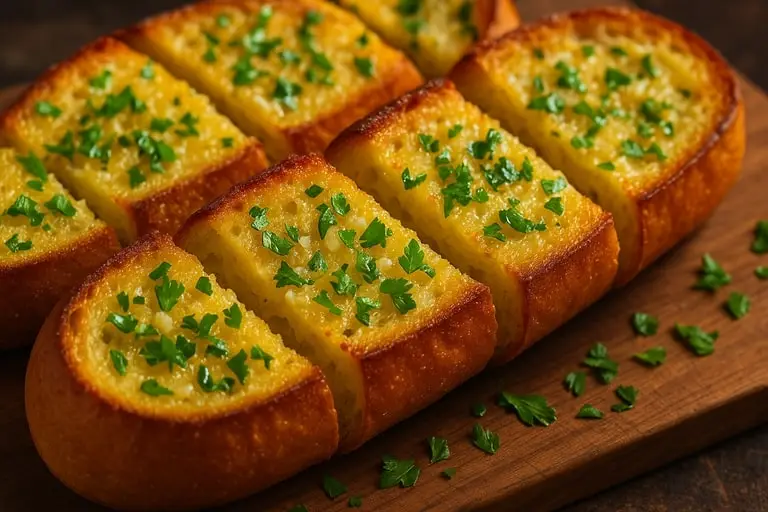
Herbs and seasonings elevate garlic bread beyond simplicity. Parsley is the classic garnish, adding freshness and visual contrast to the richness of butter. Oregano, thyme, or rosemary deepen the flavor, while crushed red pepper provides heat. Parmesan, mozzarella, or even sharp cheddar can be added for indulgence, turning garlic bread into something closer to a standalone dish. These variations illustrate that the recipe is not static but endlessly flexible, allowing each cook to imprint their preferences and culture onto a universal template.
The cooking method determines much of the final experience. Baking garlic bread in the oven crisps the edges while keeping the center soft, while broiling creates an irresistible golden crust. Some prefer wrapping the loaf in foil for gentler heat that melds flavors, while others bake uncovered to emphasize crunch. Grilling adds smokiness, making the bread ideal for summer meals. Regardless of method, the goal is to achieve harmony: crisp exterior, tender interior, and flavors that feel layered yet balanced. The adaptability of technique demonstrates why garlic bread recipes are loved in every culinary tradition.
Culturally, garlic bread has become more than a side dish; it is an icon of hospitality and abundance. It often appears at gatherings where sharing is central, such as family pasta dinners, barbecues, or potlucks. Its very nature — bread designed to be torn, dipped, and shared — reinforces community. Garlic bread embodies generosity, as it can be made in large quantities with minimal cost yet deliver maximum satisfaction. Its role in meals is symbolic as well as practical: it signals comfort, welcome, and celebration, ensuring everyone at the table feels included.
The sensory qualities of garlic bread explain its universal appeal. The aroma of garlic and butter wafting from the oven builds anticipation before the bread even reaches the table. The sight of golden crusts flecked with herbs and cheese delights the eye. The first bite combines crunch with softness, heat with richness, garlic sharpness with buttery smoothness. Eating garlic bread engages every sense, creating pleasure that feels both indulgent and familiar. These qualities make it not just a side but a highlight, often remembered as vividly as the main dish it accompanies.
Nutritionally, garlic bread can be indulgent, but thoughtful adjustments make it adaptable to different goals. Whole-grain breads add fiber, olive oil provides healthy fats, and reduced cheese versions lighten the dish without sacrificing flavor. Garlic itself carries health benefits, including cardiovascular support and immune-boosting properties. In this way, garlic bread aligns indulgence with nourishment, proving that pleasure and health need not be opposites. This adaptability ensures its place on both celebratory and everyday tables.
Economically, garlic bread reflects practicality and generosity. Bread, butter, and garlic are inexpensive staples found in nearly every pantry, yet together they create a dish that feels festive and abundant. It can feed large groups without straining budgets, making it ideal for community meals. Leftovers reheat easily or transform into croutons, stuffing, or savory bread puddings, ensuring nothing goes to waste. This resourcefulness underscores the values of home cooking: creativity, efficiency, and respect for ingredients.
Ultimately, the garlic bread recipe endures because it embodies the essence of comfort food: simplicity elevated through care, generosity expressed through abundance, and pleasure achieved with minimal effort. It reflects traditions as old as bread itself while continuing to adapt to modern tastes and lifestyles. To make garlic bread is to participate in a ritual of nourishment and sharing, proving that some of the most beloved dishes are those built on humility and heart. In every golden slice lies memory, comfort, and connection, ensuring garlic bread’s place as a timeless favorite across kitchens and cultures.