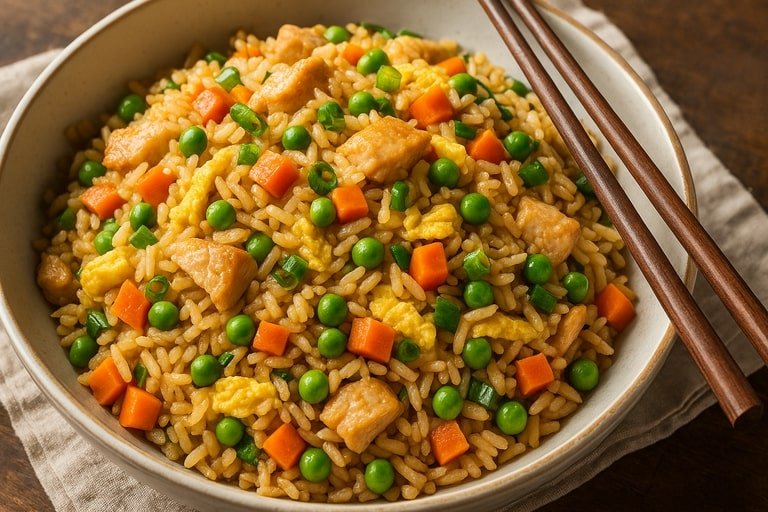
The fried rice recipe has earned a place in kitchens worldwide not only as a practical way to transform leftovers into a satisfying dish but also as a culinary canvas that reflects the culture and creativity of its cook. The essence of fried rice lies in its balance: rice grains that remain distinct yet tender, infused with aromas of aromatics, proteins, and vegetables seared in the wok or pan under controlled heat. Unlike many other comfort foods, the fried rice recipe is a celebration of technique as much as taste, requiring precision in timing, temperature, and seasoning. When one approaches it with patience and skill, the result is not simply sustenance but a layered dish that resonates across palates.
Historically, the fried rice recipe emerged in China, believed to have been created during the Sui dynasty, though its variations now span continents. Each culture adapts the method with available ingredients, giving rise to countless styles from Indonesian nasi goreng to Japanese chahan, all of which share the common principle of stir-frying rice with seasonings and add-ins. Understanding the roots of the dish allows home cooks and professionals alike to appreciate that while recipes differ, the foundation remains constant: the rice must be properly cooked, cooled, and treated with respect so it never clumps but instead carries flavor evenly.
Texture is a hallmark of a well-executed fried rice recipe. Achieving the ideal mouthfeel requires rice that has had time to lose excess surface moisture, often left overnight or at least several hours after steaming. Freshly cooked rice, though tempting, tends to be too soft and sticky, leading to clumps rather than the desirable separate grains. This principle highlights why planning ahead is integral: the dish is quick to stir-fry, but the preparation of ingredients in advance underpins success.
The protein choices in a fried rice recipe allow for versatility without compromising authenticity. Whether one opts for shrimp, chicken, beef, or a vegetarian path, the key is ensuring these are cooked swiftly over high heat to lock in succulence while preventing overcooking. In professional kitchens, proteins may be pre-marinated lightly with soy, sesame oil, or rice wine to provide depth. Their integration with rice is not random; timing ensures that meat juices mingle with the grains, enhancing the dish rather than overwhelming it.
Vegetables, too, play a vital role in balancing nutrition, color, and flavor within a fried rice recipe. The addition of carrots, peas, scallions, or bean sprouts creates visual vibrancy while contributing crispness. The wok’s searing heat allows vegetables to retain brightness and texture, achieving what chefs call “wok hei,” the smoky, slightly charred aroma that defines true stir-fried food. This elusive characteristic can be pursued even in home kitchens with careful control of high heat and minimal crowding of the pan.
Seasonings elevate the fried rice recipe from a simple grain-based dish to a symphony of flavors. Soy sauce, oyster sauce, sesame oil, and sometimes fish sauce create the umami base, while a restrained hand ensures the rice itself remains the focus. Excess liquid dilutes texture, so expert cooks drizzle sauces sparingly along the edges of the hot pan, allowing them to caramelize before integrating with the rice. Salt and white pepper add further layers, yet harmony is maintained by balancing savory with aromatic freshness from herbs or scallions.
Eggs are often a defining feature of a fried rice recipe, not only for their golden hue but also for their ability to bind flavor while providing richness. The debate over whether to scramble them separately or push rice aside to incorporate directly into the wok illustrates the subtleties of technique. In both approaches, the key remains speed: eggs should set softly, coating rice rather than forming dense clumps. This seemingly minor detail often distinguishes a mediocre dish from one that lingers in memory.
Fried rice recipes also demonstrate the art of layering flavors in stages. Garlic and onions are introduced early to perfume the oil, followed by proteins and vegetables, and only then the rice. This sequence allows each element to express its qualities without being muted. Chefs often emphasize the importance of tasting continually, adjusting salt, acidity, and spice as the dish evolves. Such attentiveness transforms the cooking process into an act of craftsmanship rather than routine.
Culturally, the fried rice recipe embodies resourcefulness. It teaches that nothing in the kitchen need go to waste: yesterday’s rice, leftover meats, or seasonal vegetables can all find new life in the wok. This philosophy resonates globally, contributing to the dish’s popularity across households and restaurants alike. Its adaptability has also made it a canvas for fusion cuisine, where local spices or proteins integrate seamlessly into the universal stir-frying method.
Serving fried rice is as much about presentation as preparation. A bowl piled high with glistening grains, flecked with color, carries comfort and appeal. Garnishes such as fresh herbs or a drizzle of sesame oil add the final flourish, signaling care and precision. Whether served as a main course or as a complement to other dishes, fried rice holds its own with dignity, a testament to its balanced design.
For those seeking to refine their craft, practicing the fried rice recipe repeatedly offers insights into timing, heat, and ingredient interplay. Each attempt builds intuition, sharpening one’s ability to judge by aroma, sound, and sight rather than by recipe alone. It is this experiential learning, passed through generations, that has elevated fried rice from a humble meal to a global emblem of culinary technique.
Fried rice recipes explained through cooking traditions
The phrase fried rice recipes often implies variety, yet beneath the spectrum of styles lies a shared method of transforming rice with controlled heat and complementary flavors. In Southeast Asia, the dish takes on bold personalities with chili, shrimp paste, or kecap manis, while in East Asia, subtlety reigns with delicate soy and scallion accents. By analyzing these traditions, one appreciates how fried rice adapts while remaining loyal to its roots. The cooking process, though brief in execution, condenses centuries of wisdom into each stir-fry.
A crucial distinction among fried rice recipes is the choice of rice itself. Jasmine, long-grain, or medium-grain varieties influence texture, fragrance, and resilience under high heat. In Thailand, jasmine rice contributes floral aroma, while in China, medium-grain cultivars lend chewiness. Understanding these nuances allows cooks to tailor their approach, recognizing that the foundation is not interchangeable without consequence. This choice reflects culinary identity as much as practical preference.
Preparation methods vary across fried rice recipes, but mise en place remains non-negotiable. Ingredients must be prepped, measured, and within reach, since the cooking itself happens in mere minutes. Heat waits for no one, and hesitation risks steaming rather than searing. Mastery, therefore, lies not only in flavor combinations but in orchestration, where each motion follows logically and efficiently, culminating in a dish that feels effortless yet refined.
Spices and aromatics provide regional identity in fried rice recipes. Indian adaptations may incorporate cumin, turmeric, or curry leaves, layering earthy warmth, while Korean iterations embrace kimchi for tang and spice. These additions do not obscure the rice but rather enhance its role as a carrier of taste. The diversity illustrates how one culinary concept can express local heritage while maintaining universal appeal.
Protein in fried rice recipes reflects cultural context as well. While shrimp dominates coastal cuisines, pork or beef often prevails inland. Vegetarian variations, drawing upon tofu or eggplant, prove equally compelling. These differences showcase how fried rice respects dietary customs and ingredient availability, reinforcing its reputation as a democratic dish accessible to all.
Cooking techniques in fried rice recipes also reveal cultural philosophies. In Japanese kitchens, restraint and precision shape each step, yielding subtle layers. In Indonesian practice, intensity and bold seasoning take precedence, delivering an assertive flavor profile. Both approaches highlight that technique is not merely mechanical but rather an embodiment of cultural values expressed through food.
Modern fried rice recipes embrace innovation without abandoning fundamentals. Chefs experiment with quinoa, cauliflower, or brown rice as alternatives, catering to contemporary nutritional preferences. Yet success still hinges on achieving distinct grains, balanced seasoning, and harmony of elements. This continuity underscores how tradition and modernity coexist in culinary practice.
The timing of adding sauces in fried rice recipes deserves particular attention. By incorporating them gradually, chefs ensure even distribution without saturating grains. This method distinguishes professional cooking from rushed attempts, reinforcing the principle that mastery is not about speed alone but about control. It is this attention to microscopic details that elevates a familiar dish into artistry.
Visual appeal remains central to fried rice recipes across cultures. The interplay of golden egg, green scallions, orange carrots, and pink shrimp creates a palette that signals freshness and nourishment. Plating, too, contributes: serving in clay pots, banana leaves, or porcelain bowls reflects cultural aesthetics while heightening sensory experience. Such considerations reveal that food is not sustenance alone but communication of identity and care.
Ultimately, fried rice recipes represent an ongoing dialogue between heritage and creativity. Each cook contributes to the narrative, whether by adhering strictly to ancestral methods or by infusing personal interpretation. This evolution ensures that fried rice continues to inspire, delight, and sustain, transcending its humble origins to embody culinary resilience and ingenuity.
Fried rice recipe with authentic flavor techniques
When exploring a fried rice recipe with authentic flavor techniques, the central theme is fidelity to tradition while embracing precision. Authenticity here does not imply rigid adherence but rather respect for the foundational methods that make the dish recognizable and satisfying. At its core, authentic fried rice embodies distinct grains, balanced seasoning, and the elusive “wok hei,” achievable only with high heat and intentional movement of the pan.
Selecting the right oil is the first step toward authenticity in a fried rice recipe. Peanut, canola, or sunflower oils, known for their high smoke points, allow grains to sear without burning. The choice of oil subtly influences aroma and mouthfeel, reminding us that every element, no matter how small, contributes to overall perception. Authentic techniques teach restraint, highlighting rice rather than masking it under heavy fats.
Egg handling remains a hallmark of authentic fried rice. Some traditions advocate for scrambling first, then folding into the rice, while others encourage cooking directly in the pan with grains. Each approach has merit, but authenticity resides in achieving lightness rather than density. The eggs must coat rice, creating a sheen that signals careful timing and respect for texture.
Seasoning practices further distinguish authentic fried rice recipes. Light soy sauce provides umami without overpowering, while sesame oil contributes fragrance when added at the end. Authenticity here is not excess but balance: sauces must enhance, never drown, the natural flavor of rice. This principle underscores why mastery requires judgment beyond measurement.
Authentic fried rice also demands attention to portion size within the pan. Overloading prevents even searing and diminishes wok hei. Professional kitchens often divide batches, prioritizing quality over speed. This practice reflects a mindset that values patience and consistency, teaching that the pursuit of authenticity lies in respecting limitations as much as techniques.
Regional authenticity shines through localized ingredients. In Cantonese kitchens, char siu pork lends sweetness; in Thai renditions, fish sauce and chili flakes provide sharp edges. Authenticity does not erase variation but honors the essence of each culture’s approach, ensuring the dish resonates with both local memory and global recognition.
The role of aromatics in authentic fried rice cannot be overstated. Garlic, ginger, and scallions introduced early in hot oil lay the foundation upon which flavors build. Their controlled caramelization is essential, for burnt aromatics compromise authenticity. Observing this step with care exemplifies the discipline demanded of those who seek culinary integrity.
Authenticity also extends to the use of rice itself. Short-cuts with freshly steamed grains compromise texture, while properly aged rice affirms tradition. This principle is not mere dogma but a reflection of generations who recognized the interplay between moisture content and heat absorption. Authentic fried rice, therefore, respects science as much as culture.
Serving authentic fried rice involves mindful presentation. The dish should appear neither greasy nor clumped but vibrant and composed. A garnish of scallions or a subtle drizzle of sesame oil reflects finishing touches consistent with tradition. Authenticity lives not only in flavor but in appearance, signaling pride and respect for the dish’s heritage.
Finally, the authentic fried rice recipe endures because it transcends eras. While new adaptations emerge, the core techniques remain relevant, teaching that mastery lies not in novelty but in honoring fundamentals. Authenticity thus becomes a compass for cooks, guiding them toward excellence in every bowl.
Few dishes embody global comfort food as well as fried rice. Found in countless variations across Asia and beyond, it is beloved for its balance of flavor, texture, and practicality. What makes the fried rice recipe so enduring is its ability to turn leftovers into a masterpiece, combining simple ingredients into something satisfying and deeply flavorful. From humble street stalls to fine dining restaurants, fried rice thrives because it is endlessly adaptable, affordable, and universally loved.
At its core, the dish begins with rice — preferably day-old, chilled, and slightly dry, so that it fries properly without clumping. This small detail is crucial: fresh rice often produces mushy results, while drier grains absorb flavors and maintain texture. Into the hot wok or skillet go oil, aromatics like garlic and onions, and then vegetables, proteins, or sauces. The beauty of the fried rice recipe lies in its simplicity: nothing is wasted, and everything has potential to contribute to a dish that feels fresh, balanced, and complete.
The technique is central to success. High heat ensures that ingredients cook quickly, preserving both flavor and texture. Stir-frying requires constant movement, preventing burning and allowing each grain of rice to be coated in oil and seasoning. Timing matters: proteins are seared first, vegetables tossed until crisp-tender, and rice added last to soak up flavors. A good fried rice recipe demonstrates the artistry of stir-fry cooking, where speed, heat, and precision combine to create harmony in minutes.
Soy sauce often forms the backbone of flavor, adding saltiness and umami. Oyster sauce, sesame oil, or fish sauce can deepen complexity, while chili paste introduces heat. Eggs scrambled into the mixture lend richness and body, coating the grains with golden silkiness. Vegetables such as peas, carrots, and scallions add freshness and crunch, while proteins like chicken, shrimp, beef, or tofu create heartiness. The fried rice recipe thrives on balance — every addition enhancing the dish without overshadowing the rice itself.
Cultural variations highlight its global journey. Chinese fried rice remains the classic, with soy sauce, eggs, and vegetables creating a simple, satisfying base. In Thailand, basil fried rice introduces aromatics and spice, while in Indonesia, nasi goreng incorporates sweet soy sauce and sambal for depth and heat. Japanese versions often use short-grain rice with soy and mirin, while Hawaiian fried rice includes spam and pineapple. Each interpretation reflects local ingredients and tastes, proving that the fried rice recipe is endlessly adaptable across cultures.
Texture is key to its appeal. A successful dish maintains distinct grains, lightly crisped from the heat of the wok. Proteins and vegetables add contrasting textures: juicy shrimp, tender chicken, crunchy carrots, or crisp bean sprouts. Even eggs provide variety, depending on whether they are scrambled separately or folded directly into the rice. The fried rice recipe teaches cooks the importance of balance — between softness and crunch, richness and freshness — to create a dish that satisfies every bite.
Nutrition adds another reason for its enduring popularity. Rice provides carbohydrates for energy, while vegetables and proteins add essential nutrients. With mindful ingredient choices, fried rice can be a complete, balanced meal. Using brown rice or cauliflower rice introduces fiber and lowers calories, while lean proteins keep it light. The fried rice recipe aligns perfectly with modern values of resourcefulness, sustainability, and wellness, offering nourishment without sacrificing indulgence.
Restaurants and street vendors showcase fried rice in countless ways. In casual settings, it is often a quick, affordable option that highlights comfort and familiarity. In fine dining, chefs reinterpret it with luxurious ingredients such as lobster, wagyu beef, or truffle oil, proving its adaptability. Across Asia, bustling night markets serve steaming plates of fried rice customized to order, making it both personal and communal. The fried rice recipe succeeds in all these contexts because it is both humble and sophisticated.
The digital era has amplified its popularity further. Food bloggers and social media influencers share vibrant photos of golden rice studded with colorful vegetables and proteins, inspiring audiences to try their own versions. Online tutorials guide beginners through the basics of stir-frying, while advanced recipes showcase creative fusions with global flavors. The fried rice recipe thrives online because it is approachable, affordable, and visually striking — an ideal dish for a digital food culture.
Emotional resonance plays a role in its timelessness. For many, fried rice is associated with childhood meals, family gatherings, or comforting late-night snacks. Its aroma of garlic, soy, and sizzling rice evokes nostalgia, while its flavor delivers warmth and reassurance. Preparing it at home often feels like an act of care, turning leftovers into something delicious and memorable. The fried rice recipe endures because it connects people not only to flavor but also to memory and belonging.
Practicality ensures its role in modern cooking. Fried rice can be made quickly, requires minimal equipment, and adapts to whatever ingredients are on hand. It is an ideal dish for reducing food waste, repurposing small amounts of protein or vegetables into a full meal. Leftovers reheat beautifully, often tasting even better as flavors continue to meld. The fried rice recipe proves that efficiency and creativity can coexist in a single pan, making it indispensable for busy households.
Ultimately, fried rice remains timeless because it embodies the essence of cooking: transformation, adaptability, and joy. It can be rustic or refined, traditional or experimental, quick or elaborate. Every culture, every cook, and every kitchen has a version, and each one tells a story of ingenuity and care. The fried rice recipe endures because it satisfies hunger while celebrating creativity, proving that food made with intention can be both practical and profound.