
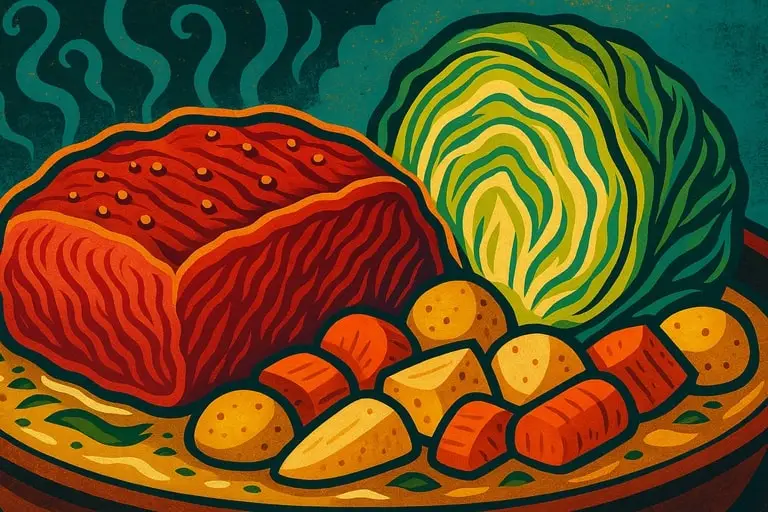
Corned beef and cabbage carries with it more than just flavor—it embodies history, culture, and the ritual of gathering around a hearty meal. While often associated with Irish-American heritage, this dish has roots that stretch further back, reflecting resourcefulness, adaptation, and the ability of simple ingredients to deliver extraordinary satisfaction. A proper corned beef and cabbage recipe begins with patience, as corned beef itself is a cured cut of brisket, transformed by brining with salt and spices over days to develop its characteristic flavor. When simmered slowly with cabbage and complementary vegetables, the result is a meal that is robust, comforting, and timeless.
The story of corned beef begins with preservation. Long before refrigeration, curing beef with coarse salt—referred to as “corns” of salt—was a means of extending its usability. Immigrants brought this tradition to new lands, adapting it with ingredients readily available, and in America, cabbage soon joined the dish as an affordable, nutritious companion. Together, they created a combination that not only sustained but also symbolized cultural identity, particularly among Irish communities celebrating heritage and resilience. To cook corned beef and cabbage is therefore to take part in a lineage that ties nourishment to history.
The foundation of the dish lies in choosing quality brisket. Corned beef is known for its rich marbling, which, when simmered gently, renders down into tenderness. Placing the beef into a pot of cold water infused with spices such as mustard seed, coriander, cloves, and bay leaves initiates the slow transformation. As it simmers, flavors infuse the meat, softening connective tissues until each slice yields with ease. Cabbage, added toward the end, absorbs the essence of the broth while retaining its own subtle sweetness, providing balance to the beef’s robust savor.
Patience is essential in this process. Corned beef and cabbage is not a dish to rush; it thrives on slow simmering, where time coaxes flavors into depth and texture into softness. A brisket rushed on high heat becomes tough, denying the diner the satisfaction of tenderness that defines this dish. Cabbage cooked too long turns mushy, losing vibrancy, while introduced at the right moment it provides crispness against the meat’s richness. The art of cooking corned beef and cabbage rests in this orchestration of timing, where each element finds its perfect expression.
Beyond technique, seasoning decisions carry weight. Some prefer the simplicity of the spice packet often sold with corned beef, while others craft their own mixtures for a more personalized touch. Black peppercorns, allspice, and even a hint of cinnamon can add layers of intrigue. Salt must be balanced carefully, as the brining process already imparts intensity. The result should never overwhelm but rather enhance the harmony between beef and vegetables, delivering a broth that feels both substantial and nuanced.
Vegetables beyond cabbage often join the pot, adding variety and heartiness. Carrots bring gentle sweetness, potatoes contribute substance, and parsnips offer earthiness. Together, they create a medley that makes the meal feel abundant, each bite presenting a slightly different balance of flavors and textures. The broth, enriched by all these contributions, becomes more than liquid—it transforms into a savory essence that ties the dish together. Ladled over slices of beef and wedges of cabbage, it completes the meal with warmth and depth.
Cultural resonance enhances the appeal of corned beef and cabbage. It is not merely food but a ritual, particularly during celebrations of heritage. St. Patrick’s Day in America, for example, would feel incomplete without this dish gracing tables, symbolizing both tradition and adaptation. For many families, cooking corned beef and cabbage is as much about connection to ancestors as it is about taste, a reminder of resilience and the ability to create richness from modest means. In this way, the dish nourishes spirit as much as body.
Practical aspects also contribute to its popularity. Corned beef and cabbage is economical, stretching ingredients into generous servings that feed families and guests alike. Leftovers offer versatility, easily repurposed into sandwiches, hash, or soups, extending the value of the initial preparation. The fact that flavors often deepen the next day makes it particularly rewarding, ensuring that effort invested continues to pay off in meals that remain satisfying.
Serving plays an important role in honoring the dish. Corned beef, sliced against the grain for tenderness, pairs beautifully with wedges of cabbage and bright orange carrots, their colors and textures contrasting on the plate. A ladle of broth keeps everything moist and flavorful, while condiments like mustard or horseradish can provide sharpness to cut through the richness. Bread on the side completes the ensemble, turning it into a feast that satisfies on every level.
The sensory experience of eating corned beef and cabbage lingers long after the meal. The aroma of simmering spices, the tender bite of beef, the subtle crunch of cabbage, and the warmth of broth all combine into a memory that is both nourishing and emotional. For many, this dish evokes gatherings of family, celebrations of heritage, or the simple comfort of a hearty dish on a cold day. It remains a symbol of how food transcends sustenance, offering belonging and tradition in every serving.
Ultimately, corned beef and cabbage endures because it speaks to something deeper than taste. It is a meal born of necessity, elevated by care, and celebrated through tradition. Each pot tells a story of migration, adaptation, and resilience, a narrative written not only in history books but also in kitchens and around dining tables. To cook corned beef and cabbage is to participate in this living history, creating nourishment that carries meaning across time and generations. It is both a savory classic and a reminder that food, at its best, unites past and present in one unforgettable meal.
Corned Beef Recipes Enhanced With Cabbage
Corned beef recipes have existed in many forms, but when enhanced with cabbage, they reach a balance that feels complete. Corned beef on its own, salty and rich, gains a refreshing counterpoint from cabbage, whose gentle sweetness lightens the dish and completes the experience. This pairing is more than a matter of convenience; it is a culinary partnership that embodies harmony. For many cooks, learning how to cook corned beef and cabbage becomes an essential skill, one that ties together history, flavor, and practicality.
The process begins with the meat itself. Corned beef is essentially brisket that has been cured, often for a week or more, with brine that imparts both preservation and flavor. This preparation transforms a tough cut into something that, with proper cooking, yields tenderness and distinction. Simmering allows the beef to relax, fibers loosening until they become supple. Cabbage, added at the right moment, ensures that the dish gains balance, absorbing flavors without losing its texture or brightness.
Timing remains crucial. Corned beef requires hours of slow cooking, while cabbage demands only a fraction of that time. Adding cabbage too early diminishes its vibrancy; adding it too late leaves it underdeveloped. The dance of timing in corned beef recipes is therefore about respect—respect for the ingredients, for the process, and for the tradition that has shaped the dish. This careful orchestration ensures that each component contributes as intended.
Flavor development is another area of mastery. While corned beef brings saltiness and depth, cabbage offers mildness that welcomes seasoning. A hint of pepper, a dash of vinegar, or a sprinkle of parsley can elevate both, lifting the dish from hearty sustenance to culinary statement. The broth unites these flavors, enriched by meat and vegetables, becoming a vital element that ties everything together. Served with ladles of broth, the dish becomes not just food but an immersive experience of flavor and aroma.
Cultural meaning strengthens the bond between corned beef and cabbage. Though widely recognized as Irish-American, this combination reflects a broader narrative of adaptation. In Ireland, beef was historically less accessible than pork, and cabbage was a common staple. In America, affordable corned beef and abundant cabbage came together naturally, forming a dish that celebrated heritage while embracing new realities. Today, this combination symbolizes resilience and community, an edible bridge between old and new worlds.
Corned beef recipes also adapt well to variations. Some cooks add turnips, leeks, or parsnips for added layers of flavor. Others experiment with cooking liquids, using beer or cider in place of water to deepen complexity. These adaptations preserve the essence while allowing personalization, ensuring the dish remains relevant to evolving tastes. Such versatility ensures that corned beef and cabbage never feels confined but always open to reinterpretation.
Practicality continues to define the dish’s appeal. A single pot can feed a gathering generously, its simplicity making it approachable even for novice cooks. Leftovers are particularly versatile, with corned beef sandwiches becoming staples and hash providing a hearty breakfast option. The cabbage, too, retains usefulness, easily repurposed into soups or sautéed dishes. This efficiency extends the life of the meal, underscoring its value beyond a single occasion.
Serving corned beef and cabbage involves more than plating. The visual appeal of tender pink beef, bright green cabbage, and orange carrots creates a feast for the eyes before the first bite. Accompaniments like mustard or horseradish lend sharpness, while bread or potatoes provide grounding. The meal becomes celebratory not only because of its taste but because of the way it looks and feels—generous, colorful, and abundant.
The sensory impact remains profound. Aromas of simmering spices signal comfort, flavors unfold with each bite, and textures create satisfying contrasts. For many, this experience links directly to memory—family gatherings, holiday meals, or quiet evenings of comfort. It is a dish that appeals not just to the palate but to the heart, reinforcing why corned beef and cabbage endures as a favorite.
Corned beef recipes enhanced with cabbage remain timeless precisely because they combine practicality, flavor, and meaning. They show how modest ingredients, treated with care, can produce extraordinary results. This partnership reflects more than cooking—it reflects culture, tradition, and the power of food to connect across generations. In every simmering pot lies not only nourishment but also history, waiting to be shared anew at the table.
Corned Beef And Cabbage As A Comfort Dish
At its essence, corned beef and cabbage is a comfort dish, one that nourishes body and spirit in equal measure. It represents warmth on cold days, tradition in times of celebration, and care whenever it is prepared. Comfort food transcends ingredients; it is about meaning, and corned beef with cabbage exemplifies this through its cultural resonance, hearty character, and ability to bring people together.
The comfort begins with aroma. As the pot simmers, spices mingle with beef and cabbage, creating a fragrance that fills the home and signals anticipation. This sensory prelude prepares diners even before the first bite, fostering a sense of warmth and belonging. The dish thus becomes more than a meal—it becomes an atmosphere, enveloping all who share in it.
Texture adds to the comfort. Corned beef sliced thin and tender provides substance, while cabbage offers softness with a hint of crunch. Carrots and potatoes contribute additional variety, creating a meal that satisfies through contrast as much as through flavor. The broth ties it together, rich yet balanced, warming with every spoonful. This interplay ensures that each bite delivers not just sustenance but reassurance.
Cultural symbolism strengthens its role as comfort food. For Irish-American families, corned beef and cabbage has long been tied to heritage and identity, especially during St. Patrick’s Day. Beyond its cultural context, however, it has become a universal comfort dish in many households, appreciated for its simplicity, abundance, and ability to evoke feelings of home. It represents both celebration and everyday resilience, adapting to the needs of different contexts while retaining its heart.
Health also plays a part in comfort. While hearty, the dish can be balanced, offering protein, fiber, and essential nutrients when prepared thoughtfully. Leaner cuts, abundant vegetables, and mindful seasoning ensure that the dish nourishes without excess. This balance between indulgence and wellness enhances its role as comfort food, allowing it to satisfy without guilt.
Practicality adds further comfort. Corned beef and cabbage is forgiving, able to accommodate substitutions and still deliver satisfaction. It is economical, stretching ingredients into multiple meals, and it improves with time, making it rewarding beyond the initial serving. This practicality makes it reliable, and reliability is central to comfort—knowing that a dish will satisfy consistently creates trust.
Serving context amplifies the comfort experience. A steaming plate of corned beef and cabbage served among friends or family fosters conversation, laughter, and connection. Even when enjoyed alone, it provides a sense of grounding, as if one is partaking in a tradition larger than oneself. The dish thus carries not only flavor but also emotion, uniting those who share it across time and space.
Leftovers add to its comfort identity. Reheated corned beef becomes even more flavorful, while cabbage and vegetables continue to meld into the broth. Sandwiches and hash made from the next day’s servings provide fresh expressions of the dish, extending comfort beyond a single occasion. This longevity reinforces the sense of abundance, ensuring that comfort lasts beyond the first meal.
Visual appeal also contributes. The contrast of tender beef, vibrant vegetables, and rich broth creates a plate that is as inviting to the eye as to the palate. Comfort food often relies on familiarity, and the sight of corned beef and cabbage, recognizable and generous, fulfills this role effortlessly. Presentation may be rustic, but it carries authenticity, further enhancing its comforting nature.
Ultimately, corned beef and cabbage as a comfort dish transcends its ingredients. It represents patience, care, and connection, qualities that define the very essence of comfort food. Each preparation reinforces its enduring appeal, ensuring that the dish continues to nourish hearts and bodies alike. To cook it is to participate in a tradition that values not only flavor but meaning, creating meals that resonate long after they are eaten.
Corned beef and cabbage stands as one of the most recognizable dishes in culinary tradition, especially within Irish-American culture. More than just a meal, it has become a symbol of heritage, migration, and celebration, appearing most prominently during St. Patrick’s Day festivities. While its roots are complex and intertwined with history, the dish itself embodies values of resourcefulness, comfort, and abundance. A plate of tender corned beef accompanied by soft, flavorful cabbage carries with it echoes of past struggles and triumphs, making it both sustenance and story.
The history of corned beef and cabbage is layered, spanning continents and centuries. In Ireland itself, beef was historically scarce, and pork was the more common meat. Salted pork and cabbage were staples of the Irish table, accessible and affordable for most families. It was in the United States, however, that Irish immigrants adapted their traditions, substituting corned beef — which was more available in American cities — for pork. Jewish butchers in urban neighborhoods provided the brisket cuts and preservation techniques, leading to the now-iconic pairing. Over time, the dish became firmly embedded in Irish-American identity, representing resilience and adaptation in a new land.
At the heart of corned beef and cabbage is the brisket, a cut from the chest of the cow that is naturally tough but deeply flavorful. “Corned” refers to the process of curing the beef with large grains of salt, historically called “corns” of salt, along with spices like peppercorns, bay leaves, mustard seeds, and cloves. This curing not only preserved the meat but also imparted distinctive flavors that remain central to the dish. When simmered slowly for hours, the brisket transforms into something tender and aromatic, capable of anchoring the entire meal with its richness.
Cabbage serves as the essential counterpart, providing balance and contrast. Once considered a humble vegetable due to its affordability and abundance, cabbage absorbs the flavors of the broth while contributing its own earthy sweetness. Its texture softens as it cooks, melding harmoniously with the richness of the meat. Potatoes, carrots, and onions are often added, creating a complete meal that feels hearty and abundant. Together, the combination represents the ingenuity of using simple, accessible ingredients to create dishes that sustain both body and spirit.
The cooking process itself is straightforward but rewarding, emphasizing patience and attention. Corned beef is typically simmered for several hours in water or broth, often flavored with additional spices. Vegetables are added later in the process to ensure they retain their integrity while absorbing the essence of the broth. The resulting dish is not flashy but deeply comforting, its flavors layered and harmonious. This method of slow cooking reflects the values of tradition — time, care, and transformation — which elevate humble ingredients into something enduring.
Culturally, corned beef and cabbage has come to represent more than a meal; it is a marker of identity. For Irish immigrants in the United States, the dish symbolized both adaptation and pride, a way to celebrate their heritage in a new homeland. Today, it is inseparable from St. Patrick’s Day, where it adorns tables, parade routes, and gatherings across cities and towns. Even for those with no Irish ancestry, the dish has become a seasonal tradition, uniting people in shared celebration. In this way, corned beef and cabbage transcends its ingredients to embody cultural continuity and community.
The sensory experience of corned beef and cabbage explains its lasting popularity. The aroma of spices simmering with beef and vegetables fills the home with warmth, signaling comfort before the first bite. The sight of a platter piled with slices of tender meat surrounded by vibrant cabbage and root vegetables is both rustic and abundant. The flavor delivers contrasts: the saltiness of the beef, the sweetness of carrots, the earthiness of potatoes, and the mellow bite of cabbage. Each forkful offers harmony, proving that simplicity can yield profound satisfaction.
Nutritionally, corned beef and cabbage is hearty and substantial, offering protein, fiber, and essential vitamins. Beef brisket provides strength and satiety, while cabbage contributes antioxidants and vitamin C. Potatoes add carbohydrates for energy, and carrots bring beta-carotene. While the dish is traditionally indulgent, lighter variations are possible by trimming fat or reducing salt. This adaptability ensures the dish can align with contemporary health-conscious goals without losing its comforting essence. In many ways, it reflects the balance between tradition and modernity in today’s food culture.
Economically, the dish demonstrates practicality. Corned beef, once an affordable cut, stretches far when paired with inexpensive vegetables like cabbage and potatoes. Its ability to feed large families or gatherings on a modest budget contributed to its popularity among immigrants. Even today, it remains a dish that feels abundant without requiring extravagance. Leftovers are equally celebrated, repurposed into sandwiches, hash, or soups, ensuring nothing goes to waste. This resourcefulness reinforces the wisdom of tradition, proving that value and comfort can coexist.
Modern interpretations of corned beef and cabbage continue to evolve. Some cooks experiment with braising in beer or cider to add depth, while others roast the brisket for a different texture. Global influences introduce spices like coriander, fennel, or chilies, adding new dimensions while honoring the essence of the dish. High-end chefs reinterpret the pairing with artisanal ingredients or deconstructed presentations, yet the heart of the recipe remains unchanged. Its adaptability proves its resilience, capable of bridging heritage and innovation.
Psychologically, preparing and serving corned beef and cabbage provides comfort beyond taste. The ritual of simmering, slicing, and serving becomes a way of affirming care and connection. For many, the dish evokes childhood memories of family tables filled with laughter and stories. For others, it represents a link to ancestry and cultural pride. Even eaten in solitude, a bowl of corned beef and cabbage can provide reassurance, grounding the diner in history and tradition. Its emotional resonance is as powerful as its flavor, ensuring its place in memory as well as on the table.
Ultimately, corned beef and cabbage endures because it embodies values that transcend food: resilience, adaptation, and celebration. It tells a story of immigrants who shaped their traditions to fit new circumstances, creating a dish that became more iconic abroad than in its homeland. It represents abundance built from modest origins, sustenance elevated through patience and care. In every bite lies history, culture, and continuity, proving that food is not only about nourishment but also about meaning. Corned beef and cabbage remains timeless because it is more than a recipe — it is a reminder of identity, belonging, and the joy of sharing meals that carry stories across generations.