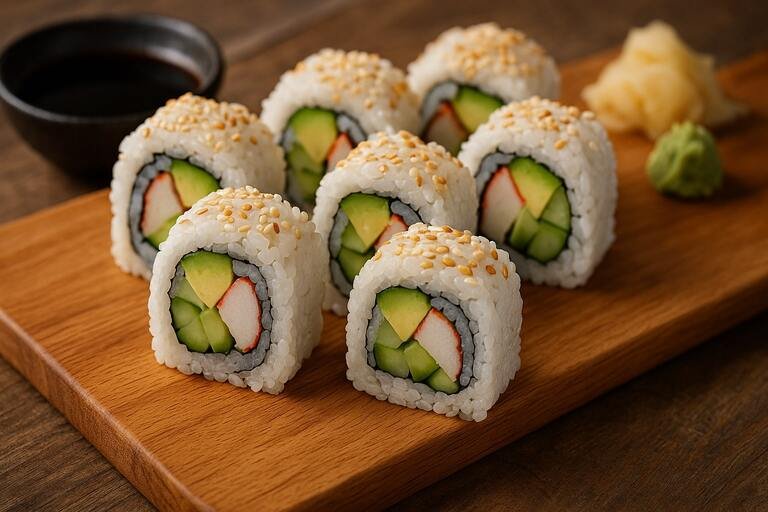
The California roll recipe has long been celebrated as the bridge between traditional Japanese sushi artistry and the Western palate, offering a harmonious fusion of textures and flavors that transformed sushi into a global phenomenon. To understand why this dish continues to hold its place as an icon of contemporary dining, one must look beyond the surface of its familiar ingredients and explore the layers of culinary intention that lie beneath. Sushi, at its core, is a practice of precision, respect for ingredients, and balance between subtlety and boldness.
When chefs in Los Angeles began substituting ingredients like crab and avocado for rarer or less approachable elements of traditional sushi, they inadvertently created a roll that introduced millions to the experience of sushi for the first time. The California roll embodies accessibility without compromising on craftsmanship, blending creamy avocado, seasoned sushi rice, and delicate seafood into a composition that feels indulgent while remaining fresh and refined.
A crucial foundation of any California roll recipe lies in the rice. Proper sushi rice is not simply cooked grain but a carefully seasoned base that anchors the entire roll. Achieving the right texture—slightly sticky yet individual in grain integrity—requires both the correct short-grain rice and precise technique in washing, cooking, and cooling. The seasoning of vinegar, sugar, and salt must be balanced so as to enhance but never overpower the delicate flavors layered upon it. Too much acidity will obscure the natural sweetness of crab and avocado, while too little leaves the roll tasting flat. Mastering this balance is the hallmark of sushi-making expertise.
Attention must also be given to nori, the roasted seaweed sheets that provide both structure and a subtle marine aroma. The California roll recipe often places rice on the exterior, encasing the nori within, a reversal of traditional maki styles. This innovation was not merely aesthetic but intentional: by hiding the seaweed, chefs made sushi more approachable to diners unfamiliar with its briny character. The inside-out structure, or uramaki, has since become emblematic of modern sushi rolls, and the California roll stands as the origin point for this now ubiquitous format.
Avocado is perhaps the most unconventional element of the California roll recipe, yet it has become inseparable from the roll’s identity. Its buttery richness mirrors the luxurious texture of toro, or fatty tuna, which was once more commonly used in traditional rolls but often unavailable or expensive in Western markets. By introducing avocado, chefs achieved a comparable mouthfeel while offering a distinctly Californian ingredient that resonated with local diners. This innovation transformed avocado into a global sushi staple and redefined expectations of what sushi could incorporate.
Equally significant is the use of crab, whether in the form of fresh crab meat or imitation crab sticks. While purists may argue over authenticity, the California roll has demonstrated remarkable versatility in accommodating different variations while preserving its essence. Fresh crab elevates the roll with sweet delicacy, while imitation crab provides consistency and affordability. The key lies in balancing this protein with the other elements, ensuring that no single ingredient dominates but instead contributes to the harmony of the whole.
Cucumber, often overlooked, introduces a crisp freshness that prevents the California roll recipe from feeling heavy. Its clean bite cuts through the richness of avocado and crab, creating contrast that sustains interest through every mouthful. This interplay of textures—creamy, tender, and crisp—reflects the philosophy of sushi as a study in balance. Without cucumber, the roll risks leaning too far into indulgence; with it, the experience remains lively and refreshing.
Technique plays a defining role in transforming simple ingredients into an elegant roll. The spreading of rice across nori requires precision to maintain evenness without crushing the grains. The arrangement of fillings demands careful proportion to avoid tearing the roll during shaping. Rolling itself, performed with a bamboo mat wrapped in plastic to prevent sticking, is an art of pressure—firm enough to bind yet gentle enough to preserve the integrity of each component. The California roll recipe thus becomes not just a collection of ingredients but a discipline in attentive preparation.
Presentation further elevates the roll into a visual and sensory experience. Neat slices reveal the symmetrical layering of green avocado, pale crab, and crisp cucumber, all encased in luminous rice. Toppings such as sesame seeds or tobiko add color, texture, and subtle flavor accents, reminding us that sushi is as much about aesthetics as it is about taste. Each element is intentional, creating an encounter that engages the eyes before the palate.
Cultural context also deepens appreciation of the California roll recipe. Emerging in the 1960s and 70s, it reflected a moment of culinary adaptation, where Japanese chefs in America sought to introduce sushi in ways that resonated with local tastes. What began as a compromise soon became a defining innovation, setting the stage for the proliferation of countless other fusion rolls that dominate sushi menus worldwide. Its story is one of resilience, creativity, and the bridging of cultures through food.
When crafting this roll at home, patience and practice become as important as the ingredients themselves. The first attempts may feel clumsy, but with repetition comes the rhythm of proper sushi-making. Respect for detail transforms an ordinary effort into a dish that embodies the spirit of sushi tradition while embracing modern adaptation. The California roll recipe thus serves as both an entry point for beginners and a reminder to seasoned cooks of the discipline inherent in culinary craft.
Ultimately, the California roll’s enduring appeal lies in its balance of familiarity and innovation. It remains approachable to those new to sushi while offering enough depth of flavor and technique to satisfy connoisseurs. By examining its origins, composition, and methods, one gains not only a deeper appreciation for this iconic roll but also an understanding of how food can transcend boundaries, adapting and thriving across cultures. In every slice, the California roll recipe speaks of heritage and evolution, a testament to the artistry of sushi and the creativity that sustains its future.
California Roll Recipe and Sushi Rice Mastery
The California rolls recipe is not just an introduction to sushi for beginners but also a framework for mastering sushi rice, the most essential component of any successful roll. Without well-prepared sushi rice, the balance of textures and flavors collapses, no matter how high-quality the fillings may be. Short-grain Japanese rice possesses a unique starch composition that makes it ideal for the slightly sticky yet distinct consistency required in sushi.
Washing the grains thoroughly until the water runs clear removes excess starch and ensures a polished surface that will cook evenly. Cooking with the right water-to-rice ratio is equally critical, as too much liquid can leave the rice mushy while too little creates undercooked grains that disrupt the roll’s structure. Once cooked, the rice must be swiftly cooled and seasoned with vinegar, sugar, and salt while gently folded to maintain integrity and shine. This process, seemingly simple, is the foundation upon which the California rolls recipe is built.
The distinction between regular rice and sushi rice cannot be overstated. Whereas most rice functions as a neutral backdrop to main dishes, sushi rice must stand as an integral partner to every other ingredient. It provides sweetness, acidity, and body, lifting the delicate crab and creamy avocado rather than overwhelming them. For chefs, mastering sushi rice represents a rite of passage, an unspoken measure of competence that reflects their respect for the craft. Even in the California rolls recipe, which is often considered accessible and entry-level, the rice holds the same gravity as in the most traditional omakase experiences.
Within the California rolls recipe, sushi rice also dictates the roll’s structural success. When pressed onto nori, the rice must cling without clumping, ensuring even coverage and manageable thickness. Too much rice can drown the fillings, while too little compromises stability. This fine balance ensures that each bite captures the intended proportions of rice, seaweed, and fillings, creating harmony rather than excess. In professional sushi kitchens, apprentices may spend years refining their handling of rice before advancing to other tasks, a reflection of its centrality to the sushi experience.
The vinegar mixture, or su, requires precise calibration. If overdone, it creates an astringent dominance that masks the delicate sweetness of crab; if underdone, the rice tastes flat and uninspired. Chefs adjust their recipes according to season and regional preferences, demonstrating that even within a defined California rolls recipe, there is space for nuance and adaptation. For home cooks, understanding this flexibility offers empowerment, allowing them to tailor the seasoning to their own palate without losing authenticity.
Nori plays its role not just as a wrapper but as a partner to sushi rice. Toasted properly, it offers both aroma and texture, but when stale, it undermines the entire roll with unwanted chewiness. The California rolls recipe, often presented in uramaki style with the rice outside, still relies on nori’s subtlety to lend balance. Without its contribution, the roll risks becoming one-dimensional, a mere combination of rice and fillings rather than a structured composition.
Avocado and crab are the headline ingredients, but their synergy with rice defines the roll’s success. The richness of avocado finds relief in the rice’s gentle acidity, while the crab’s sweetness is amplified by the grain’s delicate umami. Sushi rice is the silent mediator, orchestrating a dialogue between these contrasting textures and flavors. The California rolls recipe thus reveals that rice is not merely filler but the conductor of balance.
Cucumber, crisp and refreshing, adds textural contrast while reinforcing the rice’s role. Where avocado might overwhelm with creaminess, cucumber interjects clarity, and the rice ensures this transition feels seamless. The interplay is subtle yet essential, elevating the California rolls recipe from a mere fusion dish into a thoughtful construction of elements that respect tradition while embracing modernity.
The art of rolling California rolls underscores rice mastery. When spread evenly, it prevents gaps that would otherwise cause the roll to collapse during slicing. The chef’s hands must remain lightly moistened to avoid sticking, yet precise enough to distribute rice evenly across the nori sheet. Rolling becomes an extension of rice handling, where pressure and alignment dictate the final presentation. The California rolls recipe therefore transforms into an exercise of mindfulness, where rice guides every action.
The aesthetic appeal of the California rolls recipe is also deeply tied to sushi rice. Its gleaming white grains serve as a canvas against which the colors of avocado, crab, and cucumber shine. Garnishes such as sesame seeds or tobiko adhere naturally, enhancing both taste and presentation without disrupting balance. This visual dimension reinforces the principle that sushi is as much about sight as taste, and rice plays an indispensable role in this duality.
Historically, the California rolls recipe symbolizes not only adaptation but also validation of sushi rice as a versatile medium. By taking a centuries-old Japanese staple and applying it to a new context, chefs demonstrated the universality of its principles. Sushi rice transcended cultural boundaries, enabling a roll that could resonate with diners unfamiliar with traditional raw fish yet still grounded in authentic technique. In this way, the California rolls recipe underscores how culinary traditions can evolve without abandoning their roots.
For those pursuing mastery, the California rolls recipe remains an invitation to refine one’s relationship with rice. Whether at home or in professional kitchens, the lessons learned in washing, seasoning, and handling rice extend far beyond a single roll. They form the foundation for all sushi-making, reminding us that the simplest ingredients, when treated with respect and precision, yield the most profound culinary experiences.
California Roll Sushi with Avocado Crab Sushi Insights
The California roll sushi embodies the essence of culinary adaptation, merging avocado crab sushi principles with the disciplined structure of traditional Japanese rolls. While sushi in its original form emphasized raw fish and minimalist presentation, the California roll emerged as a bold reinterpretation that nevertheless maintained respect for sushi’s foundational values. By integrating avocado and crab into a familiar framework, chefs offered a dish that felt both exotic and accessible, paving the way for sushi’s global rise. The California roll sushi remains not just a recipe but a cultural milestone, marking the moment when Japanese culinary heritage became a worldwide conversation.
Central to this transformation is the concept of avocado crab sushi. Avocado, with its velvety texture, introduced a new kind of richness that mirrored the luxury of premium fish cuts. Crab, whether fresh or imitation, provided a sweetness that complemented the avocado’s depth while maintaining affordability. Together, they created an approachable entry point for diners hesitant about raw fish. The California roll sushi thus served as a canvas where these ingredients could shine without intimidating new audiences.
Rice once again stands as the silent backbone of California roll sushi. Its carefully seasoned profile ensures that the avocado’s creaminess does not overwhelm and the crab’s sweetness finds resonance. In avocado crab sushi, the rice mediates between indulgence and freshness, offering structure and subtle acidity that elevate the roll beyond its individual parts. Without sushi rice, the roll would devolve into disjointed ingredients; with it, they transform into a harmonious whole.
Nori, though hidden beneath the rice in California roll sushi, retains significance in grounding the roll with umami depth. Its invisibility to the uninitiated was a deliberate adaptation, easing diners into the experience. Yet its contribution is unmistakable, adding a briny whisper that anchors the avocado and crab. The avocado crab sushi combination, while decadent, could not achieve balance without nori’s understated presence.
Cucumber, though secondary, plays a vital role in keeping California roll sushi refreshing. Its crunch contrasts with the softness of avocado and crab, preventing monotony and enhancing the overall sensory experience. The inclusion of cucumber demonstrates that even within an innovative dish, the principle of balance—so central to Japanese culinary philosophy—remains intact.
The preparation of California roll sushi demands technique equal to its traditional counterparts. Rolling with rice on the outside requires precision to prevent tearing and maintain clean structure. The bamboo mat becomes an extension of the chef’s intent, guiding the ingredients into alignment. In avocado crab sushi, where fillings are creamy and prone to unevenness, the rolling technique becomes especially critical. A skilled hand ensures the roll maintains symmetry, allowing every slice to reveal the intentional layering of flavors.
Presentation amplifies the artistry of California roll sushi. When sliced, each piece becomes a visual celebration of contrast—green avocado, pale crab, translucent cucumber, all framed by gleaming rice. Garnishes such as sesame or tobiko not only enhance texture but signal the roll’s fusion identity, marrying Japanese aesthetics with Californian boldness. Avocado crab sushi, though rooted in innovation, continues to respect the visual integrity expected of sushi.
Culturally, California roll sushi reflects more than culinary experimentation; it represents a bridge between East and West. At a time when sushi was unfamiliar to many Western diners, the California roll became a safe introduction, stripping away intimidating elements while preserving sushi’s essence. Its success sparked the creation of countless fusion rolls, reshaping global perceptions of sushi into something adaptable, creative, and endlessly evolving.
For home cooks, avocado crab sushi and its California roll expression provide a learning pathway into sushi-making. Mastering the California roll teaches foundational skills in rice preparation, ingredient balance, and rolling technique, skills that later translate to more traditional sushi forms. By practicing California roll sushi, one engages with the craft of sushi while embracing its capacity for reinvention.
Ultimately, the California roll sushi demonstrates that authenticity is not fixed but adaptive. While traditionalists may view it as a departure, its respect for technique and balance affirms its place within the broader sushi tradition. Avocado crab sushi, presented in this form, embodies both heritage and evolution, proving that food thrives when it bridges cultures, embraces creativity, and remains true to the principles of craftsmanship. In this balance lies the enduring appeal of California roll sushi, a dish that transcends borders while remaining grounded in culinary integrity.
Few dishes illustrate the fusion of cultures in modern cuisine as beautifully as the California roll. What began as an inventive adaptation to local ingredients in North America has become one of the most recognized forms of sushi across the globe. The popularity of the california roll recipe lies not just in its accessibility but also in its ability to bridge tradition and innovation, offering diners a taste of Japan with a twist that suits Western palates. Its story is about more than just food; it is about adaptation, creativity, and the power of culinary ideas to travel and transform.
The foundation of the california roll recipe is deceptively simple, yet its genius lies in how those elements are combined. At its core, it replaces raw fish — intimidating to many first-time sushi eaters — with cooked crab or imitation crab, complemented by creamy avocado and crisp cucumber. These ingredients are rolled in seasoned sushi rice and wrapped in nori seaweed, sometimes with sesame seeds sprinkled on the outside for added texture. The balance between freshness, creaminess, and umami creates a flavor profile that feels both exotic and familiar, which is why this roll quickly became a gateway into the world of sushi for millions.
Cultural context is key to understanding why the california roll recipe spread so rapidly. Traditional sushi, with its focus on raw fish, was initially challenging for diners unfamiliar with Japanese cuisine. By replacing raw tuna with crab and adding avocado — a fruit beloved in California and beyond — chefs created a roll that felt approachable without sacrificing authenticity. This innovation opened the door for sushi restaurants to thrive in Western cities, transforming sushi from a niche curiosity into a mainstream culinary phenomenon. Today, California rolls are often the first item listed on sushi menus worldwide, a testament to their universal appeal.
Texture plays an essential role in making the california roll recipe unforgettable. The chewiness of sushi rice contrasts with the crisp snap of cucumber, while avocado lends a buttery smoothness that ties everything together. Crab meat or surimi introduces subtle sweetness, while the nori adds depth and structure. Each bite becomes a layered experience that feels balanced and satisfying. This combination is not accidental — it reflects the careful craftsmanship of sushi-making, where harmony among ingredients is as important as their individual qualities.
Another aspect of its success is adaptability. While the classic california roll recipe calls for crab, avocado, and cucumber, countless variations now exist. Some incorporate spicy mayonnaise for an added kick, while others top the roll with slices of fresh fish like salmon or tuna to create hybrid versions. Tempura flakes, tobiko, or even mango have been added in certain regions, proving that the California roll is more than a fixed dish — it is a template for creativity. This flexibility ensures its continued relevance, appealing both to sushi novices and seasoned enthusiasts.
Beyond taste, the California roll’s presentation also contributes to its popularity. Its inside-out style, with rice on the outside and nori hidden within, makes it visually appealing and easy to enjoy without overwhelming newcomers. This reversal of the traditional roll format was itself a bold innovation that addressed cultural hesitations about seaweed’s appearance. The california roll recipe, therefore, did not simply modify ingredients but also reimagined form, showing how thoughtful design can make food more inviting.
Nutritional qualities add another layer to its appeal. Packed with healthy fats from avocado, lean protein from crab, and essential nutrients from seaweed, the California roll offers a balanced option in the sushi category. It demonstrates that indulgence and health can coexist, a fact that has helped it become a regular part of many diets. For those seeking lighter meals without sacrificing satisfaction, the california roll recipe represents an ideal balance, offering nourishment with a touch of indulgence.
Globalization has further amplified its reach. Sushi chefs in Europe, Latin America, and Asia have embraced the california roll recipe, often introducing regional adaptations. In Mexico, it may be paired with spicy sauces; in Brazil, tropical fruits add flair; in Europe, local seafood finds its way into fillings. Each reinterpretation keeps the essence intact while adding cultural personality, proving that the roll has become a global citizen of cuisine, constantly evolving to suit diverse tastes and contexts.
The california roll recipe also exemplifies the way food trends are fueled by storytelling. Its association with California, a state long synonymous with innovation and wellness, adds aspirational value. Diners do not just order a roll; they participate in a narrative of fusion, freshness, and creativity. Restaurants leverage this identity, showcasing the roll as a symbol of modern dining that is approachable, stylish, and globally relevant. Food, after all, is never just about sustenance; it is also about identity and connection.
In today’s digital world, the California roll continues to thrive as a content star. Food bloggers and influencers celebrate its bright colors and clean presentation, while tutorials on how to perfect the california roll recipe attract millions of views online. Home cooks experiment with versions suited to their dietary needs, sharing results across platforms and contributing to the dish’s cultural momentum. This cycle of visibility reinforces its place as a staple — not only in restaurants but also in kitchens worldwide, where its approachable ingredients make it an ideal project for families and enthusiasts.
Looking to the future, the California roll is unlikely to fade from popularity. Instead, it will continue to serve as both an introduction to sushi and a base for innovation. Sustainable seafood practices are increasingly shaping culinary choices, and many chefs are experimenting with plant-based crab or alternative fillings to keep the california roll recipe aligned with modern values. This evolution ensures that the roll will remain relevant for decades to come, embodying both tradition and progress in one compact package.
Ultimately, the california roll recipe is more than a set of instructions — it is a symbol of how food adapts, survives, and flourishes across cultures. It represents the power of creativity to overcome barriers, whether culinary, cultural, or aesthetic. By bridging East and West, tradition and innovation, simplicity and sophistication, the California roll stands as one of the most enduring icons of global cuisine. Each bite offers not just flavor but also a reminder of how the best culinary ideas are those that evolve while remaining timeless.