Baked feta pasta has grown from a viral trend into a beloved staple, not because of novelty alone but because it delivers depth, ease, and comfort in equal measure. The dish centers on the transformation of feta cheese under heat, where its firm structure melts into a creamy base that coats pasta luxuriously. Paired with roasted tomatoes, garlic, and olive oil, the baked feta develops tangy richness balanced by sweet acidity. When mixed with freshly cooked pasta, the result is a dish that feels both rustic and indulgent, offering satisfaction with minimal effort. This balance of simplicity and flavor explains why baked feta pasta has earned a place not only in online trends but in real kitchens seeking nourishment.
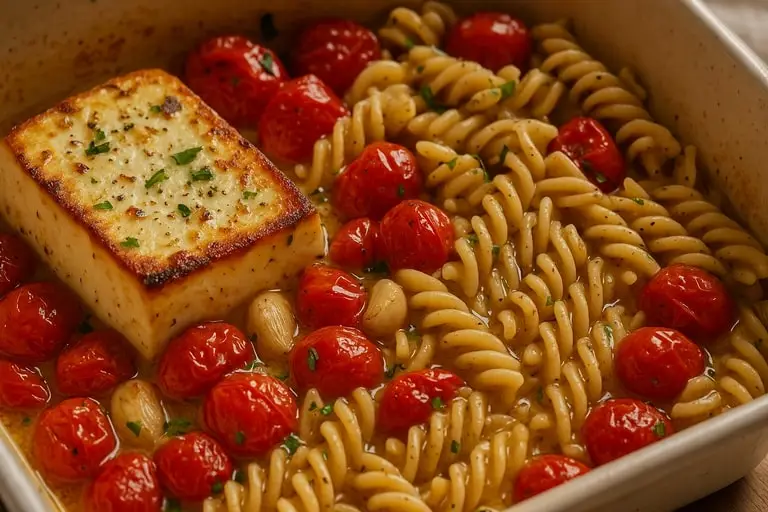
The preparation method reflects its appeal. A block of feta cheese is placed in a baking dish, surrounded by cherry or grape tomatoes and often garlic cloves, drizzled generously with olive oil, and seasoned with salt, pepper, and herbs. As the dish bakes, the tomatoes burst, releasing their juices, while the feta softens into creaminess. This transformation happens without elaborate technique, proving that complexity is not a requirement for excellence. Once removed from the oven, the mixture is stirred together to form a velvety sauce that binds seamlessly with hot pasta. The entire process, simple yet effective, embodies what makes baked feta pasta so enduringly popular.
The star of the dish is feta, a cheese known for its tangy, salty character. Baking mellows its sharpness while intensifying its creaminess, creating a base that feels rich without heaviness. The contrast between feta’s tang and tomatoes’ sweetness produces a balanced sauce that is greater than the sum of its parts. This interplay of flavors mirrors the very essence of comfort food: contrasting elements brought together to create harmony. Choosing high-quality feta, ideally made from sheep’s milk, enhances both texture and flavor, ensuring authenticity and depth.
Tomatoes, too, are critical. Roasting caramelizes their natural sugars, deepening sweetness while retaining acidity that cuts through the richness of feta. Their juices form the liquid base of the sauce, preventing heaviness while adding brightness. Whether cherry, grape, or heirloom, the choice of tomato influences the final profile, allowing customization that reflects season and preference. Garlic, softened through roasting, introduces sweetness and complexity, while olive oil enriches texture and mouthfeel. These supporting elements transform a simple idea into a multidimensional dish.
Pasta selection shapes the final result. Short shapes such as penne, rigatoni, or fusilli are often favored, as their ridges and curves capture sauce effectively. Cooking pasta al dente ensures it maintains structure when combined with feta and tomato mixture. Reserving some pasta water allows for adjustment of sauce consistency, creating silkiness that clings to every bite. The union of cheese, tomatoes, and pasta highlights how thoughtful choices elevate even the simplest recipes, turning them into memorable meals.
Seasoning distinguishes good baked feta pasta from exceptional versions. Herbs such as basil, oregano, or thyme complement Mediterranean flavors, while chili flakes introduce heat that balances creaminess. A drizzle of lemon juice at the end can brighten richness, ensuring that the dish remains vibrant rather than heavy. The ability to tailor seasoning to mood and preference proves the flexibility of baked feta pasta, making it a dish that evolves with each preparation.
Cultural context underscores its resonance. Though popularized online, baked feta pasta draws on Mediterranean traditions of combining cheese, tomatoes, and pasta. It represents a continuation of culinary practices that emphasize simplicity, freshness, and balance. Its viral moment highlighted not novelty but accessibility, demonstrating how traditional principles can find renewed life in contemporary kitchens. This cultural grounding ensures it transcends trend status, securing its place as a genuine comfort dish.
The sensory experience explains its emotional power. The aroma of roasting tomatoes and garlic fills the kitchen, creating anticipation long before serving. The sight of bubbling feta surrounded by caramelized tomatoes is visually striking, while the act of stirring the softened cheese into sauce is as satisfying as it is practical. The first bite delivers tang, sweetness, creaminess, and chew, engaging all senses simultaneously. This multisensory quality is what transforms baked feta pasta from recipe to ritual, reinforcing its status as comfort food.
Health adaptations maintain relevance in modern kitchens. Whole-grain or legume-based pastas increase fiber and protein, while reduced oil or lighter feta lowers richness without sacrificing satisfaction. Vegetables like spinach, zucchini, or peppers can be added to boost nutrition and variety. These adaptations ensure that baked feta pasta aligns with evolving dietary priorities, demonstrating its flexibility as both indulgent treat and balanced meal. Its ability to straddle indulgence and wellness underscores its longevity.
Practicality strengthens its appeal. With minimal ingredients and preparation time, baked feta pasta offers maximum return for effort. It requires little skill yet produces results that feel sophisticated, making it suitable for novice cooks and experienced chefs alike. Its efficiency makes it a reliable option for weeknights, while its beauty and flavor make it suitable for entertaining. Few dishes achieve such duality, confirming its role as both everyday staple and special occasion centerpiece.
Ultimately, baked feta pasta endures because it reflects what modern eaters value: simplicity, flavor, and authenticity. It proves that food need not be elaborate to be meaningful, that a handful of ingredients treated with care can create extraordinary results. To prepare baked feta pasta is to honor both tradition and innovation, to celebrate the pleasures of roasted flavors and creamy textures. It is a dish that satisfies the appetite, delights the senses, and reaffirms the timeless truth that comfort lies in harmony.
Feta Pasta Recipes Baked With Flavor
Feta pasta recipes highlight the adaptability of this dish, showing how the base idea can evolve into countless variations while preserving its essence. At their core, these recipes demonstrate the transformation of feta and tomatoes under heat, yet the possibilities for customization are endless. This adaptability explains their widespread embrace, as they accommodate diverse tastes, dietary needs, and culinary preferences without losing identity.
The process begins with feta itself, a cheese uniquely suited to baking. Its ability to soften without fully melting makes it ideal for sauce creation, maintaining structure while providing creaminess. Combined with olive oil and herbs, feta anchors recipes with tangy depth. Tomatoes, by contrast, provide acidity and sweetness that balance the cheese. This interplay defines feta pasta recipes, proving that harmony is achieved through contrast.
Baking serves as the transformative step. As heat penetrates, feta develops creaminess, tomatoes burst, and garlic softens. These changes create a sauce base that is then unified with hot pasta, producing a cohesive dish. Variations arise in how this base is adapted: some cooks add roasted vegetables, others incorporate proteins like chicken or shrimp, while still others enrich the sauce with cream or yogurt. Each choice reflects individual preference, proving that feta pasta recipes are endlessly flexible.
Herbs and spices further shape outcomes. Mediterranean herbs highlight traditional roots, while chili flakes, cumin, or smoked paprika introduce new dimensions. The choice of seasoning personalizes each recipe, ensuring that even frequent preparation never becomes repetitive. This flexibility mirrors the global appeal of feta pasta, inviting cooks from diverse culinary backgrounds to interpret it in ways that reflect local traditions.
Pasta choice also influences results. Short pasta holds sauce effectively, but long shapes such as spaghetti or linguine offer elegance. Gluten-free and alternative pastas expand inclusivity, ensuring feta pasta recipes remain accessible. Each variation demonstrates the universality of pasta as a canvas, adaptable yet dependable, always responsive to context.
Additions expand versatility. Roasted peppers, zucchini, or mushrooms deepen vegetable presence, while leafy greens like spinach add freshness. Proteins extend substance, transforming the dish from side to main. These adjustments not only increase nutrition but also enhance flavor complexity, proving that feta pasta recipes adapt readily to evolving dietary needs.
Cultural influences enrich interpretations. Mediterranean versions emphasize simplicity and authenticity, while fusion adaptations incorporate global spices or techniques. This diversity proves that baked feta pasta is more than a trend—it is a framework for creativity. Each version, though distinct, honors the original balance of creaminess, acidity, and comfort.
The sensory qualities of feta pasta recipes remain constant. Aromas of roasting ingredients, visuals of bubbling cheese and caramelized tomatoes, and the indulgent creaminess of the final sauce provide consistent appeal. Even as variations proliferate, these core experiences ensure continuity, reminding diners why the dish resonates universally.
Practical benefits reinforce their popularity. Few dishes achieve such impact with such little effort, making them ideal for modern households. Preparation requires minimal time and equipment, yet the results feel elevated. This practicality explains why feta pasta recipes have become staples, not only in home kitchens but also in culinary culture.
Ultimately, feta pasta recipes thrive because they balance simplicity with flexibility. They respect tradition while embracing innovation, allowing cooks to personalize without losing authenticity. This duality ensures that they remain both timeless and contemporary, proving that comfort food is not defined by rigidity but by its ability to adapt while preserving heart.
Baked Feta Pasta As A Comfort Dish
Baked feta pasta resonates deeply as a comfort dish, not only for its flavors but for the emotions it evokes. Comfort food is defined by warmth, familiarity, and satisfaction, and this dish delivers on all counts. Its creamy sauce, tender pasta, and roasted flavors combine into a meal that feels indulgent yet approachable, making it an ideal expression of comfort in modern kitchens.
The comfort begins with aroma. As feta and tomatoes bake, their fragrance fills the kitchen, signaling abundance and anticipation. This sensory prelude enhances the emotional connection, turning preparation into ritual. Comfort food thrives on such rituals, where anticipation itself provides reassurance and joy. Baked feta pasta embodies this quality perfectly.
Flavor balance further reinforces comfort. Creamy feta, sweet tomatoes, and savory garlic harmonize into a profile that is both rich and refreshing. Unlike overly heavy dishes, baked feta pasta satisfies without overwhelming, striking a balance that feels indulgent yet light enough for regular enjoyment. This moderation aligns with comfort food’s essence: satisfaction without excess.
Texture contributes equally. The velvety sauce clings to pasta, while roasted tomatoes provide bursts of juiciness. Optional toppings, such as herbs or toasted breadcrumbs, introduce contrast, ensuring each bite feels layered. This interplay of textures mirrors the complexity of comfort itself, where richness is balanced by variety.
Cultural symbolism enhances its role. Though its viral rise was recent, baked feta pasta draws from Mediterranean traditions of roasted vegetables and cheese. This grounding in heritage adds authenticity, linking comfort not only to flavor but also to cultural continuity. It demonstrates how comfort food evolves while honoring roots.
Practicality supports its comfort identity. Requiring few ingredients and little preparation, it offers reassurance in its reliability. For busy households, baked feta pasta provides a comforting solution that does not demand labor yet delivers satisfaction. Its simplicity ensures accessibility, a hallmark of enduring comfort foods.
Leftovers extend comfort further. Reheated baked feta pasta retains creaminess, often deepening in flavor as it rests. This continuity makes it a dish that comforts not only at the first serving but across meals, proving its practicality and generosity. Comfort lies in consistency, and baked feta pasta provides exactly that.
Health-conscious variations demonstrate its adaptability. Whole-grain pastas, added vegetables, or lighter cheeses allow the dish to align with wellness goals without losing indulgence. This balance affirms that comfort food can evolve with contemporary needs, proving that it is defined by intention rather than excess. Baked feta pasta thrives as both a treat and a balanced meal.
Serving reinforces its comfort symbolism. A steaming platter of pasta, vibrant with roasted tomatoes and herbs, conveys abundance and care. Shared at family tables or enjoyed quietly, it provides reassurance in its generosity. This act of sharing food highlights why baked feta pasta resonates as a dish of comfort, reinforcing bonds while nourishing body and spirit.
Ultimately, baked feta pasta endures as a comfort dish because it combines flavor, ease, and meaning. It demonstrates that food can be simultaneously simple and profound, practical and indulgent. Each bite delivers not only nourishment but also reassurance, embodying the essence of comfort food in a modern context. To cook and eat baked feta pasta is to participate in a tradition that values care, balance, and satisfaction, ensuring its lasting place in kitchens and hearts.
Baked feta pasta is one of those dishes that proves how a simple idea can capture the imagination of the world. At its heart, it combines a block of feta cheese, cherry tomatoes, olive oil, and pasta into a meal that feels indulgent yet approachable. The recipe became a viral sensation, spreading across social media platforms as people marveled at its ease and flavor. Yet beyond the trend lies a dish that embodies timeless principles: simplicity, balance, and the joy of transforming a few ingredients into something extraordinary. In many ways, baked feta pasta represents not just a recipe but a philosophy of cooking that values both convenience and creativity.
The origins of the dish can be traced to Finland, where food bloggers and home cooks first began experimenting with baking feta and tomatoes together. The combination was hardly new — Mediterranean cuisines have long paired tangy cheeses with roasted vegetables — but the presentation and method resonated with modern cooks. The viral spread of the recipe was accelerated by the pandemic, when home cooking and social media converged. What began as a regional curiosity quickly became a global phenomenon, appearing in kitchens from New York to Tokyo. This journey from niche creation to universal staple underscores the power of food to connect people through shared experience.
At the center of baked feta pasta is the feta itself, a cheese with a long and storied history. Originating in Greece, feta is traditionally made from sheep’s milk or a blend of sheep and goat milk, offering tang, saltiness, and creaminess in equal measure. When baked, feta softens into a spreadable consistency, its sharpness mellowing into richness. This transformation is the key to the dish’s appeal: the cheese becomes both sauce and seasoning, binding the pasta together while infusing it with bold character. Its ability to change texture and flavor under heat is what makes baked feta pasta both unique and irresistible.
Tomatoes provide the perfect counterpoint to the cheese. When roasted, cherry tomatoes burst with sweetness and acidity, balancing the saltiness of feta. Their juices mix with olive oil to create a sauce that feels luxurious despite its simplicity. The combination of softened feta and caramelized tomatoes creates a depth of flavor that belies the minimal ingredient list. Garlic, herbs, or chili flakes can be added to enhance complexity, but the essence of the dish lies in this fundamental pairing. The harmony between tangy cheese and sweet tomatoes is what gives baked feta pasta its timeless allure.
Pasta, the third pillar of the dish, provides substance and comfort. Short shapes like penne, fusilli, or rigatoni are often chosen because their ridges and curves hold the creamy sauce well. The pasta absorbs the flavors of cheese and tomatoes, creating unity in each bite. While traditional wheat pasta is the most common choice, gluten-free, whole grain, or even legume-based pastas adapt seamlessly, ensuring inclusivity. The pasta transforms the baked feta and tomatoes from side dish into main course, grounding the meal in the familiar comfort of carbs while allowing the other ingredients to shine.
The preparation process is remarkably simple, which explains much of the dish’s popularity. A block of feta is placed in the center of a baking dish, surrounded by cherry tomatoes and drizzled generously with olive oil. Seasonings such as garlic, oregano, or chili flakes can be scattered over the top. The dish is baked until the tomatoes burst and the feta softens, after which cooked pasta is stirred directly into the pan. The result is a creamy, savory, tangy sauce that coats every piece of pasta. The method is foolproof, accessible to beginners yet satisfying for experienced cooks.
Culturally, baked feta pasta represents the blending of tradition and modernity. It draws on Mediterranean principles of simplicity and fresh ingredients while aligning with contemporary demands for speed and convenience. Its viral spread reflects the way social media now shapes culinary trends, turning recipes into shared cultural moments. More importantly, it demonstrates that people crave not only flavor but also connection — the act of cooking and sharing a dish that millions of others are also enjoying creates a sense of unity. In this way, baked feta pasta became more than food; it became a global experience.
The sensory appeal of the dish explains its staying power. The sight of bubbling tomatoes and golden cheese excites anticipation. The aroma of roasted garlic, herbs, and tangy feta fills the air, signaling comfort and indulgence. The flavor balances saltiness, acidity, and creaminess, offering complexity from minimal effort. The texture, creamy sauce clinging to al dente pasta, delivers satisfaction in every bite. Eating baked feta pasta is a multi-sensory experience that proves simplicity can yield richness, reaffirming the idea that great food does not require long ingredient lists or elaborate techniques.
Nutritionally, baked feta pasta provides balance when approached thoughtfully. Feta contributes protein and calcium, while tomatoes bring antioxidants like lycopene and vitamin C. Olive oil adds healthy fats, and pasta provides carbohydrates for energy. The dish can be enriched with vegetables like spinach, zucchini, or bell peppers, increasing fiber and vitamins. Lighter versions use whole grain or lentil pasta, while plant-based cheeses adapt it for vegan diets. These variations ensure the dish remains relevant to diverse lifestyles, proving that indulgence and health can coexist in a single recipe.
Economically, the recipe demonstrates practicality. Its core ingredients — feta, tomatoes, olive oil, and pasta — are widely available and affordable. Yet the result feels luxurious, offering flavors that rival more elaborate dishes. The scalability of the recipe makes it ideal for solo meals or large gatherings, while leftovers reheat well, often tasting even better as flavors meld. This combination of affordability, simplicity, and abundance explains why baked feta pasta has become such a fixture in modern kitchens. It represents a philosophy of making more with less.
Modern variations have expanded the possibilities of baked feta pasta. Some cooks add proteins like chicken, shrimp, or chickpeas, turning the dish into a more substantial meal. Others experiment with different cheeses, such as goat cheese or ricotta, for alternate flavor profiles. Herbs like basil, thyme, or mint introduce freshness, while spices such as smoked paprika or za’atar provide global flair. Social media continues to fuel creativity, inspiring endless versions while preserving the essence: cheese, tomatoes, and pasta in harmony. These innovations prove that baked feta pasta is not a passing fad but a flexible format with enduring appeal.
Ultimately, baked feta pasta endures because it embodies what modern food aspires to be: simple, flavorful, adaptable, and communal. It proves that a handful of ingredients, treated with care, can produce meals that feel both indulgent and meaningful. Its viral popularity may have sparked its fame, but its staying power comes from its balance of tradition and innovation. In every creamy, tangy bite lies proof that cooking can be joyful, effortless, and deeply satisfying. Baked feta pasta is timeless not because it resists change but because it invites it, ensuring its place in kitchens for generations to come.