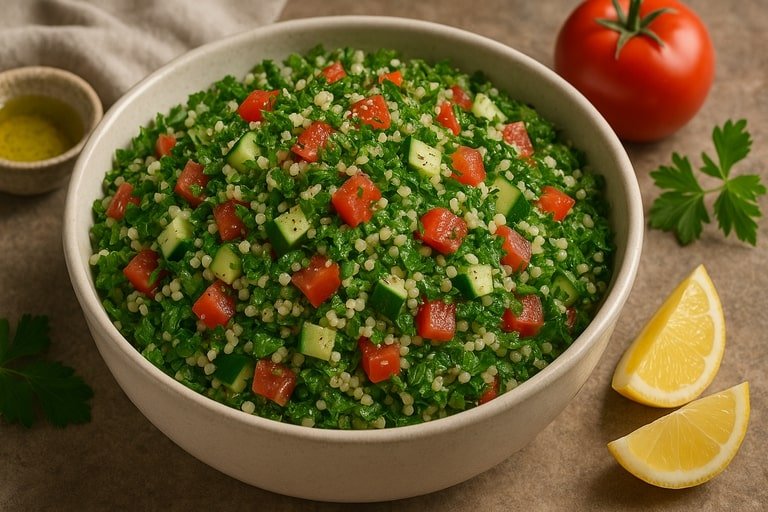
Tabbouleh recipe stands as a cornerstone of Levantine cuisine, embodying freshness, vibrancy, and balance in every bite. At its heart, the dish is a celebration of parsley—bright, herbal, and cleansing—blended with bulgur wheat, ripe tomatoes, crisp cucumbers, onions, lemon juice, and olive oil. The combination produces a salad that is light yet satisfying, nutritious yet indulgent, rustic yet refined. More than a side dish, tabbouleh represents the philosophy of letting natural ingredients shine through careful preparation and balance.
The origins of tabbouleh recipes are deeply rooted in Middle Eastern culinary traditions. In countries like Lebanon and Syria, it has long been considered not just a dish but a cultural emblem, often enjoyed during family gatherings and communal meals. The recipe captures the spirit of hospitality, serving as both nourishment and a gesture of welcome. Preparing and sharing tabbouleh connects cook and guest to a lineage of flavors that stretches across centuries.
One of the defining qualities of tabbouleh is its respect for herbs. Unlike many salads that treat herbs as garnish, here parsley takes center stage, offering freshness and a vibrant green base. Its sharpness is balanced by the sweet acidity of tomatoes, the subtle bite of onion, and the grounding texture of bulgur. Lemon juice and olive oil unify these elements, transforming them into a cohesive whole that is greater than the sum of its parts.
Nutrition underscores the enduring popularity of tabbouleh recipes. Parsley is rich in vitamins A, C, and K, while bulgur provides fiber and slow-releasing carbohydrates. Tomatoes and cucumbers contribute hydration and antioxidants, while olive oil delivers healthy fats. Together, these ingredients form a dish that is both nourishing and energizing, aligning with contemporary ideas of balanced, plant-forward diets.
Texture is another dimension of its appeal. The chewiness of bulgur contrasts with the crispness of cucumber and the juiciness of tomatoes, while parsley threads freshness through each bite. The result is a salad that feels complete and layered, engaging the palate with variety rather than monotony. This interplay ensures that tabbouleh is satisfying without heaviness.
Cultural symbolism enriches the dish’s role. Tabbouleh is often served at celebrations, on mezze platters alongside hummus, baba ghanoush, and pita bread, forming part of a broader tradition of shared dining. It embodies conviviality, reinforcing the idea that food is not only sustenance but also community and memory.
Home cooks preparing tabbouleh recipes engage in a ritual that values patience and precision. Parsley must be finely chopped to release its fragrance without bruising, bulgur carefully soaked to maintain texture, and lemon juice balanced to avoid overpowering acidity. These small steps demand attention, reminding us that respect for ingredients is central to culinary success.
Adaptability is another reason for tabbouleh’s global reach. While traditional versions emphasize parsley, modern adaptations may increase bulgur for heartiness or add mint for fragrance. Some cooks introduce quinoa as a gluten-free substitute, while others enhance flavor with spices. These variations reflect how the dish can evolve while maintaining its essence.
The sensory experience of tabbouleh preparation is part of its charm. The fragrance of freshly chopped herbs, the glisten of olive oil coating vegetables, and the brightness of lemon combine to create anticipation. Preparing it becomes as enjoyable as eating, an act that engages sight, smell, touch, and taste in equal measure.
Presentation enhances its impact. A bowl of tabbouleh, with its vivid greens and reds, immediately draws attention, embodying freshness and vibrancy. Garnishes of lemon wedges or sprigs of mint emphasize natural beauty, turning simplicity into elegance. The dish’s visual appeal mirrors its flavor, ensuring it captivates both eye and palate.
Ultimately, tabbouleh recipe endures because it offers a union of tradition, health, and artistry. It elevates humble ingredients into something remarkable, celebrates herbs as central rather than secondary, and proves that food can nourish both body and spirit through simplicity and care.
Tabbouleh Recipes Fresh Vibrant Heritage
Tabbouleh recipes are more than sets of instructions; they are cultural narratives carried across borders, kitchens, and generations. Each recipe represents a unique interpretation of a shared tradition, shaped by family practices, regional influences, and personal creativity. This dynamic ensures that while tabbouleh remains instantly recognizable, no two versions are entirely the same.
The essence of tabbouleh recipes lies in their emphasis on balance. Too much bulgur can weigh the dish down, while too little parsley robs it of freshness. The interplay of herbs, grains, vegetables, and dressing must remain harmonious, with each element supporting rather than overshadowing the others. This delicate calibration is what elevates the dish from salad to cultural symbol.
Regional variations highlight diversity. In Lebanon, parsley dominates, creating a green-forward dish, while in other areas, bulgur plays a larger role. Some households favor sharper lemon notes, while others soften acidity with extra olive oil. These differences reflect not contradiction but richness, proving that tradition thrives through variation rather than uniformity.
Nutritional benefits continue to underpin its appeal. Tabbouleh recipes align seamlessly with contemporary dietary priorities: plant-based, rich in vitamins and minerals, hydrating, and low in calories while high in satisfaction. This explains why it has not only persisted within its original context but also been embraced worldwide as a health-conscious option.
Texture forms part of its artistry. Bulgur absorbs flavors while providing gentle chew, vegetables contribute crunch and juiciness, and parsley threads brightness throughout. Lemon juice and olive oil act as connectors, unifying diversity into coherence. This symphony of textures and tastes ensures that each spoonful feels dynamic, never monotonous.
Preparation of tabbouleh recipes reinforces culinary mindfulness. Finely chopping herbs, dicing vegetables evenly, and adjusting seasoning require patience and care. These tasks may appear simple but embody skill, reminding us that mastery is not always about complexity but about respect for detail.
Tabbouleh also carries symbolic weight in gatherings. As part of mezze, it sits among dishes that emphasize sharing, conversation, and hospitality. Its freshness balances richer components like grilled meats or fried appetizers, creating harmony on the table. This integrative role reflects its cultural importance beyond nutrition.
Modern adaptations illustrate how tabbouleh can evolve while retaining its essence. Substituting quinoa or couscous accommodates different dietary needs, while additions like avocado or pomegranate seeds introduce new dimensions. These innovations prove its capacity for reinvention, allowing it to remain contemporary without losing identity.
The sensory dimension enriches its experience. The act of squeezing lemon, the scent of parsley, the gloss of olive oil—all contribute to anticipation. Tabbouleh appeals not just to taste but to memory and feeling, embodying the idea that food should engage the senses fully.
Serving tabbouleh recipes also demonstrates artistry. Presented in shallow bowls or platters, garnished with herbs or lemon slices, it embodies elegance despite simplicity. Its visual vibrancy complements its flavor, ensuring that it captivates even before the first bite.
Ultimately, tabbouleh recipes thrive because they honor tradition while welcoming adaptation. They remind us that culinary heritage is not static but living, sustained by the care of cooks who respect foundations while embracing creativity. This is why tabbouleh endures as both classic and contemporary.
Tabbouleh Recipe Homemade Herbal Delight
Tabbouleh recipe homemade versions capture the essence of intimacy in cooking, where fresh ingredients meet personal expression. Unlike restaurant preparations, which may prioritize speed or presentation, homemade tabbouleh reflects the cook’s individual choices, memories, and creativity. It transforms a cultural classic into something uniquely personal, reinforcing food’s role as both nourishment and identity.
At home, the process begins with ingredient selection. Fresh parsley must be vibrant and aromatic, tomatoes ripe and juicy, cucumbers firm, and bulgur of good quality. The attention given at this stage shapes outcome, reminding us that homemade cooking begins long before the chopping board.
Technique matters just as much. Herbs must be chopped finely to release fragrance without bruising, bulgur soaked to the right tenderness, and dressing balanced with care. The ratio of lemon to oil, salt to herbs, determines harmony, making each version an expression of taste and instinct. Homemade tabbouleh thus becomes a lesson in precision disguised as simplicity.
Nostalgia enriches its role. Many families hold cherished recipes passed down across generations, each version slightly different, reflecting both tradition and adaptation. Preparing tabbouleh at home can recall gardens, markets, or shared meals, embedding memory in each bite. This emotional dimension adds depth to its already rich profile.
Homemade versions also highlight adaptability. Some cooks add mint for fragrance, others adjust bulgur levels for heartiness, and still others use alternative grains to suit dietary needs. These variations reflect the freedom inherent in home cooking, proving that tradition thrives when personalized.
Nutrition reinforces its everyday relevance. Tabbouleh’s ingredients provide vitamins, fiber, hydration, and healthy fats, making it a dish that nourishes without heaviness. For households seeking both wellness and flavor, it becomes a reliable companion, aligning with contemporary dietary values.
The sensory process is part of its charm. The sight of colorful vegetables, the aroma of parsley, and the brightness of lemon juice create anticipation. Cooking becomes ritual, engaging the senses in a way that connects preparation with enjoyment.
Homemade tabbouleh also emphasizes practicality. It can be prepared in generous batches, stored, and enjoyed over several days, often tasting better as flavors meld. Its versatility allows it to serve as side dish, light main, or companion to grilled foods, ensuring its place in household routines.
Presentation at home reflects care. A simple garnish of mint, a drizzle of olive oil, or a squeeze of lemon can elevate the dish, proving that elegance can emerge from simplicity. Shared with family or guests, it reinforces hospitality while offering nourishment.
Experimentation adds freshness. Incorporating seasonal vegetables, adjusting herbs, or pairing with unexpected accompaniments ensures that homemade tabbouleh remains dynamic. Each preparation becomes both an homage to tradition and a reflection of the cook’s creativity.
Ultimately, tabbouleh recipe homemade versions endure because they embody the values of care, simplicity, and adaptability. They prove that even the most iconic dishes thrive when made personal, nourishing not only the body but also memory, community, and connection.
Among the many celebrated dishes of Middle Eastern cuisine, tabbouleh holds a special place as a vibrant salad that is as nourishing as it is refreshing. Built around parsley, bulgur, tomatoes, and lemon, it has gained worldwide admiration for its clean flavors and health benefits.
The enduring popularity of the tabbouleh recipe comes from its ability to elevate simple ingredients into a dish that feels lively, balanced, and deeply satisfying. Whether served as a side, appetizer, or centerpiece of a mezze spread, it embodies the philosophy of food that delights the palate while supporting well-being.
The foundation of the dish lies in parsley, an herb that transforms from garnish to star ingredient. Finely chopped until almost fluffy, parsley creates the vibrant green base that defines the salad’s look and flavor. Its freshness contrasts with the sweetness of tomatoes, the tang of lemon, and the subtle nuttiness of bulgur. The tabbouleh recipe teaches us that herbs can be more than accents; they can carry a dish with brightness and character, reminding us that flavor often begins in the garden.
Bulgur wheat provides the body that anchors the salad. Soaked or lightly cooked, it adds a tender bite without overwhelming the herbs and vegetables. Unlike heavier grains, bulgur complements rather than dominates, making the dish light yet filling. In some regional variations, couscous or quinoa may be substituted, reflecting modern adaptations. Still, the traditional tabbouleh recipe emphasizes bulgur for authenticity, showing how even modest grains can enrich a dish with texture and nutrition.
Tomatoes bring balance and vibrancy. Their juiciness adds freshness and natural acidity, which works in harmony with lemon juice to brighten the salad. Some cooks peel and seed tomatoes to keep the mixture from becoming watery, while others embrace the juices as part of the dressing. Cucumbers are sometimes included in modern versions, adding crunch, though purists prefer the traditional quartet of parsley, bulgur, tomatoes, and mint. The tabbouleh recipe thrives because it welcomes both fidelity to tradition and flexibility for innovation.
Mint is another essential herb that elevates the dish. Its cool, slightly sweet flavor adds dimension to parsley’s earthiness, creating a refreshing complexity. Combined with olive oil and lemon juice, the dressing ties all elements together into a cohesive whole. The key lies in balance: too much mint can overpower, too little and its freshness is lost. A well-executed tabbouleh recipe is a study in proportion, where every ingredient enhances rather than overshadows the others.
Cultural roots add depth to the dish’s identity. Originating in the Levant, tabbouleh has long been a staple of Lebanese and Syrian kitchens. It reflects the regional reliance on fresh produce, herbs, and grains, and it is often enjoyed as part of a mezze platter alongside hummus, baba ghanoush, and pita bread. For families across the Middle East, the tabbouleh recipe is more than food; it is tradition, memory, and hospitality, symbolizing gatherings and the sharing of abundance.
Nutrition is central to its global appeal. High in fiber, vitamins, and antioxidants, tabbouleh is celebrated as a superfood salad that aligns perfectly with modern wellness trends. It is low in calories yet rich in nutrients, offering a dish that supports health without sacrificing pleasure. The tabbouleh recipe embodies the Mediterranean diet’s emphasis on whole foods and plant-based ingredients, proving that the healthiest meals are often the most flavorful.
The global journey of tabbouleh has introduced countless adaptations. In Western kitchens, chefs experiment with quinoa, kale, or even cauliflower rice as substitutes, making the dish gluten-free or tailored to specific diets. These innovations expand accessibility while showcasing its adaptability. Despite variations, the essence of the tabbouleh recipe remains the same: fresh herbs, vibrant vegetables, wholesome grains, and a citrusy dressing that ties everything together. Its resilience lies in this balance between authenticity and reinvention.
Restaurants worldwide feature tabbouleh as a refreshing option on menus ranging from Mediterranean bistros to health-focused cafés. It may appear as a side dish to grilled meats, a topping for grain bowls, or a stand-alone salad. Fine dining chefs elevate the presentation with microgreens or heirloom tomatoes, while street vendors keep it rustic and hearty. This diversity of contexts highlights the universality of the tabbouleh recipe, proving that a simple salad can bridge culinary worlds with ease.
The digital era has amplified its presence, making tabbouleh a favorite of food bloggers and social media influencers. Its vibrant colors photograph beautifully, encouraging home cooks to try it themselves. Online tutorials walk beginners through the process of chopping herbs finely, soaking bulgur correctly, and balancing dressing proportions. The tabbouleh recipe thrives in this digital space because it is both approachable for novices and endlessly adaptable for seasoned cooks seeking creative twists.
Emotional connection further strengthens its legacy. For many, tabbouleh recalls family gatherings, holiday feasts, or meals prepared by loved ones. Its aroma of parsley and lemon evokes nostalgia, while its freshness connects people to seasons and gardens. The act of preparing and sharing the dish carries meaning that transcends flavor. The tabbouleh recipe endures because it nourishes not only the body but also the spirit, reminding us of the joy of food rooted in tradition and shared with care.
Ultimately, tabbouleh stands as more than a salad — it is a philosophy of cooking that values freshness, balance, and respect for ingredients. It is light yet satisfying, simple yet profound, traditional yet adaptable. Each bowl tells a story of culture, health, and hospitality. The tabbouleh recipe continues to flourish across the globe because it captures exactly what people seek in food: nourishment, connection, and timeless flavor. From Levantine kitchens to global tables, its journey proves that the simplest dishes often carry the greatest meaning.