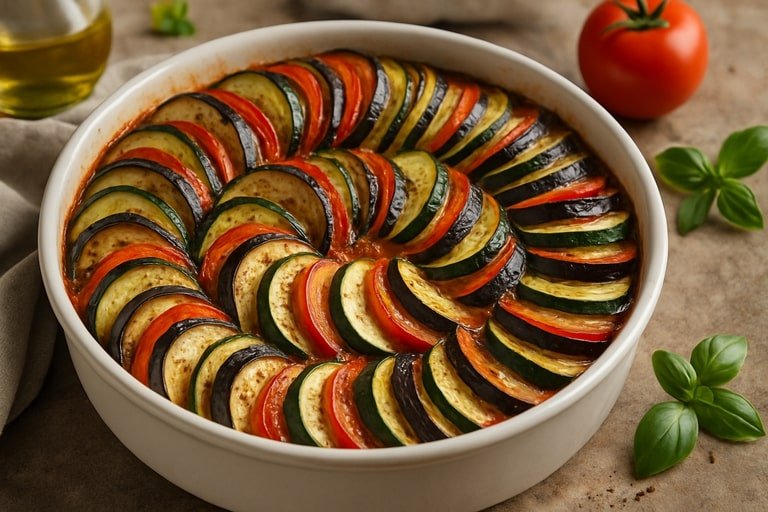
Ratatouille recipe stands as one of the most iconic demonstrations of how humble vegetables, when treated with care, can be elevated into a dish of remarkable beauty and flavor. Originating from Provence in southern France, ratatouille has long embodied the spirit of rustic cooking, where fresh produce from local fields and gardens is transformed into nourishment that satisfies both body and soul. At its heart, the dish unites eggplant, zucchini, bell peppers, onions, and tomatoes into a harmonious medley, simmered gently with olive oil, garlic, and herbs. The result is both simple and sophisticated, proof that tradition and artistry need not be at odds.
The power of ratatouille recipes lies in the respect for ingredients. Each vegetable contributes its character: eggplant brings richness, zucchini adds mild sweetness, peppers contribute brightness, onions ground the flavors, and tomatoes bind everything into a cohesive whole. Cooking them slowly allows flavors to deepen and merge without losing identity, creating a dish where every bite reveals both individuality and unity. This balance is why ratatouille has endured as both comfort food and culinary statement.
Technique plays a defining role in the success of any ratatouille recipe. Some traditions emphasize layering vegetables in concentric patterns before baking, creating an elegant presentation that highlights visual beauty as much as flavor. Others prefer the rustic approach of stewing vegetables together, prioritizing texture and depth over symmetry. Both methods speak to the flexibility of the dish, allowing it to suit both casual family dinners and fine dining experiences.
Nutrition reinforces its appeal. Ratatouille is naturally plant-based, low in fat, and packed with vitamins, minerals, and antioxidants. The vegetables provide fiber, hydration, and essential nutrients, making the dish both wholesome and filling without heaviness. This quality aligns it with contemporary values of health-conscious eating, even though it has been cherished for centuries.
Ratatouille recipes also highlight the significance of seasonality. In Provence, cooks would prepare it during the height of summer when gardens overflowed with produce. Using vegetables at their peak ensures maximum flavor, reflecting the principle that great cooking begins with great ingredients. This connection to nature and rhythm of seasons is part of what makes ratatouille timeless.
The dish also serves as a cultural emblem. In France, it is associated with rural kitchens and communal meals, embodying hospitality and shared sustenance. Its appearance in popular culture, most famously in cinema, has further cemented its place as a symbol of artistry, resilience, and joy in cooking. Ratatouille thus lives not only on plates but also in imagination, a rare achievement for any recipe.
For home cooks, preparing ratatouille is an exercise in patience and mindfulness. Vegetables must be cut with care, oil measured with restraint, and heat monitored to avoid overcooking. These steps, while simple, demand attention, reminding cooks that mastery often comes from respect rather than complexity. In this way, ratatouille becomes more than food—it becomes a practice of honoring ingredients.
Experimentation thrives within its framework. Some cooks add olives or capers for briny depth, others introduce herbs like thyme or basil to enhance fragrance. Modern interpretations may feature roasted vegetables for smoky notes or unconventional arrangements to impress visually. Each variation pays homage to tradition while allowing personal expression, proving ratatouille’s enduring versatility.
Texture adds to its allure. The softness of eggplant contrasts with the firmness of zucchini, while peppers and onions provide subtle crunch. Tomatoes melt into sauce, coating everything with savory richness. This interplay of consistencies creates complexity that engages the palate, ensuring that each bite feels dynamic rather than monotonous.
Ratatouille also thrives as a companion. It pairs beautifully with crusty bread, roasted meats, fish, or grains, serving either as a centerpiece or an accompaniment. This flexibility makes it equally at home in simple suppers and elaborate feasts, further underscoring its adaptability and universality.
Ultimately, ratatouille recipe endures because it celebrates simplicity elevated by care. It honors vegetables not as mere sides but as stars in their own right, embodying a philosophy that great cooking arises from respect, patience, and creativity. In every sense, ratatouille remains both rustic and refined, a dish that unites history, culture, and nourishment.
Ratatouille Recipes Colorful Culinary Heritage
Ratatouille recipes reflect a heritage that transcends geography while remaining rooted in Provence. Each recipe tells a slightly different story, shaped by the cook’s choices and cultural context, yet all converge on the principle of honoring vegetables through patient, thoughtful preparation. This universality explains why ratatouille has become a global favorite, cherished as both tradition and innovation.
At their core, ratatouille recipes emphasize balance. No single vegetable dominates; rather, each supports the others in creating harmony. This philosophy mirrors broader lessons about community and cooperation, where strength lies not in isolation but in unity. Cooking ratatouille thus becomes symbolic as well as practical, reinforcing values that extend beyond the kitchen.
Presentation varies widely across recipes. Some cooks carefully arrange vegetables in spirals, producing visually striking dishes that resemble edible art. Others favor stews that forgo symmetry in favor of depth and rustic authenticity. Both approaches have legitimacy, and both demonstrate how form can shape perception while leaving flavor intact.
Nutrition continues to define ratatouille’s relevance. Its vegetable composition aligns with modern plant-forward diets, offering satiety without excess. Vitamins A and C from peppers, potassium from zucchini, and antioxidants from tomatoes contribute to wellness, making the dish as nourishing as it is delicious. This duality ensures its endurance in both traditional and contemporary contexts.
Cultural interpretations expand its reach. In Mediterranean kitchens, ratatouille is served with grains like couscous; in European households, it may accompany roasts; in modern plant-based menus, it often stands alone as a complete meal. These variations reveal how ratatouille integrates seamlessly into diverse cuisines while retaining identity.
Ratatouille recipes also encourage resourcefulness. Cooks can adapt based on what is available, substituting vegetables according to season or pantry stock. This flexibility reflects the origins of the dish, when resourceful cooks made the most of abundant summer harvests. Today, it continues to embody sustainability and mindfulness.
Texture plays a vital role in its appeal. Some recipes emphasize softness, where vegetables meld into a silky stew, while others preserve distinct textures for contrast. The choice reflects not only preference but also intention: comfort versus complexity, rustic heartiness versus refined elegance.
Modern chefs have reimagined ratatouille to suit contemporary dining. Some deconstruct it into separate elements, others elevate it with haute cuisine techniques, and still others present minimalist versions that celebrate purity of flavor. These innovations prove that even centuries-old dishes can remain relevant through reinvention.
Memory contributes significantly to its place in culture. For many, ratatouille recalls family gardens, summer markets, or shared meals. Preparing it at home becomes an act of continuity, connecting present cooking with ancestral practices. This emotional resonance adds dimension to its enduring appeal.
Serving ratatouille also reflects artistry. Garnishes of fresh herbs, drizzles of olive oil, or accompaniments of wine turn a rustic dish into a refined experience. Its adaptability ensures it can appear in humble kitchens and on fine-dining menus with equal legitimacy, a rare distinction for any recipe.
Ultimately, ratatouille recipes endure because they combine flavor, nourishment, artistry, and symbolism. They represent the best of rustic traditions while accommodating modern creativity, proving that vegetables, when respected and celebrated, can anchor some of the most memorable meals.
Ratatouille Recipe Homemade Comfort and Flavor
Ratatouille recipe homemade versions embody the intimacy of cooking, where fresh produce meets personal expression. Preparing it at home transforms a traditional French dish into something uniquely personal, shaped by the cook’s hands, preferences, and context. Unlike restaurant presentations, which often pursue polish, homemade ratatouille celebrates authenticity, imperfection, and care.
The process begins with choosing vegetables. Garden-fresh zucchini, firm eggplant, vibrant peppers, ripe tomatoes, and aromatic onions each contribute not only flavor but also character. Selecting them by hand reflects the mindfulness inherent in homemade cooking, reinforcing the connection between cook, ingredient, and final dish.
Technique at home may vary. Some cooks embrace the rustic method of stewing everything together, while others prefer arranging slices neatly before baking. Both methods are equally valid, demonstrating that homemade cooking allows freedom without strict adherence to formality. This flexibility reflects the larger truth that cooking at home prioritizes nourishment and creativity over uniformity.
Homemade ratatouille also highlights seasonality. Using vegetables at their peak ensures flavor intensity and nutritional value. In summer, markets and gardens offer abundance, allowing cooks to create vibrant dishes that mirror the richness of the season. Preparing ratatouille in this way connects the meal directly to nature’s cycles.
The sensory experience enriches homemade preparation. The scent of garlic sizzling in olive oil, the sight of colorful vegetables layered or stewed, and the sound of gentle simmering all create anticipation. These details transform cooking from task into ritual, engaging multiple senses and infusing the dish with meaning.
Homemade versions also encourage experimentation. Adding fresh basil for fragrance, chili for heat, or balsamic vinegar for acidity personalizes the dish, ensuring that each preparation feels distinct. These touches reflect the creativity of the cook while maintaining the recognizable spirit of ratatouille.
Nutrition underscores its everyday appeal. A homemade ratatouille is naturally rich in fiber, vitamins, and antioxidants, aligning with both traditional wellness and modern dietary goals. The use of olive oil and herbs adds healthy fats and flavor, reinforcing the dish’s role as both satisfying and beneficial.
Practicality strengthens its place in households. Ratatouille can be made in generous portions, stored, and reheated, often tasting better after resting as flavors meld. It complements a wide range of accompaniments, making it a reliable choice for both everyday meals and gatherings.
Memory enriches its homemade dimension. Many families pass down recipes, adapting them over generations. Cooking ratatouille at home can evoke gardens tended by grandparents, markets visited as children, or shared meals that defined seasons. This emotional layer turns a recipe into a vessel of continuity.
Serving homemade ratatouille underscores its versatility. It may appear alongside roasted meats, as a topping for grains, or simply with bread and wine. Each context highlights different qualities, from hearty nourishment to refined elegance, proving that its place on the table is never static.
Ultimately, ratatouille recipe homemade versions endure because they celebrate both tradition and individuality. They demonstrate that comfort and creativity can coexist, that vegetables deserve reverence, and that food prepared with care nourishes beyond the body, feeding memory and connection as well.
Few dishes capture the essence of rustic French cooking quite like ratatouille. With its roots in Provence, this medley of simmered vegetables has become a symbol of both home-style comfort and refined culinary artistry. The enduring appeal of the ratatouille recipe lies in its balance of simplicity and elegance, transforming humble ingredients into a dish worthy of both family tables and fine dining restaurants. It is proof that when handled with care, vegetables can shine as brightly as any meat or seafood centerpiece.
At the heart of the dish is its reliance on seasonal produce. Eggplant, zucchini, bell peppers, onions, and tomatoes form the foundation, each contributing unique textures and flavors. Olive oil, garlic, and fresh herbs such as thyme and basil weave the vegetables into a harmonious whole. The genius of the ratatouille recipe is not in complexity but in coaxing out the natural sweetness and depth of each ingredient, allowing them to retain individuality while working together in perfect balance.
The preparation of ratatouille varies by tradition and interpretation. Some cooks prefer a rustic stew, where the vegetables are cut into chunks and simmered until tender. Others favor a more refined presentation, layering thin slices of zucchini, eggplant, and tomato into an artistic spiral, as popularized in contemporary cuisine and cinema. Both approaches showcase the versatility of the ratatouille recipe, proving that the dish can be as casual or as elegant as the occasion demands.
Cooking technique plays a crucial role. Rather than throwing all ingredients into a pot at once, traditional recipes emphasize cooking vegetables separately before combining them. This prevents overcooking, preserves textures, and ensures that each flavor shines through. Tomatoes simmer into a base that enriches the entire dish, while eggplant softens into creaminess and zucchini contributes lightness. The ratatouille recipe teaches patience and respect for ingredients, highlighting the artistry of layering flavors gradually.
Nutritional value adds another layer to its appeal. Packed with fiber, vitamins, and antioxidants, ratatouille is both nourishing and satisfying. It aligns perfectly with Mediterranean dietary principles, which emphasize vegetables, olive oil, and fresh herbs. For health-conscious cooks, the dish offers an abundance of flavor without heaviness, making it a perfect choice for wellness-oriented meals. The ratatouille recipe demonstrates how food can delight the palate while supporting balance and vitality.
Cultural symbolism enriches its reputation. Ratatouille is more than a vegetable dish; it embodies Provençal identity, where fields of sun-ripened produce meet centuries of culinary tradition. For locals, it is a taste of heritage and seasonality. For global audiences, it represents the romance of French cooking, offering a way to bring a piece of the Mediterranean lifestyle into everyday kitchens. The ratatouille recipe connects people to culture, geography, and the timeless appeal of regional cuisine.
Adaptations across the world reveal its flexibility. In Italy, similar preparations appear as caponata or ciambotta. In Spain, pisto features peppers and zucchini simmered with tomatoes. Modern chefs create deconstructed versions, pairing roasted vegetables with emulsified sauces, or use ratatouille as a filling for tarts, pasta, or crepes. This adaptability ensures that the ratatouille recipe remains relevant, constantly evolving while honoring its origins.
Restaurants celebrate ratatouille in countless ways. Rustic French bistros serve it in clay pots alongside crusty bread, while fine dining establishments present it with artistic flair. Some pair it with roasted lamb or grilled fish, while others showcase it as a vegetarian main course in its own right. Its presence on menus signals both tradition and creativity, proof that a dish born of simplicity can command respect at every level of gastronomy. The ratatouille recipe bridges comfort and sophistication seamlessly.
The digital era has amplified its popularity. Social media platforms and food blogs overflow with colorful photos of spiral-styled ratatouille, inspiring home cooks to recreate the dish in their own kitchens. Video tutorials walk audiences through the meticulous slicing and layering process, while simpler one-pot approaches appeal to busy households. This accessibility ensures that the ratatouille recipe continues to thrive across audiences, from culinary novices to ambitious home chefs seeking a challenge.
Emotional resonance also fuels its timelessness. Ratatouille is often described as a dish that tastes like home, carrying the warmth of sun-soaked gardens and the comfort of shared meals. Its flavors evoke nostalgia for those with Mediterranean roots and curiosity for those discovering it anew. Food critics often point to its ability to surprise — simple ingredients that, when combined with care, produce something extraordinary. The ratatouille recipe endures because it satisfies both body and soul.
Practicality contributes to its staying power. The dish can be made in large batches, served hot or cold, and enjoyed as a side, a main course, or even a leftover topping for pasta, rice, or bread. Its affordability and reliance on common vegetables make it accessible to households everywhere. At the same time, its elegance allows it to shine at celebratory gatherings. The ratatouille recipe proves that true culinary treasures are those that work in both humble and elevated contexts.
Ultimately, ratatouille thrives because it embodies everything people seek in food: flavor, health, tradition, and artistry. It honors the land by celebrating seasonal vegetables, embraces creativity by welcoming countless variations, and delivers nourishment in every sense. The ratatouille recipe is not just a set of instructions — it is a philosophy of cooking that values respect for ingredients and joy in simplicity. For those who prepare it, each spoonful offers not just sustenance but also a reminder of how food can bring us closer to culture, memory, and connection.
Ratatouille stands as one of the most beloved dishes of French cuisine, a celebration of seasonal vegetables brought together in a symphony of flavors. Originating in the Provence region, this rustic dish reflects the Mediterranean philosophy of turning humble produce into something extraordinary. The ratatouille recipe has become iconic not only for its taste but also for the way it symbolizes balance, health, and artistry in cooking. It has been embraced globally, finding its place in family kitchens, elegant restaurants, and popular culture alike.
At its core, ratatouille is a vegetable stew, but it is far more than the sum of its parts. Eggplant, zucchini, bell peppers, onions, and tomatoes form the foundation, each offering distinct texture and depth. Olive oil, garlic, and fresh herbs infuse the dish with layers of aroma, while slow cooking coaxes out natural sweetness. The beauty of the ratatouille recipe lies in its ability to showcase each ingredient’s individuality while blending them into a harmonious whole. It is an ode to simplicity, proving that great food often requires nothing more than respect for fresh produce.
Cooking methods define the dish’s character. In its most rustic form, vegetables are chopped and stewed together until tender, creating a comforting, hearty blend. More refined versions involve cooking each vegetable separately to preserve texture and color before uniting them in a shared sauce. The spiral arrangement made famous in modern interpretations emphasizes presentation, layering thin slices into a vibrant, oven-baked mosaic. These diverse methods reveal the versatility of the ratatouille recipe, which can shift from casual comfort food to fine dining art with ease.
Texture is central to ratatouille’s appeal. A successful dish balances softness with bite: eggplant melts into creaminess, zucchini remains light, peppers add structure, and onions weave everything together. Tomatoes tie the flavors with acidity and depth, preventing the stew from becoming overly heavy. A drizzle of olive oil or balsamic reduction before serving elevates the dish further. The ratatouille recipe highlights the importance of balance — not only in flavors but also in how vegetables interact to create a satisfying, multidimensional dish.
Cultural resonance enhances ratatouille’s identity. In Provence, it represents resourcefulness and a connection to the land, embodying the practice of cooking with whatever is fresh and abundant. Globally, it is associated with the romance of French cuisine, a dish that feels both authentic and aspirational. Popularized by cookbooks, chefs, and even animated films, the ratatouille recipe has become a culinary ambassador, inviting diners everywhere to experience the charm of Mediterranean living through a simple bowl of vegetables.
Nutrition is another reason for its lasting popularity. Rich in vitamins, antioxidants, and fiber, ratatouille delivers wellness alongside flavor. It aligns perfectly with modern dietary trends that emphasize plant-based eating, sustainability, and whole foods. Low in calories yet deeply satisfying, it proves that healthy meals can be indulgent in taste and presentation. The ratatouille recipe has therefore gained favor not only with traditional cooks but also with health-conscious audiences seeking dishes that nourish body and spirit.
Global adaptations continue to expand ratatouille’s reach. In Italy, similar preparations like caponata emphasize eggplant and vinegar for a tangy edge. In Spain, pisto introduces peppers and olive oil in abundance. Contemporary chefs have fused ratatouille into tarts, quiches, and pasta sauces, while others deconstruct it into modernist plates. This flexibility underscores why the ratatouille recipe thrives across borders: it is infinitely customizable while retaining its Provençal soul.
Restaurants play a pivotal role in keeping the dish relevant. Rustic eateries serve ratatouille alongside crusty bread and grilled meats, while fine dining restaurants reinterpret it with artistic plating and gourmet ingredients. Vegetarian menus highlight it as a satisfying main course, demonstrating that vegetables can command center stage. The ratatouille recipe proves that a dish rooted in modest origins can command respect and admiration at every level of dining.
The digital era has further amplified its appeal. Food bloggers, YouTube channels, and social media influencers celebrate the dish for its color, health benefits, and elegance. Step-by-step tutorials demystify the process for beginners, while advanced cooks experiment with plating styles and unusual herbs. The ratatouille recipe, with its bright palette and endless interpretations, has become a visual and culinary favorite online, ensuring that it reaches new generations of cooks.
Emotional connections also sustain its timelessness. For many, ratatouille is a reminder of summer markets, family kitchens, or holidays in the Mediterranean. Its aroma of roasted vegetables and herbs evokes nostalgia and comfort. The dish is often described as one that “tastes like home,” even for those outside of France, because it carries a universal sense of warmth and care. The ratatouille recipe succeeds not just because of flavor but because of the emotions it awakens.
Practicality enhances its role in everyday cooking. Ratatouille can be made in large batches, stored easily, and served in multiple ways — as a side dish, a main course, or even as a topping for grains, bread, or pasta. Its affordability makes it accessible, while its elegance allows it to shine at celebratory meals. Few dishes offer such a balance of economy and sophistication. The ratatouille recipe proves that versatility is as valuable as taste when it comes to enduring culinary traditions.
Ultimately, ratatouille endures because it is a dish that celebrates both nature and craft. It honors seasonal vegetables, embraces adaptability, and showcases the artistry of turning simplicity into beauty. Its journey from rustic kitchens in Provence to dining tables around the world demonstrates the power of food to connect people to culture, memory, and health. The ratatouille recipe is more than instructions — it is a philosophy of cooking that values respect for ingredients and joy in sharing meals. With every version prepared, its legacy continues to grow, nourishing body and soul alike.