The timeless appeal of cinnamon rolls lies in their ability to balance sweet indulgence with comforting familiarity. This pastry is more than a swirl of sugar and spice; it is an expression of patience, precision, and artistry in baking. The dough forms the foundation, requiring careful kneading to develop elasticity and an understanding of how yeast transforms flour and liquid into a pillowy structure.
Experienced bakers know that time is as important as technique, allowing fermentation to create subtle depth and aroma that cannot be rushed. Each roll, when executed with care, becomes not just a dessert but a ritual that celebrates the joy of making something by hand, the fragrance of cinnamon filling the kitchen long before the first bite.
True mastery of cinnamon rolls begins with an appreciation for dough science. Sweet dough behaves differently from lean bread dough, enriched with butter, eggs, and sugar that alter gluten development. This requires a nuanced touch: too little kneading, and the rolls collapse; too much, and they toughen. The baker’s role is to find balance, encouraging strength without rigidity, ensuring the crumb remains tender. As the dough rests, yeast consumes sugars, producing carbon dioxide that stretches gluten strands. This quiet fermentation is what creates the softness bakers seek, a quality impossible to fake with shortcuts or excessive leavening agents.
Filling defines character as much as dough. Cinnamon pastries have survived centuries not because of elaborate decorations but because the blend of spice, sugar, and butter awakens nostalgia and indulgence simultaneously. The key is restraint—enough filling to create richness without overwhelming the dough.
When applied properly, the swirl becomes a visual and gustatory centerpiece, spiraling with promise. Too heavy a hand leaves gaps or causes leakage during baking, compromising the structure. Expert bakers understand the subtle equilibrium between intensity and subtlety, where cinnamon’s warmth harmonizes with dough’s sweetness instead of dominating it.
Homemade baking thrives on these details, offering control that commercial methods often overlook. When flour is sifted carefully, butter softened rather than melted, and cinnamon freshly ground, the difference resonates in flavor and texture. Even the sugar selection matters: brown sugar adds caramel undertones, while white sugar produces cleaner sweetness. Small choices layer together, shaping a pastry that tastes like a story of intent. The roll becomes not merely food but evidence of deliberate craft, reflecting the baker’s respect for ingredients and process.
The shaping stage challenges precision. Dough must be rolled evenly to ensure consistency, then spread with filling across a smooth canvas. Cutting demands sharpness and control—squashed edges betray impatience. Each segment, coiled with deliberate symmetry, reveals itself during proofing as air pockets expand, promising uniform baking. It is here that art meets science most clearly: aesthetics influencing flavor through even exposure to heat. Consistency is not decoration; it is the difference between one roll baking dry and another turning soggy.
Oven timing is where confidence meets restraint. Cinnamon rolls demand heat sufficient to caramelize sugar without drying the crumb. Pulling them too soon leaves raw dough at the core, while hesitation results in dryness. Experienced bakers develop intuition for this balance, watching color and inhaling aroma as indicators. Golden-brown is not a shade but a sign of readiness, a moment when the sugar within the spirals transforms into syrup, sealing moisture and flavor into the pastry. Precision separates success from disappointment at this final stage.
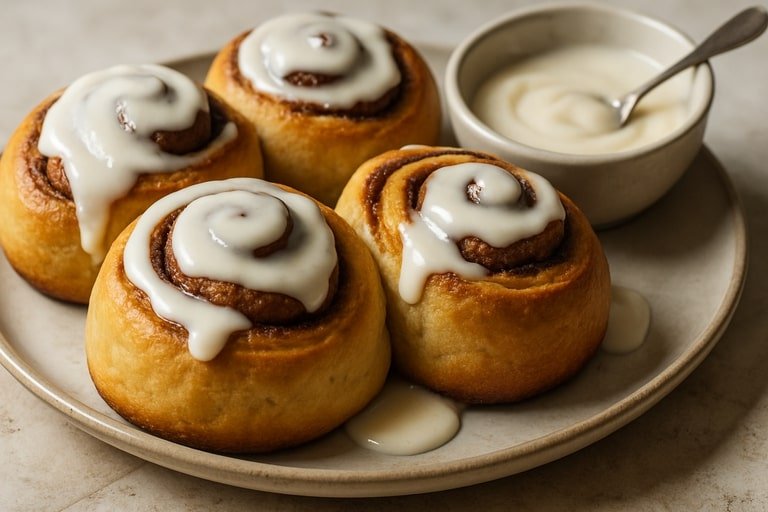
Glazing elevates cinnamon rolls from comfort to elegance. Some bakers choose cream cheese frosting, others prefer simple sugar glazes, yet all recognize that topping is more than decoration. It interacts with warmth, melting into spirals and amplifying texture. Applied while rolls are hot, glaze seeps between layers; applied when cooled, it provides contrast and sheen. Both methods serve purpose, reminding bakers that choice defines character. This final flourish is less about sweetness and more about completion, an acknowledgment that a craft deserves presentation equal to effort.
Cultural resonance has carried cinnamon rolls across generations and continents. From Scandinavian traditions where spice was treasured, to American kitchens where the roll became a staple of breakfast indulgence, this pastry reflects migration, adaptation, and memory. Each culture has shaped the roll differently—some lighter and subtler, others richer and heavily frosted—yet all share the central theme of comfort. Baking cinnamon rolls becomes less about following a recipe and more about connecting to heritage, family, and moments of celebration.
Modern bakers adapt tradition to new contexts. Health-conscious variations replace sugar with alternatives, butter with plant-based fats, or wheat with gluten-free flours. Yet even these adaptations must respect the essence: a tender dough swirled with warmth and sweetness. When innovation abandons foundation, the result ceases to be a cinnamon roll and becomes imitation. Integrity requires adaptation that honors core principles, reminding bakers that progress and respect need not oppose each other.
Homemade baking of cinnamon rolls also nurtures patience in a world obsessed with speed. Fermentation cannot be rushed, and proofing demands stillness. In kneading dough or waiting for it to rise, bakers find rhythm, an antidote to distraction. This process creates not only food but also experience, shaping an environment where family gathers, aromas linger, and anticipation builds. Baking thus becomes both craft and meditation, with the final roll as proof of commitment and care.
To understand cinnamon rolls fully is to acknowledge that their allure lies not in extravagance but in balance. Dough and filling, science and art, tradition and adaptation—each contributes to a pastry that speaks universally to comfort. They endure not because they are complex but because they are honest, a synthesis of skill, patience, and warmth. In every swirl lies a narrative: of history, of craft, and of the baker who chose to invest time into creating something ephemeral yet unforgettable.
Cinnamon Rolls Perfection with Sweet Dough Technique
Sweet dough offers the enriched foundation upon which cinnamon rolls achieve their signature tenderness, but mastering it requires an appreciation for how fat and sugar alter fermentation and gluten structure. Unlike lean bread, which thrives on strength and chew, sweet dough demands elasticity balanced by softness, a paradox resolved only through precise technique.
Bakers who embrace this balance discover how butter and eggs enrich texture, while sugar both enhances sweetness and slows yeast activity, demanding patience in proofing. Understanding this interplay allows for rolls that rise gracefully rather than collapse or toughen, carrying the hallmark of mastery in every bite.
The fermentation process of sweet dough is slower because sugar competes with yeast for hydration. Professional bakers know that adjusting rise times is not optional but necessary, ensuring full development of flavor and structure.
This patient process rewards with depth, creating notes beyond sweetness, a quiet complexity that resonates long after the first bite. To rush this stage is to flatten both flavor and character, robbing rolls of the very qualities that define them. The baker’s wisdom lies in restraint, recognizing that time, like heat, is an ingredient in itself.
Temperature control becomes critical when working with sweet dough. Butter melts easily, eggs coagulate under heat, and sugar caramelizes at thresholds that can alter the outcome of proofing or baking. Handling requires a cool environment, steady movements, and a rhythm that keeps fat integrated rather than leaking. Experienced bakers adjust touch and timing, ensuring dough remains pliable without becoming greasy or stiff. This sensitivity defines success, reminding us that technique matters as much as recipe.
The shaping of sweet dough highlights its pliability, offering the baker a canvas to stretch and roll without tearing. Its enriched structure yields more readily than lean doughs, yet its fragility requires respect. Rolling evenly prevents weak spots, while spreading cinnamon filling across a balanced surface ensures uniform spirals. Each cut becomes a decision point where symmetry and proportion translate into baking consistency. Such attention to shaping reflects not vanity but professionalism, where aesthetics and function merge seamlessly.
During proofing, sweet dough responds to environment with heightened sensitivity. Too cool, and yeast activity stalls; too warm, and butter softens excessively, compromising structure. A steady, moderate climate produces the best results, with the dough doubling gracefully, its surface taut yet supple. This stage is where bakers witness the living quality of dough, a transformation that speaks of both science and craft, turning raw ingredients into something greater through the invisible work of fermentation.
Baking cinnamon rolls from sweet dough presents challenges unique to their enrichment. Sugar accelerates browning, demanding vigilance to prevent scorching, while fat retains moisture that risks undercooking if heat is not balanced. Professional bakers rely on intuition supported by observation, watching for color gradients, inhaling aroma as indicators of readiness. The oven becomes not merely a machine but an extension of experience, where the baker’s senses guide timing to capture perfection.
Glazing sweet dough cinnamon rolls adds dimension that complements rather than overwhelms. Cream cheese frosting accentuates richness, while simple sugar glazes provide sheen and contrast. The choice reflects intention: indulgence or elegance, tradition or modern restraint. Each option, when applied with consideration, enhances texture and balances flavor, ensuring the rolls conclude as both visually captivating and sensorially satisfying.
Cultural history also highlights sweet dough’s role in festive baking traditions across Europe and North America. It has carried celebratory weight for centuries, appearing in breads, cakes, and pastries that marked holidays and milestones. Cinnamon rolls inherit this heritage, their enriched base linking them to rituals of abundance and joy. Baking them today connects modern kitchens to histories of migration and adaptation, reinforcing their place as both everyday comfort and ceremonial indulgence.
Adaptations of sweet dough cater to evolving dietary needs. Bakers exploring plant-based alternatives substitute butter with coconut oil or margarine, eggs with flaxseed mixtures, sugar with agave or honey. Yet these substitutions must respect structural integrity, for sweet dough cannot be stripped of enrichment without losing identity. The challenge is to innovate while preserving essence, honoring tradition even as recipes evolve toward inclusivity.
Homemade baking with sweet dough nurtures a sense of accomplishment that transcends taste. Each step—kneading, waiting, shaping—demands investment, rewarding bakers not only with flavor but with pride. The tactile pleasure of working dough, the anticipation of rising, and the reveal of golden spirals from the oven make the process as fulfilling as the result. It transforms routine into ritual, offering solace in craft and satisfaction in outcome.
Ultimately, sweet dough cinnamon rolls embody the duality of indulgence and craftsmanship. They are rich yet balanced, intricate yet approachable, traditional yet versatile. To bake them with understanding is to join a lineage of artisans who recognized that food carries meaning beyond sustenance. Each roll becomes a testament to patience, precision, and respect for ingredients, reminding us why such pastries endure as symbols of both comfort and artistry.
Cinnamon Rolls Guide on How to Make Cinnamon Rolls at Home
Learning how to make cinnamon rolls at home reveals both the simplicity and sophistication of this beloved pastry. At its heart lies a sequence of steps—mixing, kneading, proofing, shaping, baking, glazing—that demand attention rather than complexity. Each stage builds upon the last, and when treated with care, transforms basic ingredients into something extraordinary. For the home baker, this process becomes an initiation into the art of patience and precision, a journey that teaches as much about method as about taste.
The foundation begins with flour, yeast, sugar, butter, and milk, assembled into a dough that promises softness if handled well. Measuring accurately and respecting ingredient temperatures ensures balance. Cold butter resists incorporation, overly hot milk kills yeast, and mismeasured flour disrupts hydration. Mastery begins not with grand gestures but with details, where precision underpins success. In learning how to make cinnamon rolls, bakers discover that small mistakes compound, while small attentions accumulate into excellence.
Kneading introduces rhythm, transforming rough mixtures into elastic structures capable of holding gas. This tactile stage invites bakers to connect with dough physically, feeling it shift under hand from sticky to supple. The transition signals gluten alignment, a framework that will trap fermentation’s gases. Overkneading exhausts structure, underkneading leaves fragility; the balance rests on intuition, honed through practice. This physical dialogue between hand and dough embodies the spirit of craft, reminding bakers that baking is as much sensory as intellectual.
Proofing demands patience, teaching bakers to trust invisible processes. Covered and left undisturbed, dough rises as yeast metabolizes sugars into carbon dioxide. The wait allows character to form, producing depth of flavor that no shortcut can replicate. Watching dough swell, pressing gently to test spring, learning when to proceed—these lessons shape not only the roll but also the baker. In this stillness lies transformation, a quiet assurance that time, when respected, rewards with texture and taste.
Shaping introduces artistry. Rolled evenly, spread with filling, sliced with intention, each piece spirals into potential. Here the baker’s personality emerges: tight coils suggest precision, looser spirals reveal generosity. Uniformity aids baking, yet slight variations carry charm. This stage affirms that baking is not mechanical but expressive, where skill merges with individuality to craft rolls that reflect both tradition and personal touch.
Baking is the crucible where preparation meets transformation. Heat awakens aromas, caramelizes sugars, and solidifies structure. Timing demands vigilance, as seconds distinguish between perfection and disappointment.
Watching color develop, listening for the subtle crackle, sensing when rolls have achieved balance—these are the marks of attentiveness. Home bakers learn that ovens, like ingredients, carry quirks, requiring adaptation rather than blind obedience to timers.
Glazing completes the narrative. Poured over warm rolls, glaze seeps into layers, softening sweetness with contrast. Spread over cooled rolls, it adds definition and sheen. Whether a rich cream cheese frosting or a simple sugar syrup, this finishing step ties process to presentation, offering both indulgence and refinement. It reminds bakers that flavor extends beyond taste into appearance, texture, and aroma, a holistic experience crafted by deliberate choice.
Learning how to make cinnamon rolls also invites improvisation. Spices beyond cinnamon—cardamom, nutmeg, clove—add dimension, while fillings of nuts or fruit diversify character. Yet innovation succeeds only when rooted in respect for balance. Overloading dough diminishes structure, excessive variation muddles identity. The lesson is that creativity flourishes within boundaries, where understanding enables freedom rather than chaos.
Homemade cinnamon rolls create more than food; they build memory. Kitchens filled with warmth and aroma become stages for gathering, sharing, and celebrating. Each roll served carries not just sweetness but significance, a symbol of effort transformed into comfort. In teaching ourselves how to make cinnamon rolls, we also teach patience, care, and generosity, values that extend far beyond the plate.
Cultural connections deepen this act of baking. Families pass down recipes, communities gather around shared trays, traditions evolve yet endure. Each batch ties baker to heritage, linking present moments to past kitchens where similar aromas lingered. In making cinnamon rolls today, we participate in a lineage of care, an unbroken chain of comfort stretching across time and geography.
Ultimately, mastering how to make cinnamon rolls at home reveals that excellence lies not in shortcuts or extravagance but in attention, balance, and respect. Dough and filling, patience and precision, tradition and individuality—all converge in each spiral.
What emerges is not just a pastry but a reflection of effort, heritage, and joy. Every roll carries a story, every bite affirms the value of time invested, and every batch reminds us why baking remains both art and devotion.
The world of baking has always carried a special charm, drawing people into kitchens where warmth, aroma, and creativity meet. For centuries, families have relied on traditions passed down through generations, each recipe a reflection of culture and memory. In modern homes, the joy of crafting treats from scratch has not diminished, and perhaps nowhere is this more evident than in the art of homemade pastry.
Beyond the crisp layers, golden crusts, and delicate fillings lies a narrative of patience, skill, and comfort, making this practice more than cooking—it becomes a way of connecting to heritage and pleasure at once.
At its core, homemade pastry represents the balance of science and intuition. The baker measures flour, butter, and liquid with precision, yet it is the hands-on process that shapes the final result. Unlike store-bought shortcuts, crafting dough by hand allows for subtle control of texture and flavor.
From the first knead to the final golden rise in the oven, every step of making homemade pastry requires attention and care, reinforcing the idea that time invested translates directly into quality and satisfaction.
Cultures around the globe offer distinct interpretations of what homemade pastry should embody. In France, croissants with their countless flaky layers epitomize patience and technique. In Eastern Europe, filled pastries reflect the flavors of cottage cheese, fruit, and poppy seeds, tying communities together around celebratory tables.
In the Middle East, delicate phyllo layers envelop nuts and honey, producing desserts that dazzle with richness. Each variation, though unique, underscores the universality of homemade pastry as both sustenance and symbol.
One of the greatest appeals lies in its versatility. Homemade pastry can be savory or sweet, light or indulgent, rustic or refined. A simple tart shell might hold fresh vegetables for a wholesome dinner, while puff layers transform into éclairs filled with cream for dessert. By adjusting ingredients and techniques, bakers can adapt homemade pastry to every occasion, from everyday snacks to holiday feasts. This adaptability ensures its enduring relevance across cultures and lifestyles.
The sensory experience is equally powerful. Few aromas rival the scent of butter-rich dough baking in an oven, filling kitchens with anticipation. The moment of breaking into a crisp shell to reveal soft interiors creates delight that engages both memory and appetite. Homemade pastry thus engages not only taste but also smell, touch, and even sound—the crackle of crust becomes part of its charm. This multi-sensory dimension explains why the tradition remains so beloved despite the convenience of ready-made options.
Health-conscious bakers also find appeal in the process. Unlike mass-produced alternatives, homemade pastry allows full control over ingredients. Whole-grain flours, natural sweeteners, or plant-based fats can be substituted without sacrificing flavor. The act of crafting dough at home aligns with modern values of wellness and mindfulness, demonstrating that indulgence can coexist with conscious choices. In this way, homemade pastry reflects a balance between tradition and contemporary priorities.
Family traditions often center around baking days, where generations gather to prepare dough, fillings, and glazes together. The act of rolling, folding, and shaping becomes an opportunity for storytelling and teaching. Children learn not only recipes but also patience, responsibility, and pride in creation. Thus, homemade pastry becomes more than a food item—it transforms into a vessel for transmitting heritage, keeping family bonds alive through taste and memory.
Chefs, too, have drawn inspiration from these humble beginnings. Many acclaimed bakers trace their passion back to childhood encounters with homemade pastry, later refining those roots into professional artistry. Their work in bakeries and restaurants elevates what began as tradition into culinary masterpieces, yet the essence remains: respect for ingredients and joy in sharing. By bridging rustic authenticity with technical excellence, they ensure that homemade pastry continues to inspire admiration across contexts.
Economically, the practice also plays a role. Farmers’ markets brim with vendors selling handmade pies, tarts, and turnovers, often highlighting local produce. This circulation strengthens regional economies while reinforcing values of freshness and sustainability. Customers not only purchase food but also buy into the narrative of craftsmanship and locality. Homemade pastry, therefore, fuels not just kitchens but also communities.
Literature and art have long celebrated the imagery of pastry. Novels describe cozy kitchens where pies cool on windowsills, while paintings capture the abundance of tables laden with breads and tarts. These depictions resonate because they connect to universal feelings of comfort, abundance, and care. The enduring symbolism of homemade pastry in culture illustrates how something as simple as flour and butter can represent love, security, and tradition.
Tourists often seek authentic experiences that include regional baked goods. Traveling through Europe without tasting its pastries would mean missing an essential part of culture. Bakeries highlight local variations, drawing visitors who crave authenticity. These encounters reinforce the idea that homemade pastry is not only a domestic ritual but also a cultural ambassador, introducing global audiences to the flavors and values of a region.
Ultimately, homemade pastry embodies a story of patience, creativity, and connection. It speaks to the timeless desire for food that nourishes both body and soul, bridging the gap between tradition and modernity. Every bite carries the weight of heritage and the promise of comfort, ensuring that this practice will remain cherished in kitchens for generations to come. To embrace homemade pastry is to embrace not only a dish but also an enduring way of life.