Pot roast stands as one of the most enduring dishes in home cooking, a symbol of patience rewarded by tenderness and flavor that cannot be rushed. At its core, pot roast is a method of transforming a tough, inexpensive cut of beef into a succulent centerpiece through the slow alchemy of braising. The process involves searing the beef to lock in flavor, then allowing it to simmer gently in liquid alongside vegetables and aromatics until it becomes fork-tender. The end result is not just a meal but an experience, one that embodies comfort food at its most soulful.
The foundation of a good pot roast begins with choosing the right cut of beef. Brisket, chuck, or round are often favored, as their connective tissues and marbling break down over long cooking, creating richness and body. This transformation is what defines pot roasts: they turn affordability into luxury through patience and technique. Browning the beef thoroughly is the first critical step, creating a crust that develops complex flavors which later meld into the braising liquid. This caramelization elevates the final dish beyond simple simmered meat.
Once the meat is seared, vegetables such as onions, carrots, and celery join the pot. These aromatics not only contribute their flavors but also enrich the braising liquid, creating a foundation for the sauce that will later coat the meat and vegetables. Potatoes or parsnips may be added for heartiness, their starches naturally thickening the broth into a velvety consistency. Each vegetable plays its part, ensuring that every spoonful of pot roast offers balance between savory beef and subtly sweet, earthy notes.
The liquid used for braising defines the character of a pot roast. Beef stock is traditional, lending depth, but wine or beer can add acidity and complexity that brighten the dish. The key lies in ensuring enough liquid to partially submerge the beef while allowing reduction to concentrate flavor over time. As the roast simmers, gelatin from the connective tissue dissolves, enriching the broth and producing a sauce that clings luxuriously to meat and vegetables. The result is a dish that feels hearty without heaviness, substantial yet refined.
Time and temperature are non-negotiable in pot roast cooking. Low, steady heat over several hours ensures that tough fibers relax gradually, creating tenderness. Rushing the process leads to toughness, undermining the very essence of the dish. Whether cooked on a stovetop, in an oven, or in a slow cooker, the principle remains the same: patience produces transformation. This is why pot roast has endured for generations—it exemplifies the virtue of waiting for greatness to unfold.
Seasoning is another aspect where mastery emerges. Salt and pepper are foundational, but bay leaves, thyme, rosemary, and garlic often find their place in the pot, adding aromatic depth. The balance of herbs ensures that the dish remains layered without overwhelming the natural flavor of the beef. Some cooks add a touch of tomato paste for richness or vinegar for brightness, proving that even small adjustments can shift the stew’s personality while maintaining its identity. This flexibility allows pot roast to adapt to personal and regional preferences while retaining its core essence.
Cultural variations showcase the universality of pot roasts. In France, pot-au-feu emphasizes simplicity and clarity, while Italian brasato al Barolo highlights wine and herbs. German sauerbraten introduces tangy marinades, while American versions lean into richness with hearty vegetables and gravy. Each interpretation reflects local tastes and resources, yet all embody the same principle: slow-cooked beef transformed into a dish of comfort and tradition. This adaptability explains why pot roast remains beloved across continents.
Practicality also sustains its popularity. Pot roast is economical, stretching inexpensive cuts into meals that can feed families generously. Leftovers carry even greater depth of flavor, making the dish rewarding long after its first serving. The versatility of reheated pot roast, whether served as sandwiches, shredded over noodles, or repurposed into soups, underscores its value as a cornerstone of home cooking. Its practicality matches its flavor, ensuring it remains relevant in both modest kitchens and modern culinary contexts.
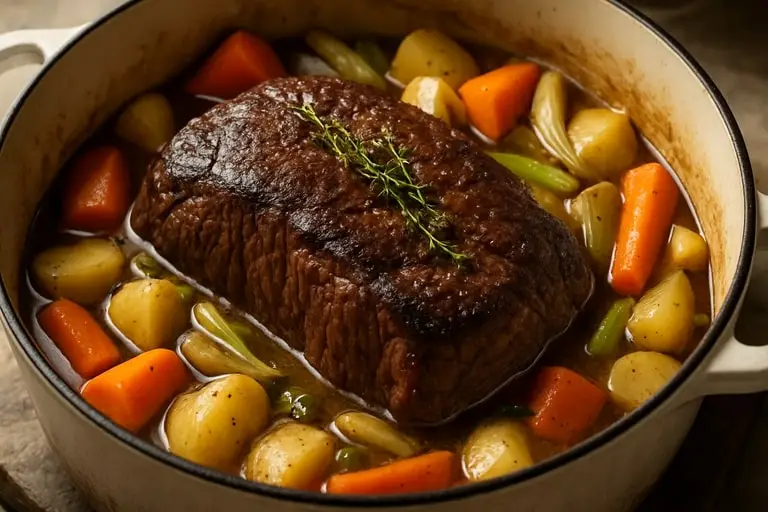
The sensory appeal of pot roast is undeniable. As it cooks, the aroma of simmering beef and herbs fills the air, creating anticipation and warmth. The sight of tender meat surrounded by vibrant vegetables and glossy sauce is a feast for the eyes before the first bite. Texturally, the meat yields effortlessly, vegetables offer contrasting substance, and the sauce envelops everything with richness. This multi-sensory experience defines pot roast as a dish that satisfies on every level, from appetite to emotion.
Serving pot roast is as much ritual as cooking it. Placing a steaming platter at the center of the table conveys abundance and care, inviting sharing and conversation. Bread or mashed potatoes often accompany it, soaking up the flavorful sauce, while a simple salad can provide refreshing balance. These accompaniments enhance the experience, ensuring that pot roast is not just eaten but celebrated. Its presence at gatherings reinforces its symbolic role as a dish of togetherness.
Ultimately, pot roast endures because it embodies the essence of home cooking: resourcefulness, patience, and the transformation of humble ingredients into something extraordinary. Each preparation carries with it echoes of tradition, yet leaves room for personal expression. To cook pot roast is to honor heritage while creating nourishment that resonates with contemporary life. It is more than a recipe—it is a story told in flavor, a reminder that the simplest dishes often hold the deepest meaning.
Pot Roasts And The Craft Of Slow Cooking
The beauty of pot roasts lies in their relationship with time. They are not dishes to be rushed but to be nurtured, embodying the philosophy that great food requires patience. Slow cooking is central to their identity, a method that allows collagen in the beef to dissolve into gelatin, creating texture that is both luxurious and comforting. This transformation, invisible yet profound, is what elevates pot roasts beyond ordinary fare, making them a testament to the craft of slow cooking.
Preparation begins long before the pot is placed on the heat. Choosing a well-marbled cut, trimming excess fat while retaining enough to enrich the dish, and seasoning thoughtfully all set the stage. Browning the meat is essential, as it develops the complex foundation upon which the entire dish rests. This initial investment of time and attention ensures that every subsequent step builds upon a solid base of flavor. Pot roasts demonstrate that detail at the outset resonates throughout the dish.
Vegetables and aromatics, often called the “mirepoix” in classical cooking, are integral to pot roasts. Onions, carrots, and celery not only flavor the broth but also provide balance against the richness of the beef. Over hours of cooking, they soften and surrender their sweetness, creating harmony. Potatoes, parsnips, or turnips may add substance, making the dish complete in itself. Each vegetable is chosen not randomly but for its contribution to the whole, a testament to how careful selection underpins success.
The liquid chosen for braising reflects cultural identity and personal preference. Stock lends depth, wine introduces sophistication, and beer provides earthy undertones. Some cooks experiment with cider or broth enriched with soy sauce for added umami. Whatever the choice, the principle remains: liquid is not passive but active, carrying flavors, reducing into concentration, and creating the sauce that defines the final experience. Pot roasts illustrate how even the simplest ingredients, when simmered patiently, achieve grandeur.
Herbs and spices serve as the dish’s quiet architects. Bay leaves add structure, thyme and rosemary offer fragrance, while pepper introduces subtle heat. Garlic often finds its way into the mix, its sweetness emerging over time. The slow cooking process allows these aromatics to integrate fully, creating depth without any one note dominating. Mastery lies in balance, ensuring that flavors harmonize rather than compete. This restraint reflects the wisdom of traditional cooking: simplicity often achieves the greatest depth.
Cultural expressions of pot roasts demonstrate the universality of braising. French pot-au-feu emphasizes clarity and purity, while Italian brasato draws on regional wines for personality. Jewish brisket, often served on holidays, carries spiritual as well as culinary significance. Each variation tells a story of place and people, yet all affirm the same truth: slow-cooked beef unites flavor, tradition, and community. Pot roasts are thus both local and universal, grounded in context yet shared across humanity.
The sensory experience of slow cooking is as important as the outcome. Hours of simmering fill homes with aromas that create anticipation and comfort. The gentle bubbling of the pot signals steadiness and progress, a rhythm that reassures as much as it promises. These sensory cues turn the act of cooking into an experience in itself, engaging cooks and diners alike long before the first bite is taken. Pot roasts remind us that food begins to nourish even before it is served.
Practicality intertwines with artistry in pot roasts. Large portions feed gatherings generously, making them ideal for family dinners or festive occasions. Leftovers, often more flavorful after resting, extend the value of the dish, transforming into sandwiches, soups, or hash. This practicality, combined with their depth of flavor, ensures pot roasts remain staples in kitchens around the world. They embody efficiency without compromise, proving that resourcefulness and indulgence can coexist.
Serving pot roasts carries ritual significance. The act of slicing tender beef, ladling sauce over vegetables, and presenting the dish at a table filled with loved ones reflects hospitality at its highest. Pot roasts are not solitary meals but communal ones, designed to be shared. This reinforces their identity as comfort food, not only through flavor but through the connections they foster.
In the end, pot roasts are lessons in patience, tradition, and the art of cooking with care. They demonstrate that greatness emerges not from speed but from attentiveness, from allowing time to transform the ordinary into the extraordinary. To master pot roasts is to master the philosophy of slow cooking itself, a philosophy that values balance, depth, and connection. They remind us that the heart of cooking lies not just in the ingredients but in the care invested, and that the simplest dishes often hold the greatest wisdom.
Pot Roast Cooking For A Hearty Comfort Dish
Cooking a pot roast goes beyond technique; it is about crafting an experience of comfort and abundance. A hearty comfort dish such as this offers more than sustenance—it offers reassurance, continuity, and warmth that extends beyond the plate. Pot roast has long been associated with family gatherings, Sunday dinners, and celebrations where food is as much about connection as it is about flavor. To cook pot roast is to participate in this tradition, one that has nourished generations and continues to thrive.
The comfort begins with anticipation. As the roast simmers, aromas fill the home, signaling that something special is underway. This fragrance alone is enough to evoke memory and emotion, connecting people to meals of the past while creating new associations for the future. Comfort food is not only about taste but about the atmosphere it creates, and pot roast excels at enveloping its surroundings with warmth.
Texture defines the dish as well. The beef, after hours of cooking, yields effortlessly to the fork, while vegetables retain enough structure to provide contrast. The sauce, rich and velvety, binds everything together, offering cohesion. Each bite delivers not only flavor but also satisfaction, the kind of grounding nourishment that explains why pot roast remains a classic hearty dish in so many cultures. This harmony of textures contributes to its comforting identity.
Flavor layering is another aspect of comfort. The savory depth of beef is complemented by the sweetness of carrots, the earthiness of potatoes, and the herbal fragrance of thyme and rosemary. The sauce absorbs and unites these elements, creating a flavor profile that feels both complex and familiar. Comfort food thrives on this combination of familiarity and depth, reassuring while still rewarding. Pot roast captures this balance perfectly, offering consistency with just enough intrigue to keep diners engaged.
Cultural significance reinforces pot roast’s role as a comfort dish. It has long been a centerpiece of American Sunday dinners, but its roots connect to European braising traditions, each bringing variations that highlight local flavors. In Jewish households, brisket braises often appear at holiday tables, while Italian and French versions carry their own regional distinctions. Despite differences, the shared thread is abundance, nourishment, and the gathering of people around a communal meal. Pot roast symbolizes not just food but fellowship.
Practical aspects strengthen its comforting nature. Pot roast is forgiving, capable of absorbing substitutions or adjustments without losing its essence. It stretches ingredients economically, feeds generously, and improves with time. Leftovers ensure that comfort extends beyond a single meal, turning one cooking session into several satisfying occasions. This reliability underlines why pot roast is a staple of comfort food traditions—it delivers not only flavor but also security.
Health can also be part of the conversation. While pot roast is hearty, thoughtful preparation ensures balance. Leaner cuts reduce excess fat, while abundant vegetables contribute nutrients and fiber. Herbs and spices enhance flavor without excess salt. These adjustments allow pot roast to remain indulgent while also aligning with modern wellness priorities. Comfort food is most meaningful when it nourishes holistically, and pot roast demonstrates this balance.
Serving pot roast is an act of generosity. Placing a platter of tender beef and vibrant vegetables at the center of a table communicates abundance and care. The dish invites sharing, conversation, and lingering over the table, embodying the spirit of togetherness. Whether served with bread, potatoes, or salad, the accompaniments only highlight the generosity of the roast, reinforcing its status as a dish meant for community.
Leftovers provide ongoing comfort. Reheated pot roast often tastes deeper and more cohesive, while creative uses like shredded beef in sandwiches or soups add variety. This longevity ensures that the comfort derived from pot roast continues beyond the initial meal, reinforcing its role as a dish that keeps giving. In this way, comfort extends not just across palates but across time.
The symbolism of pot roast as comfort food lies in its simplicity. It demonstrates how ordinary ingredients, when treated with patience, create extraordinary results. This principle resonates with the very idea of comfort food, which values sincerity over extravagance. Pot roast proves that care, time, and thoughtfulness elevate the humble into the exceptional.
Ultimately, cooking pot roast as a hearty comfort dish affirms the essence of food as connection, tradition, and care. Each preparation tells a story of resourcefulness, patience, and generosity. It nourishes body and spirit alike, grounding people in the familiar while offering flavor that feels timeless. To prepare pot roast is to embrace the philosophy that comfort lies not in excess but in meaning, and that the simplest dishes often carry the greatest power to satisfy.
Pot roast is one of those dishes that manages to be both humble and celebratory, a meal that bridges the gap between everyday sustenance and the grandeur of tradition. At its core, it is a simple concept: a cut of beef slowly cooked with vegetables and broth until it becomes tender and deeply flavored. Yet in its simplicity lies magic, for pot roast represents patience, transformation, and the comfort of home. Across generations, the dish has stood as a centerpiece for Sunday dinners, holiday gatherings, and quiet evenings, embodying values of nourishment, connection, and resilience.
The history of pot roast is layered with cultural exchanges and adaptations. European immigrants brought braising traditions to America, where they found affordable cuts of beef that suited the method perfectly. In France, boeuf à la mode inspired elegance, while in Germany, sauerbraten emphasized tang and spice. In the United States, the dish evolved into its own form, shaped by regional preferences and abundant local ingredients. Over time, pot roast became embedded in family routines, often tied to the ritual of slow-cooking on weekends. It is a dish that reflects heritage but also adaptation, proof that culinary traditions are living, evolving stories.
At the heart of pot roast lies the beef itself. Cuts such as chuck, brisket, or round are often chosen because of their connective tissues and marbling. These tough cuts, unsuitable for quick cooking, transform under long, gentle heat into something tender and luxurious. Browning the meat before braising develops flavor through caramelization, laying a foundation of richness that infuses the dish. This technique reflects the wisdom of cooks who knew how to turn modest cuts into meals of abundance, proving that patience can elevate even the simplest ingredients.
Vegetables play an equally vital role in pot roast, shaping its body and balance. Carrots, onions, and potatoes are classics, offering sweetness, depth, and substance. Celery adds subtle bitterness, while parsnips or turnips provide earthiness. Mushrooms can deepen the umami profile, while fresh herbs bring brightness. As the stew simmers, the vegetables absorb the broth and meat juices, becoming infused with layered flavors. Their tenderness contrasts beautifully with the meat, creating harmony in every bite. Pot roast is not merely about beef; it is about the interplay of components that unite into one dish.
The broth is the soul of pot roast, turning liquid into velvet over hours of slow cooking. Beef stock, wine, or beer form the base, while garlic, tomato paste, or Worcestershire sauce add complexity. Herbs like rosemary, thyme, and bay leaves bring fragrance, evolving as they infuse the liquid. Over time, the broth thickens into a sauce that coats each bite with richness, proof of the alchemy that happens when simple ingredients meet patience. For many, the gravy is as beloved as the meat itself, spooned generously over vegetables, bread, or even rice.
Culturally, pot roast is inseparable from family and tradition. It was often prepared for Sunday dinners, when families gathered to share not just food but stories and togetherness. For children, the aroma of pot roast simmering in the kitchen often became part of memory, tied to feelings of warmth and belonging. Its association with holidays and special occasions made it more than just sustenance — it became a marker of time, a dish that represented rest, celebration, and the bonds of community. To eat pot roast is to participate in a ritual as much as a meal.
The sensory qualities of pot roast are unforgettable. The sight of a browned roast nestled among golden carrots and potatoes creates immediate anticipation. The aroma of herbs, onions, and caramelized beef fills the air, wrapping the home in comfort long before dinner is served. The taste delivers harmony — rich beef, sweet vegetables, savory herbs, and silky broth merging into one. The texture ensures satisfaction, with meat so tender it yields to a fork and vegetables softened into perfection. Eating pot roast engages every sense, turning dinner into a fully immersive experience.
Nutritionally, pot roast provides balance when prepared with care. Beef delivers protein and iron, while root vegetables provide fiber and vitamins. The broth preserves nutrients lost in other cooking methods, ensuring that each spoonful nourishes as much as it comforts. Modern variations can reduce fat by trimming excess or choosing leaner cuts, while vegetable-forward versions emphasize plant-based balance. These adjustments allow pot roast to align with contemporary health goals without losing its essence. The dish proves that comfort and nutrition need not be opposites but can coexist in harmony.
Economically, pot roast reflects wisdom and resourcefulness. By using inexpensive cuts of beef and seasonal vegetables, families created meals that felt abundant without straining budgets. Its ability to feed many people from one pot made it ideal for gatherings, while leftovers stretched its value even further. Cold slices became sandwiches, while reheated portions provided quick comfort meals. The dish represents a philosophy of making the most of what is available, a trait that ensured its survival and popularity through generations.
Modern kitchens have embraced pot roast with innovations that maintain tradition while enhancing convenience. Slow cookers allow busy families to prepare it with minimal effort, while pressure cookers reduce hours into minutes. Chefs reinterpret pot roast with global influences, adding soy, miso, or exotic spices, creating fusion versions that remain rooted in the same principle: slow transformation. Even fine dining has reimagined the dish, elevating it with artisanal ingredients and presentation. Yet despite these innovations, pot roast remains recognizable — proof of its resilience and adaptability.
Psychologically, pot roast offers comfort beyond flavor. Preparing it involves ritual — seasoning, searing, layering, simmering — that grounds the cook in patience and intention. The aroma that fills the home provides reassurance, signaling that something nourishing and satisfying awaits. Sharing the dish strengthens bonds, as pot roast is always made in abundance, designed to be passed around a table. Even in solitude, a bowl of pot roast provides connection, evoking memories of family, tradition, and belonging. Its emotional resonance is inseparable from its culinary appeal.
Ultimately, pot roast endures because it embodies what food at its best should represent: transformation, tradition, and generosity. It takes modest ingredients and, through time and care, turns them into meals that comfort both body and spirit. It connects us to heritage while adapting to modern life, proving its relevance across cultures and generations. In every tender bite lies more than nourishment — there is memory, history, and meaning. Pot roast is timeless because it transcends food itself, becoming a symbol of home, resilience, and the quiet power of sharing a meal.