Stew represents one of the oldest and most enduring cooking methods in human history, a dish that combines practicality with artistry in a way that transcends cultures and time. The word itself evokes a sense of warmth, patience, and nourishment, embodying the essence of slow simmering where meat, vegetables, and broth come together to create more than just food. When discussing stew, it is not only about recipes but about a culinary practice that reflects resourcefulness and care. By gently cooking ingredients over low heat, flavors deepen, textures soften, and disparate elements merge into something harmonious and comforting.
The foundation of a good stew begins with ingredient selection. Choosing the right cuts of meat, often those less tender but rich in connective tissue, ensures that hours of cooking transform them into velvety bites infused with flavor. Root vegetables like carrots, potatoes, and parsnips provide body and sweetness, while onions and celery deliver aromatic depth. These choices are not random but deliberate, as stew cooking thrives on balance between hearty substance and subtle enhancement. This interplay between robust and delicate flavors forms the very heart of stews across the world.
Browning meat before simmering is an essential step often emphasized by culinary professionals. This technique, known as the Maillard reaction, creates a caramelized crust that imparts complexity and depth to the final dish. Skipping this step results in a stew that may feel flat, missing the layered richness that sets apart a truly memorable preparation. Vegetables, too, benefit from a brief sauté, releasing natural sugars that later meld with the broth, enhancing the entire pot’s character. These small but crucial steps demonstrate how attention to detail transforms simple ingredients into extraordinary meals.
The broth or cooking liquid plays a decisive role in defining the personality of stew. Whether built on homemade stock, store-bought alternatives, or additions like wine or beer, the liquid carries and unifies every flavor. It is not merely a medium but an integral component, developing body as gelatin from bones dissolves and starches from vegetables thicken it naturally. The slow simmer encourages reduction, concentrating flavors into a cohesive, savory whole that feels both substantial and nuanced. Seasoning with herbs like bay leaves, thyme, and parsley adds dimension, ensuring the stew achieves harmony rather than heaviness.
Time is the secret ingredient in stew cooking. The long, gentle simmer allows connective tissues in meat to dissolve, turning tough cuts into tender, flavorful morsels. Vegetables gradually soften, surrendering their essence into the broth, while herbs and spices weave their subtleties throughout. This unhurried process is what gives stew its character, a testament to patience and the understanding that true flavor cannot be rushed. In many ways, cooking stew mirrors life’s lessons: transformation requires time, and rewards come to those willing to wait.
Cultural variations of stew demonstrate its universality. French cuisine offers boeuf bourguignon, enriched with wine and mushrooms, while Irish stew highlights lamb and root vegetables. Moroccan tagine introduces spices like cumin and cinnamon, producing an entirely different yet equally captivating expression. Asian hotpots, Latin American sancocho, and countless regional stews all share the same foundation of slow simmering while adapting to local ingredients and traditions. This adaptability highlights stew’s role as a global comfort food, at once familiar and endlessly diverse.
The practical side of stew also contributes to its enduring appeal. A large pot can feed a family generously, making it economical as well as satisfying. Leftovers improve with time as flavors continue to meld, offering meals that feel even richer on the second day. For households, stews provide both convenience and sustainability, ensuring that effort invested in one cooking session yields nourishment across multiple occasions. In this sense, stew embodies efficiency without sacrificing quality, a trait that has kept it central to kitchens for centuries.
Cooking stew also engages the senses in profound ways. The aroma that fills the kitchen as the pot simmers signals comfort and anticipation, drawing people together even before the meal is served. The sight of tender meat and vibrant vegetables submerged in a thickened broth stimulates appetite, while the first taste confirms that patience has been rewarded. Texture completes the sensory experience, with each bite offering contrast between soft vegetables, succulent meat, and velvety sauce. This multisensory engagement elevates stew from mere sustenance to a deeply satisfying ritual.
Serving stew is equally important to its enjoyment. Pairing it with crusty bread allows diners to savor every drop of broth, while a side salad can provide a refreshing counterpoint to the dish’s richness. Presentation, though often rustic, conveys generosity, as stew is most often ladled into bowls that invite sharing. In communal settings, it symbolizes hospitality and abundance, making it a favored dish for gatherings where warmth and connection matter most.
Modern kitchens offer multiple approaches to stew cooking. Traditional stovetop simmering remains the gold standard, but slow cookers and pressure cookers provide convenience without sacrificing quality. Each method influences texture and flavor in subtle ways, yet all honor the fundamental principle of low, sustained cooking that allows ingredients to release and integrate. Adapting stew to these technologies reflects its resilience, showing that while tools evolve, the essence of the dish remains constant.
Ultimately, stew is more than a recipe; it is a reflection of heritage, patience, and the art of transformation through cooking. Every culture, every household, and every cook can shape it differently, yet the outcome always embodies nourishment and comfort. Preparing stew is as much about intention as it is about ingredients, a ritual that delivers not just flavor but meaning. In each simmering pot lies a story of sustenance, of care, and of a culinary tradition that continues to thrive across centuries and continents.
Stews And The Art Of Cooking Slowly
Stews hold a revered place in culinary tradition precisely because they honor the art of slow cooking. At their core, stews are about transformation, where tough cuts of meat become tender, humble vegetables turn into flavor carriers, and broth evolves into a rich, velvety sauce. This metamorphosis only occurs with time and attention, elements that modern life often overlooks but which remain indispensable in stew cooking. The philosophy behind stews thus extends beyond the plate, reminding us of the value of patience in a world driven by speed.
The art begins with preparation, where each ingredient is treated with respect. Meat is browned to unlock complexity, onions are sautéed until translucent, and root vegetables are chopped to consistent sizes for even cooking. These foundational steps create a base upon which flavors can layer, ensuring that the finished stew possesses depth rather than flatness. In many ways, stews demonstrate how meticulous beginnings yield outstanding outcomes, a lesson that resonates in both cooking and life.
Liquid selection further shapes the character of stews. Stock, whether beef, chicken, or vegetable, provides structure, while wine or beer introduces acidity and dimension. The simmering process gradually reduces the liquid, concentrating flavor and encouraging natural thickening. Unlike sauces thickened artificially, the richness of stews develops organically, drawing strength from the very ingredients simmering within. This authenticity defines their appeal, creating a dish that feels honest and nourishing.
Herbs and spices also distinguish stews, adding layers of complexity without overwhelming the central flavors. Bay leaves lend subtle floral notes, thyme introduces earthiness, and pepper provides gentle heat. Regional preferences bring additional diversity: paprika in Hungarian goulash, cumin in North African tagines, or cilantro in Latin American preparations. Each variation speaks to local identity, showing how stews serve as vessels of cultural expression as well as sustenance.
Time is central, yet so is temperature. The gentle simmer, maintained consistently, is what allows meat fibers to break down gradually while preserving moisture. Too much heat leads to toughness, while insufficient heat prolongs cooking without sufficient transformation. Mastery of this balance defines successful stews, underscoring the importance of attentiveness even in a dish known for its forgiving nature. Though stews are simple in concept, their excellence lies in nuance.
Cultural examples reveal the universality of stews. Japanese nikujaga offers comfort with soy-based flavors, while Caribbean pepper pot stew delivers spice and vibrancy. Mediterranean fish stews highlight coastal abundance, while Eastern European variations emphasize heartiness in colder climates. These diverse stews illustrate not only culinary adaptation but also shared human needs for warmth, nutrition, and comfort. Each is distinct yet connected by the same underlying technique of slow simmering.
The practical benefits of stews further explain their longevity. They allow cooks to use economical ingredients while still creating meals of substance and satisfaction. Large batches provide sustenance for days, with flavors improving as they rest. This practicality makes stews both accessible and rewarding, aligning culinary enjoyment with everyday life’s demands. Families throughout history have relied on stews for precisely this reason: they are both resourceful and indulgent.
Stew cooking also fosters a sense of togetherness. The process often begins hours before serving, filling homes with aromas that signal gathering and comfort. By the time bowls are filled, the stew has already shaped the experience, creating anticipation and a sense of unity. Food, after all, is about more than taste—it is about the emotions and connections it fosters. Stews excel in this regard, transforming meals into moments of shared warmth.
The adaptability of stews ensures their continued relevance. Whether prepared in a rustic kitchen over an open flame or in a modern apartment using an electric slow cooker, the essence remains unchanged. Tools evolve, ingredients shift, but the principle of patient simmering endures. This continuity makes stews timeless, binding past and present through the simple yet profound act of cooking.
Health considerations add another layer of significance. Stews can be tailored to dietary needs, emphasizing lean meats, abundant vegetables, or alternative grains. This flexibility ensures that stews remain inclusive, offering both indulgence and balance depending on preparation. As modern eaters seek both flavor and wellness, stews provide a bridge between tradition and contemporary values.
Ultimately, stews embody the intersection of craft, culture, and care. They are proof that cooking does not need extravagance to achieve greatness—only thoughtfulness and time. By mastering the art of stew cooking, one learns not just a recipe but a philosophy: that transformation requires patience, that nourishment is holistic, and that the simplest dishes often carry the deepest meaning.
Stew Cooking For A Hearty Dish Experience
The experience of stew cooking extends beyond the technical aspects of preparation and enters the realm of memory, comfort, and ritual. A hearty dish like stew is not just food on a plate but a statement of intention—an offering of warmth to oneself and to others. Each pot of stew represents time invested, flavors nurtured, and traditions carried forward, making it more than just a meal but an act of connection.
The anticipation begins as ingredients are gathered, each chosen with care for its role in the final dish. The rhythmic act of chopping vegetables, the sizzle of meat browning, and the rising aroma from the pot all signal that something meaningful is taking place. Stew cooking is immersive, demanding engagement of all senses from the outset. Even before tasting, the process itself creates satisfaction, a reminder that cooking is as much about the journey as the outcome.
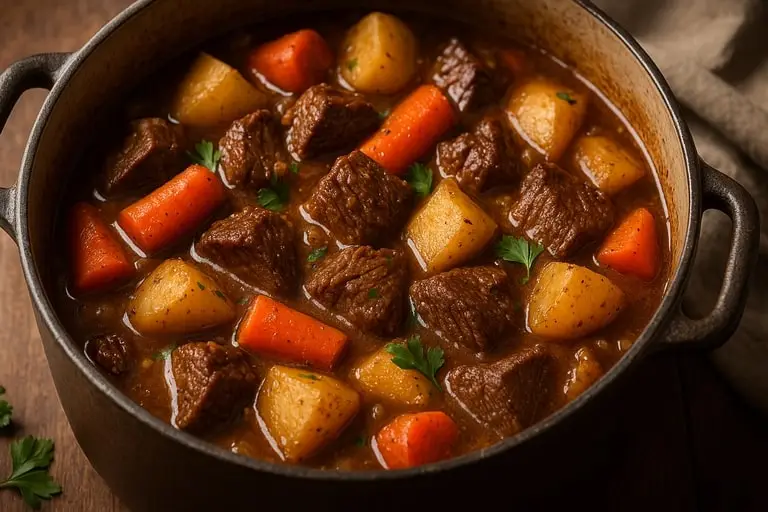
Flavor development is at the heart of the hearty dish experience. By layering ingredients gradually, stews achieve complexity that no single step could provide. The sweetness of carrots balances the richness of beef, while potatoes contribute body and onions dissolve into subtle sweetness. Each element plays a part, ensuring that no bite feels monotonous but instead reflects a harmony of contributions. This layered complexity is what makes stews deeply satisfying and universally appealing.
Texture also defines the experience. The meat should be tender enough to yield effortlessly yet firm enough to retain substance. Vegetables should provide contrast—some dissolving into the broth for body, others holding shape to add interest. The broth itself should be thickened naturally, clinging to ingredients without feeling heavy. Achieving this requires attention to timing, ensuring that components reach their peak at the same moment for a balanced result.
The communal nature of stews elevates their impact. They are inherently generous, cooked in large pots that invite sharing. A steaming bowl placed in front of someone communicates care, while the act of passing bread around the table reinforces connection. Stews have historically been central to gatherings, whether family dinners, celebrations, or communal feasts, embodying the idea that food is most meaningful when shared.
Cultural symbolism underscores this role. In many traditions, stew signifies abundance and hospitality. It has long been a dish of resilience, capable of turning modest ingredients into a hearty dish of depth and substance. This symbolism persists today, reminding us that food is not only about nutrition but also about expressing values of generosity and togetherness.
Stews also provide continuity between past and present. Recipes may change with available ingredients, but the principle remains the same. Grandparents pass down techniques to grandchildren, ensuring that even as kitchens modernize, the ritual of stew cooking endures. In this way, every pot of stew carries history, acting as a bridge between generations.
Practicality adds to the appeal. Stews are forgiving, able to accommodate substitutions without losing integrity. They are economical, stretching a few ingredients into multiple meals. They are convenient, improving with time so that effort today rewards tomorrow as well. These traits make stew uniquely suited to modern lifestyles while preserving its timeless allure.
Health and balance are naturally woven into stews. By incorporating diverse vegetables, lean proteins, and controlled seasoning, they provide nourishment without excess. Adjustments allow customization, whether one seeks richness for indulgence or lightness for wellness. This adaptability ensures that stews remain relevant in any dietary context, proving that tradition and health can coexist seamlessly.
Ultimately, stew cooking delivers more than a hearty dish—it delivers meaning. Each simmering pot embodies care, patience, and connection, transforming ingredients into memory and sustenance. To prepare stew is to participate in a ritual older than written history, one that continues to satisfy because it speaks to the deepest human needs for nourishment, comfort, and togetherness. In every spoonful lies not only flavor but also the essence of tradition and the promise of comfort renewed.
Stew is one of the oldest and most enduring forms of cookery, a dish defined not by rigid recipes but by the principle of slowly simmering ingredients together until they meld into harmony. Across continents and cultures, stew has been a way to transform simple, inexpensive foods into meals of substance and comfort. Whether thick or brothy, meat-based or vegetarian, spicy or mild, the essence of stew lies in its ability to turn time and patience into depth of flavor. More than food, it is a universal symbol of resilience, resourcefulness, and the communal act of sharing.
The history of stew stretches back to ancient times. Archaeological evidence shows that early civilizations cooked stews in clay vessels, allowing grains, meats, and vegetables to simmer over low heat. Stew’s flexibility made it ideal for survival, as it accommodated whatever ingredients were available locally and seasonally. From the French pot-au-feu to Moroccan tagine, from Hungarian goulash to Japanese nabe, stews evolved as reflections of culture and geography. Each variation is unique, yet all are bound by the shared idea of nourishment through slow transformation. This universality explains why stew endures as a global culinary language.
At the heart of stew is its base — liquid that carries flavor and binds the dish together. Water was historically the simplest option, but stocks, broths, and fermented liquids later enriched the dish. Wine, beer, or coconut milk introduced complexity, while herbs and spices added layers of aroma. The liquid not only softens ingredients but also absorbs their essence, reducing into a sauce or broth that embodies the stew’s identity. This interplay of solids and liquids makes stew as much about alchemy as about cooking, with the broth becoming as important as the meat or vegetables within it.
Protein choices define many stews, though vegetables can carry equal weight. Beef, lamb, chicken, or fish are traditional anchors in countless cultures, but legumes such as lentils, chickpeas, and beans offer plant-based heartiness. Root vegetables like carrots, parsnips, and potatoes provide body and sweetness, while greens and herbs add freshness toward the end of cooking. The combination is never fixed; instead, stew thrives on adaptability, welcoming whatever is at hand. This flexibility makes it both practical and democratic — a dish that belongs equally to kings and common households.
The process of cooking stew is as essential as the ingredients. Browning meat or vegetables creates a foundation of flavor through caramelization, while slow simmering allows connective tissues to break down, creating tenderness and richness. Low, steady heat ensures flavors meld without harshness, transforming disparate elements into unity. Unlike quick meals, stew asks for patience, rewarding the cook with depth that no shortcut can replicate. It is in this unhurried method that the heart of stew resides — in the idea that time is an ingredient in its own right.
Culturally, stew is inseparable from the idea of gathering. It is a dish designed for sharing, often cooked in large pots that fill homes with fragrance and feed entire families or communities. From village feasts to Sunday dinners, stew has long been associated with generosity and abundance. Its presence at communal tables reinforces values of connection, turning eating into ritual. In many traditions, the act of serving stew is as important as cooking it, as ladling portions into bowls symbolizes care, welcome, and unity.
The sensory qualities of stew explain its emotional resonance. The sight of steam rising from a bowl, the vibrant colors of vegetables softened by broth, and the sheen of tender meat all signal satisfaction. The aroma of herbs, spices, and caramelized onions builds anticipation as the pot simmers, long before it reaches the table. The flavor delivers harmony, with sweetness, acidity, spice, and umami balanced in every spoonful. The texture is equally compelling: tender chunks, soft vegetables, and velvety broth create a symphony of contrasts that linger with comfort. Eating stew is an act of indulgence that feels both simple and profound.
Nutritionally, stew offers balance that few other dishes achieve. It combines protein, carbohydrates, and vegetables in one pot, often requiring minimal added fats. The long simmering preserves nutrients within the broth, ensuring that little is lost. Modern versions adapt to dietary needs easily — lighter broths for wellness, plant-based proteins for inclusivity, and whole grains for added fiber. Spices such as turmeric, ginger, and garlic contribute health benefits as well as flavor. This adaptability proves that stew can satisfy indulgence while also aligning with health-conscious lifestyles.
Economically, stew has always represented resourcefulness. It stretches ingredients, making the most of less expensive cuts of meat or seasonal vegetables. Leftovers improve with time, as flavors deepen overnight, extending value and minimizing waste. Historically, stew was a way for households to create abundance from scarcity, feeding many with few resources. That wisdom endures today, as stew continues to provide comfort while demonstrating sustainability. It is a dish that proves luxury need not be costly; it is found in the careful treatment of humble ingredients.
Modern interpretations of stew demonstrate its resilience and adaptability. Chefs around the world reinterpret traditional recipes with global influences, creating new expressions while honoring the essence of slow-simmered comfort. Home cooks experiment with slow cookers, pressure cookers, and even sous-vide techniques to achieve different textures and flavors. Fusion stews combine ingredients from multiple cultures, highlighting the dish’s role as a canvas for creativity. Yet regardless of innovation, the identity of stew remains intact: a meal that unites through time, patience, and shared nourishment.
Psychologically, stew provides comfort beyond sustenance. Preparing it involves ritual — chopping, browning, stirring, and waiting — that grounds the cook in rhythm and mindfulness. Its aroma fills a home with reassurance, promising warmth even before the first taste. Sharing it magnifies its meaning, reinforcing bonds among family and friends. Even in solitude, stew offers companionship, as though each bowl carries echoes of tradition and togetherness. Its psychological power explains why stew remains a go-to dish in times of need, celebration, or reflection.
Ultimately, stew endures because it embodies what cooking is meant to achieve: transformation, nourishment, and connection. It turns ordinary ingredients into extraordinary meals, celebrates patience as an art, and reinforces the importance of sharing food with others. Its universality proves that despite cultural differences, humans everywhere are united by the desire for warmth and sustenance. To cook stew is to participate in a lineage that stretches back centuries, affirming continuity while embracing adaptability. In every pot lies history, memory, and the quiet magic of food, ensuring stew will remain timeless for generations to come.
Soup is among the most ancient and versatile foods ever created, a dish that embodies nourishment, comfort, and adaptability. From clear broths to creamy bisques, from hearty chowders to delicate consommés, the variety of soup reflects the diversity of global cuisine. A pot of soup can be simple or elaborate, rustic or refined, yet its essence is always the same: ingredients simmered in liquid to create harmony. Beyond sustenance, soup symbolizes warmth, healing, and togetherness, proving that some of the most powerful foods are also the simplest.
The origins of soup reach back to humanity’s earliest use of fire and vessels. Archaeologists have found evidence of people boiling grains, meats, and vegetables thousands of years ago, using water and heat to transform ingredients. Its invention was revolutionary: cooking in liquid not only softened foods and made them digestible but also captured nutrients that might otherwise be lost. Over centuries, soup evolved differently in each culture. Chinese medicinal broths, French bouillabaisse, Russian borscht, and Mexican pozole all reflect local traditions while sharing the universal principle of simmering for nourishment.
At the heart of soup lies the broth, the liquid that carries flavor and defines the dish’s identity. A well-made broth is more than a base; it is the soul of the soup. Chicken stock offers lightness and comfort, beef stock provides depth and heartiness, while vegetable stock highlights freshness and balance. In many traditions, bones are simmered for hours, extracting collagen and minerals that create richness and body. The clarity or opacity of the broth determines style — a clear consommé signals refinement, while a thick chowder suggests indulgence. This range demonstrates soup’s adaptability across contexts.
Vegetables form the backbone of many soups, shaping both flavor and nutrition. Carrots, onions, celery, and potatoes are classics, while seasonal produce such as squash, tomatoes, or greens add variety. In Asian soups, bok choy, mushrooms, and seaweed introduce earthiness and umami. The way vegetables are cut influences texture and presentation: chunky pieces for rustic stews, finely diced for elegant broths, puréed for smooth, creamy soups. Their versatility ensures that soup can be adjusted to any occasion, whether hearty or delicate, celebratory or everyday.
Protein additions expand the possibilities. Chicken noodle soup is globally synonymous with comfort, beef soups anchor hearty meals, and seafood-based soups such as chowders or bisques bring richness. Legumes like lentils, chickpeas, and beans provide plant-based protein, turning simple broths into complete meals. In many regions, soups highlight local specialties: miso soup with tofu in Japan, pho with beef in Vietnam, or lamb shorba in the Middle East. These variations prove that soup adapts not only to ingredients but also to cultural identity, serving as a culinary reflection of place.
The cooking process for soup emphasizes patience and layering. Aromatics are often sautéed first to release flavor, followed by liquids and proteins. Herbs and spices are added strategically: some at the start for depth, others at the end for freshness. Long simmering extracts richness, while quick methods preserve brightness. The balance between time and technique defines the final result. Unlike rigid recipes, soup thrives on intuition, allowing the cook to taste, adjust, and improvise. This flexibility makes it one of the most forgiving and creative forms of cooking.
Culturally, soup has always carried meaning beyond food. In many traditions, it is associated with healing, given to the sick for comfort and recovery. Chicken soup is famously called “Jewish penicillin,” while herbal broths in Asia are prescribed for balance and wellness. Soups are also tied to rituals: lentil soups for New Year’s luck, Ramadan harira to break the fast, or Easter sorrel soups in Eastern Europe. In every case, soup embodies care and symbolism, affirming its role as both nourishment and ritual.
The sensory appeal of soup explains its universality. The sight of steam rising from a bowl, the aroma of simmering herbs, and the warmth of the first spoonful create anticipation and comfort. Soup is one of the few dishes that feels equally satisfying in solitude or community. Its heat soothes, its flavors linger, and its textures vary from silken smoothness to chunky heartiness. Eating soup is not just about filling hunger but about engaging senses fully, creating experiences that comfort body and mind alike.
Nutritionally, soup offers balance and flexibility. Broth-based soups are light yet sustaining, delivering hydration and nutrients, while creamy soups provide indulgence. Adding vegetables ensures fiber and vitamins, while proteins contribute strength and satiety. Modern adaptations embrace wellness trends, with superfood soups, detox broths, and plant-based versions gaining popularity. The very nature of soup — cooking everything in liquid — means nutrients remain in the dish rather than being lost. This makes soup one of the most efficient ways of nourishing the body.
Economically, soup reflects wisdom and resourcefulness. It stretches ingredients, turning scraps, bones, and leftovers into abundant meals. A small piece of meat can flavor an entire pot, while vegetables past their prime regain life when simmered into broth. Leftovers often taste even better, as flavors deepen overnight, making soup ideal for meal prep. Its ability to transform minimal resources into abundance explains why soup has been a survival food in hard times and a celebratory dish in good ones. It embodies both frugality and generosity.
Modern innovations expand the scope of soup without diminishing its tradition. Chefs reinterpret classics with global influences, creating fusions such as curry-spiced chowders or ramen-inspired vegetable broths. Technology allows home cooks to prepare soups in slow cookers, pressure cookers, or even blenders, making the process more convenient while preserving depth. Despite these changes, the essence remains the same: a bowl of warmth that sustains and comforts. Soup continues to evolve with culture, proving its relevance across centuries and lifestyles.
Ultimately, soup endures because it captures what food at its best should represent: transformation, nourishment, and connection. It is timeless because it adapts, universal because it resonates, and enduring because it comforts. Whether served in humble bowls or refined china, in village homes or Michelin-starred restaurants, soup speaks the same language of care and sustenance. In every spoonful lies history, heritage, and the quiet affirmation that food is about more than flavor — it is about memory, belonging, and the shared joy of being nourished.
Food has always been more than a necessity; it is a reflection of who we are, where we come from, and how we connect to one another. Across centuries, what we eat has carried meaning that goes beyond nutrition, speaking to identity, memory, and culture. A simple meal can become a ritual, a story, or a bridge between people. Even the humblest dish carries within it echoes of history, the migration of ingredients, and the ingenuity of cooks who turned scarcity into abundance. Food sustains the body, but it also nourishes tradition and imagination.
The act of cooking transforms raw ingredients into something greater, combining technique with creativity. Fire softens and caramelizes, water extracts and blends, oil crisps and seals, each method altering flavor and texture in its own way. The slow patience of simmering yields depth and comfort, while the quick intensity of searing captures immediacy and boldness. The artistry lies in balance — knowing when to allow time to work its magic and when to harness speed. In this duality, cooking mirrors life itself: a mixture of patience and decisiveness, of care and spontaneity.
Culturally, meals have always been a way of telling stories. The foods that define a region are rarely random; they are shaped by climate, geography, and trade. Spices that traveled on ancient caravans reshaped cuisines continents away. Crops carried across oceans became staples in new lands, blending into traditions until they felt inseparable. Rice, wheat, maize, and potatoes are not just crops but symbols of adaptation and survival. To eat what generations before us cultivated is to participate in a long, unbroken chain of human ingenuity and resilience.
The communal nature of food is one of its most profound qualities. Sitting at a table together dissolves barriers, creating shared experiences that transcend differences. Across cultures, feasts mark milestones — births, marriages, harvests, and farewells — where eating together reaffirms bonds. The table becomes a place where stories are exchanged, traditions are reinforced, and emotions are expressed without words. Even in solitude, the act of preparing and eating carries connection, linking the individual to broader cultural memory. Every meal, shared or private, is an act of participation in humanity’s collective rhythm.
Sensory experiences play a powerful role in how we relate to food. The aroma of herbs crushed between fingers, the sight of steam rising from a pot, the sound of sizzling on a pan — all stimulate memory and anticipation. A flavor can transport someone to childhood in an instant, unlocking feelings long forgotten. This connection between senses and memory explains why food is so evocative, capable of grounding us in the present while simultaneously carrying us back through time. Each bite tells a story not only of flavor but of emotion.
Economically and socially, food reflects both abundance and inequality. While in some parts of the world it symbolizes indulgence and choice, in others it represents struggle and scarcity. Yet even under constraint, people have found ways to transform the little they had into nourishment that carried dignity. Dishes born of necessity often evolve into beloved traditions, admired not for luxury but for ingenuity. Food reveals the resilience of people, their ability to create meaning and pleasure even under difficult circumstances. In this way, it embodies both history’s challenges and triumphs.
Modern life has reshaped our relationship with food, accelerating convenience but also challenging traditions. Industrialization has brought abundance and variety, yet it has also distanced many from the origins of what they eat. Fast food and prepackaged meals offer speed but often sacrifice depth of flavor and ritual. At the same time, movements toward local, seasonal, and sustainable eating seek to reclaim connections lost. The tension between convenience and tradition mirrors the tension in society itself, reflecting both progress and longing for authenticity.
Food also serves as a medium of creativity. Chefs push boundaries with bold combinations, reinterpreting heritage through innovation. Home cooks experiment with flavors, adapting recipes passed down from elders to suit contemporary tastes. This creativity ensures that food is never static; it is always evolving, reflecting both continuity and change. In this way, cooking becomes not just preservation of culture but also a living art form, where each generation leaves its mark.
Psychologically, food provides comfort, security, and even healing. The phrase “comfort food” exists for a reason: certain dishes offer reassurance not because of their ingredients but because of their associations. A bowl of warm soup, bread just out of the oven, or a sweet treat after a long day restores balance. These meals remind us that nourishment is not only physical but also emotional. They affirm care — whether self-care or care from another — making food one of the most powerful expressions of love and empathy.
Travel reveals the universality of food while highlighting its diversity. To taste dishes in new places is to experience culture directly, often more vividly than through words or monuments. Street food markets, family kitchens, and restaurants all tell stories of people and place. Food tourism has grown not just because people seek flavors but because they seek meaning, authenticity, and connection. Every meal abroad becomes a way of bridging cultures, a reminder that while dishes differ, the desire to share them is universal.
Sustainability has become one of the defining concerns of our time, and food is at the center of it. Choices about what we eat, how we grow it, and how we share it shape not only our health but the planet’s future. Movements toward reducing waste, embracing plant-based options, and supporting small producers all reflect awareness that food is not just personal but collective responsibility. The sustainability of traditions and ecosystems alike depends on how we approach meals today.
Ultimately, food is a mirror of humanity itself. It reflects our resourcefulness, creativity, struggles, and celebrations. It binds generations together through recipes, stories, and rituals, ensuring continuity even as society changes. Whether humble or elaborate, every dish carries meaning that transcends its ingredients. To cook, to eat, and to share is to engage in one of the most profound human experiences — one that nourishes not only the body but also the heart and spirit. Food endures because it is essential not only to survival but also to connection and meaning.