Apple pie recipe discussions often begin with its status as a symbol of comfort, yet what makes the dessert endure across centuries is not symbolism alone but the depth of technique embedded in its creation. This dish embodies balance: tart fruit softened by sugar, spice sharpened by warmth, and crust brought to life through precise handling. It is at once rustic and refined, inviting cooks to practice both technical skill and sensory awareness. A recipe followed without attention risks mediocrity, while a recipe approached with care transforms into something memorable and enduring.
The crust forms the true test of a baker. Pie baking requires understanding fat distribution within flour. Cold butter cut into flour leaves visible flecks that release steam in the oven, producing flakiness. Overmixing dissolves this potential, leading to toughness. Chilling dough before rolling gives gluten time to relax, ensuring structure without resistance. These small details, often overlooked, determine whether an apple pie recipe results in delicate crispness or dense heaviness. Crust is no mere vessel but equal partner to fruit.
The apples themselves demand discernment. A baker must consider texture, sweetness, and acidity. Firm apples hold shape during baking, avoiding mush. A blend of varieties balances flavor, combining sharp tartness with mellow sweetness. Too much sugar overwhelms fruit character, while too little leaves sourness unchecked. Achieving harmony requires more than measurement; it requires tasting and adjusting. In this way, apples themselves teach the lesson of balance that defines the dish.
Spice forms the pie’s aromatic signature. Cinnamon reigns, yet nutmeg, allspice, and even a hint of clove deepen complexity. The baker’s art lies not in adding more but in calibrating restraint. Spices should lift fruit without drowning it, warming the palate while preserving clarity. A well-crafted apple pie recipe demonstrates respect for both tradition and ingredient integrity by allowing fruit to remain central.
Homemade apple pie surpasses shortcuts not only in flavor but in meaning. Preparing fruit by hand, slicing with care, and layering in crust reflect investment of time and attention. A homemade dessert carries warmth that pre-made versions cannot replicate. The kitchen fills with fragrance, transforming anticipation into memory. This act of preparation binds the baker to those who will share the pie, turning food into connection.
Fruit desserts occupy a unique role in culinary history, serving as bridges between abundance and preservation. Apple pie originated not only from indulgence but from the need to store fruit harvests in forms that carried through colder months. By encasing apples in pastry, bakers preserved flavor while creating celebration. This historical lens reminds us that recipes are never just about taste but about resourcefulness, survival, and culture.
Apple pie recipes also highlight the science of thickening. Flour, cornstarch, or tapioca each influence filling differently. Too little leaves runny liquid that collapses structure, too much dulls flavor and texture. Judging proper balance requires awareness of apple juice content, which varies by variety and freshness. Precision here ensures slices hold together while still remaining tender. This scientific attention underlines the artistry of pie.
Mistakes teach as much as successes. A soggy bottom crust warns of inadequate blind-baking or under-thickened filling. Overly brown edges suggest insufficient shielding during bake. Apples collapsing into puree indicate choice of unsuitable varieties. Each misstep refines judgment, turning the baker from follower of instructions into interpreter of process. In this sense, every apple pie recipe functions as teacher as much as instruction.
Cultural significance cannot be overlooked. Apple pie is embedded in identity, often called a symbol of home and heritage. Yet beyond metaphor, the dessert thrives because it delivers balance of flavor and texture unmatched by many sweets. Its endurance rests not on patriotic slogans but on genuine pleasure it provides. Every well-crafted apple pie recipe confirms why this dish remains universal.
Ultimately, the apple pie recipe endures because it combines tradition with adaptability. It rewards technical mastery while welcoming reinterpretation. It connects seasons, families, and generations, while allowing each baker to leave their own mark. A crust carefully rolled, apples wisely chosen, spices judiciously measured—these details elevate dessert into legacy. To bake apple pie is to participate in continuity, crafting comfort that transcends time.
Apple Pie Recipes And The Art Of Variation
When considering apple pie recipes in their plural form, one encounters a tapestry of adaptations, each expressing creativity while honoring a shared foundation. Across kitchens and cultures, apples meet pastry in countless ways, demonstrating resilience of this dessert to interpretation and reinvention. Variations reflect regional produce, individual preference, and evolving dietary needs, yet all maintain essence of fruit encased in crust.
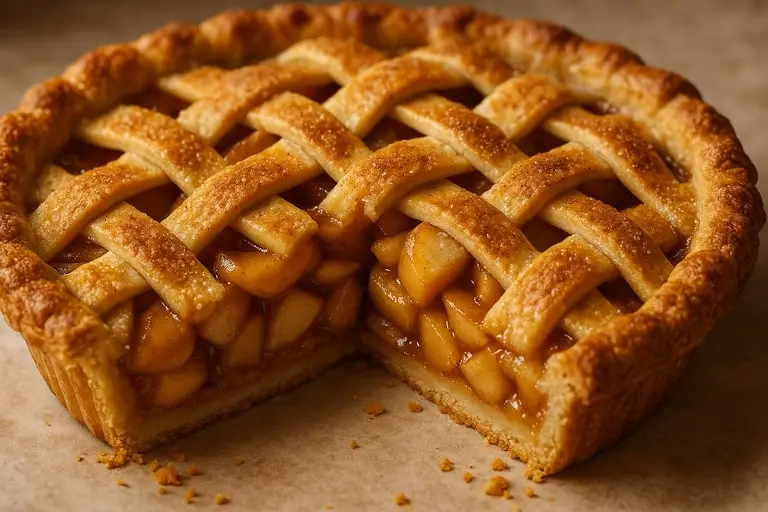
Pie baking knowledge anchors every variation. Some recipes employ lattice tops to allow steam release, others favor crumb toppings for texture. Pastry thickness varies by style, some preferring delicate thin crusts, others favoring robust layers. Each method shifts balance between fruit and pastry, offering bakers opportunity to shape outcome according to context. The variety in crust technique alone underscores richness of plural expression.
Homemade apple pie remains central among these recipes. While commercial options abound, they rarely capture freshness or personality. Homemade preparation allows bakers to calibrate sweetness, choose apple blends, and experiment with spices. It also provides opportunity for creative crust designs, from braids to cutouts, transforming dessert into artwork. This personal involvement distinguishes homemade pies from uniform store-bought ones.
Fruit desserts such as apple pie reveal the universal appeal of combining natural produce with crafted pastry. In some cultures, honey replaces sugar; in others, nuts enrich filling. These plural adaptations demonstrate how the apple pie recipe becomes a canvas for local identity while remaining globally recognizable. The fruit’s versatility makes it an ideal subject for reinterpretation across borders.
Apple pie recipes also illustrate evolution of dietary consciousness. Gluten-free crusts, plant-based fats, and reduced sugar options invite broader participation without diminishing flavor. Bakers adjust methods to preserve structure while meeting new health priorities. Such adaptations prove that tradition can evolve without compromise, ensuring continuity of enjoyment for future generations.
Technique variations shape sensory experience across plural recipes. Some emphasize tender fillings by precooking apples, while others rely on raw fruit for freshness. Spices may range from bold to subtle, and sweeteners from refined sugar to natural syrups. Each adjustment alters both aroma and flavor profile, reminding us that recipes are not rigid formulas but living practices shaped by intention.
Cooks who experiment with multiple apple pie recipes deepen understanding of baking principles. They learn how sugar concentration affects caramelization, how starch choices influence thickness, and how baking times shift depending on crust design. Exposure to variety builds intuition, allowing improvisation and mastery beyond single recipes. Such exploration turns baking into ongoing education.
Homemade apple pie recipes also reinforce cultural memory. Families pass down versions across generations, often without written instructions. These pies become symbols of lineage, their flavors tied to specific kitchens and occasions. Each variation participates in preserving identity while also adapting to new contexts, illustrating the pie’s role as both tradition and innovation.
To appreciate apple pie recipes is to respect their diversity. Rather than searching for a single definitive version, one honors plurality by embracing variation. This openness enriches skill and deepens enjoyment, proving that the dessert thrives not by uniformity but by adaptation. Each recipe contributes to a collective heritage of flavor and craft.
Ultimately, plural apple pie recipes highlight resilience of tradition and flexibility of interpretation. They reveal how a simple pairing of apples and pastry can expand into infinite expressions while maintaining core identity. This adaptability ensures that apple pie will remain relevant and cherished in kitchens worldwide.
Apple Pie Recipe Step By Step Precision
An apple pie recipe step by step is more than a sequence of instructions; it is a discipline in patience and precision. Each stage contributes to structure, flavor, and presentation. To follow the recipe with attentiveness is to engage not only in cooking but in craftsmanship, where every decision shapes final outcome.
Step one begins with crust preparation. Cold fat cut into flour quickly maintains pockets that release steam, producing flakiness. Chilling dough before rolling strengthens structure. This foundation, built with care, supports entire dessert. Without it, even the best filling falters.
Step two requires selecting and preparing apples. Choosing a blend of firm and tart varieties ensures complexity and stability. Slicing evenly promotes uniform cooking, while tossing with lemon juice prevents browning and adds brightness. At this stage, fruit sets direction for balance of sweetness and acidity.
Step three turns to spice and sweetener. Cinnamon forms backbone, with nutmeg or clove as accents. Sugar binds fruit juices, creating syrup that thickens when baked. The step by step method emphasizes tasting here, ensuring harmony rather than relying blindly on measurement.
Step four integrates thickener. Flour or cornstarch disperses among apples, preparing filling to set properly in oven. Judgment at this stage prevents sogginess without creating heaviness. This step reflects awareness of science behind texture.
Step five transfers filling to prepared crust. Careful layering ensures even distribution, preventing hollow spaces that disrupt structure. The pie begins to resemble its final form, each slice of apple contributing to collective whole.
Step six involves top crust or alternative covering. Lattice design allows steam release and aesthetic appeal, while solid tops require venting. Each choice shapes texture and presentation. This step highlights intersection of function and artistry.
Step seven focuses on sealing edges. Crimping locks moisture inside while preventing leakage. Brush with egg wash or milk to encourage browning. Attention here transforms crust from mere container into polished finish.
Step eight addresses baking process. Preheated oven stabilizes temperature, while gradual cooking allows crust to crisp and filling to thicken. Covering edges with foil prevents burning, illustrating how patience and vigilance guide success.
Step nine requires monitoring doneness. Bubbles in filling signal readiness, while golden crust confirms completion. Pulling pie at correct moment preserves texture. Overbaking toughens crust, underbaking leaves filling runny. Precision distinguishes mastery from guesswork.
Step ten emphasizes cooling. Allowing pie to rest before slicing stabilizes juices, ensuring clean portions. Impatience here ruins structure. This step demonstrates that baking extends beyond oven time into post-bake discipline.
Step eleven, serving, completes the step by step journey. Presenting slices neatly, perhaps with cream or ice cream, transforms pie into experience rather than mere food. Reflection at this stage reveals how each earlier step contributed to unity. An apple pie recipe step by step, executed carefully, teaches not only technique but also the rhythm of patience and reward.
Apple pie stands as one of the most iconic desserts in culinary history, a dish that has become synonymous with tradition, comfort, and celebration. More than just a pastry filled with fruit, an apple pie recipe represents values of home, heritage, and abundance. Its flaky crust, tender apple filling, and warm spices create a dessert that feels both familiar and festive. For many families, apple pie is not only dessert but ritual, an offering at gatherings, holidays, and quiet evenings that links generations. Its endurance proves that food is never just sustenance but memory, culture, and love.
The history of apple pie spans continents and centuries. Early versions appeared in Europe, particularly England and the Netherlands, where apples were plentiful and pies provided a way to preserve fruit. These recipes crossed the Atlantic with settlers, adapting to new apple varieties in North America. Over time, the dessert took on cultural significance, becoming a symbol of prosperity and hospitality. By the nineteenth and twentieth centuries, apple pie had become firmly embedded in American identity, often associated with values of home life and even patriotism. Today, the apple pie recipe endures globally as a timeless classic.
At the heart of every apple pie recipe lies the fruit itself. Choosing the right apples determines the success of the dish, as each variety contributes distinct qualities. Tart apples like Granny Smith hold their shape during baking, balancing sweetness with acidity, while sweeter varieties like Honeycrisp or Fuji add juiciness and fragrance. Many bakers combine multiple types to create complexity, ensuring the filling is both balanced and vibrant. Slicing apples consistently allows even cooking, while tossing them with sugar, spices, and thickening agents ensures a filling that is luscious yet structured.
The crust is equally essential, serving as both vessel and complement. A flaky, buttery pastry provides contrast to the soft filling, its golden edges offering crunch with each bite. Achieving such a crust requires cold butter, gentle handling, and patience, as overworking the dough can result in toughness. Some bakers use lard or shortening for added flakiness, while others stick to pure butter for rich flavor. Double-crust pies, with a full lid on top, trap steam and create a more tender filling, while lattice or crumb toppings add beauty and texture. Whatever the variation, the crust defines the artistry of an apple pie recipe.
Spices transform apples into something transcendent. Cinnamon remains the cornerstone, its warmth enhancing the natural sweetness of fruit. Nutmeg, cloves, ginger, and allspice add depth and complexity, while lemon juice provides brightness that cuts through richness. The balance of spices is highly personal, with some families guarding their blend as tradition. The aroma of spiced apples baking in the oven fills a home with anticipation, signaling both comfort and festivity. This sensory dimension ensures that the apple pie recipe is not only eaten but also experienced long before the first slice is served.
Culturally, apple pie represents hospitality and generosity. It often appears at family dinners, holidays such as Thanksgiving and Christmas, and community events where sharing is central. The act of baking and serving apple pie is a gesture of care, its abundance communicating welcome. Over centuries, the phrase “as American as apple pie” emerged to symbolize not just the dessert but values of warmth, tradition, and belonging. Yet the appeal of apple pie is universal, resonating in households far beyond America, proving its role as a global comfort food.
The sensory appeal of apple pie explains why it endures across generations. The sight of golden crust shimmering with sugar, the steam rising from warm slices, and the scent of apples and cinnamon all create anticipation. The first bite delivers contrasts: crisp crust, tender apples, and a sauce that combines sweetness, acidity, and spice. A scoop of vanilla ice cream often adds coolness and creaminess, elevating the experience. Eating apple pie engages every sense, creating an act of comfort that extends beyond taste to memory and emotion. This sensory completeness explains why the apple pie recipe remains beloved even in a world of endless desserts.
Nutritionally, apple pie offers balance when prepared thoughtfully. Apples themselves provide fiber, antioxidants, and vitamins, while spices contribute beneficial compounds. Adjustments to sugar, fat, or crust can align the dessert with modern health-conscious goals, making it lighter without losing character. Vegan and gluten-free variations expand accessibility, ensuring that the apple pie recipe continues to be enjoyed across lifestyles. While indulgent, apple pie also proves that desserts can carry both pleasure and nourishment, aligning tradition with wellness.
Economically, apple pie reflects resourcefulness. Apples are abundant and affordable, particularly during harvest season, making the dessert accessible to households of all incomes. The ingredients for crust and filling are pantry staples, requiring no extravagance. A single pie feeds many, while leftovers retain their appeal, often tasting even better as flavors meld. This combination of affordability and abundance explains why apple pie became central to both humble family kitchens and celebratory feasts. It is proof that joy does not require luxury, only care and creativity.
Modern variations of the apple pie recipe demonstrate its adaptability. Some bakers experiment with salted caramel, cheddar cheese, or exotic spices, while others reinterpret the dessert as hand pies, galettes, or bars. High-end chefs refine techniques for gourmet versions, yet the essence remains the same: apples, crust, and spice in harmony. Innovations prove the resilience of apple pie, capable of evolving while maintaining its soul. Its adaptability ensures relevance across generations and cultures, making it as exciting today as it was centuries ago.
Psychologically, apple pie carries immense emotional resonance. Preparing it involves rituals — peeling, slicing, layering, baking — that ground cooks in mindfulness. The anticipation of its aroma builds comfort before the first bite is taken. Sharing it with loved ones magnifies its meaning, as the act of slicing and serving affirms connection. For many, the apple pie recipe evokes childhood memories, family gatherings, and the warmth of seasonal traditions. Even eaten alone, a slice of apple pie provides companionship and reassurance, connecting the eater to something larger than themselves.
Ultimately, the apple pie recipe endures because it embodies values that never fade: tradition, comfort, adaptability, and abundance. It transforms humble fruit and flour into a dessert that feels celebratory, nourishes both body and spirit, and connects generations across time. In every slice lies more than flavor — there is memory, culture, and continuity. Apple pie is timeless not because it resists change but because it evolves while remaining true to its essence. To bake it is to honor the past while feeding the present, proving that some recipes are not just food but heritage.