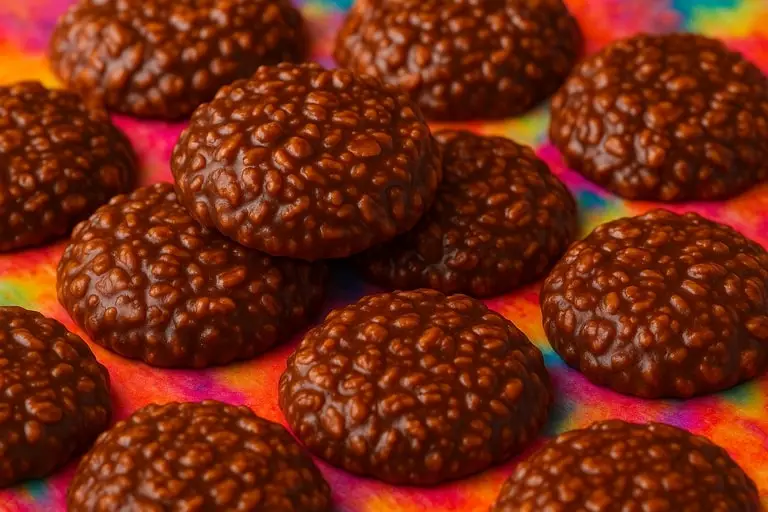
The no bake cookies recipe stands apart in the realm of desserts for its unique balance of simplicity, accessibility, and nostalgic comfort. Unlike traditional cookies that rely on ovens and precise baking, no bake cookies achieve their character through stovetop preparation, where ingredients such as oats, cocoa, sugar, and butter transform into chewy, flavorful confections that set without heat from the oven. This approach not only broadens access—requiring fewer tools and less skill—but also reflects a culinary philosophy that values resourcefulness and creativity.
The origins of no bake cookies are intertwined with twentieth-century food culture, particularly during times of scarcity. Recipes gained popularity in North America during the Great Depression and later in the mid-twentieth century, when households sought affordable, efficient desserts. The reliance on pantry staples like oats, sugar, cocoa, and peanut butter made them accessible, while the absence of baking equipment requirements ensured broad appeal. In many ways, no bake cookies embody practicality, arising from necessity yet evolving into beloved traditions.
Texture defines their charm. The combination of oats and cocoa-based syrup creates a consistency that is simultaneously chewy and soft. When cooled properly, no bake cookies hold shape without becoming brittle, offering comfort in their tactile familiarity. The process highlights the role of technique—timing, boiling duration, and mixing speed all influence texture—proving that even simple recipes demand attentiveness for success.
Flavor balance distinguishes variations of no bake cookies. Cocoa provides depth, oats contribute nuttiness, and peanut butter or other nut butters add richness. Sugar sweetens but also binds, ensuring cohesion, while a touch of vanilla enhances aroma. Regional or household variations may include coconut, dried fruits, or spices, expanding scope while retaining essence. This adaptability underscores their enduring popularity, as they invite personalization without sacrificing identity.
Culturally, no bake cookies symbolize accessibility and community. They appear at bake sales, school events, and family gatherings, representing inclusivity. Their ease of preparation makes them ideal for teaching children basic cooking, embedding memories of learning and sharing. In this way, no bake cookies become vessels of tradition, linking generations through shared recipes and experiences.
The sensory qualities of no bake cookies amplify their appeal. The glossy mixture bubbling on the stove, the aroma of chocolate blending with oats, the anticipation as cookies set on wax paper—all create rituals that extend beyond eating. These moments transform preparation into shared anticipation, deepening their cultural and emotional resonance.
From a nutritional standpoint, no bake cookies lean toward indulgence but allow for adjustments. Substituting honey or maple syrup for sugar, adding flaxseed or chia for fiber, or using dairy alternatives makes them adaptable to modern dietary preferences. Their simplicity enables both indulgence and health-conscious variations, ensuring their relevance across generations.
Professional kitchens may not feature no bake cookies prominently, yet their influence persists. Many chefs reference them as nostalgic touchstones, reminding diners that simplicity carries emotional weight. Their accessibility also aligns with broader culinary movements that value tradition, resourcefulness, and inclusivity.
The practicality of no bake cookies ensures their survival in fast-paced societies. With minimal preparation and no need for specialized equipment, they fit seamlessly into modern lifestyles. Their ability to provide comfort quickly demonstrates that culinary satisfaction need not rely on complexity.
Ultimately, the no bake cookies recipe embodies more than ease—it represents resilience, adaptability, and memory. In their chewy, chocolatey texture lies a reminder that food’s power extends beyond sustenance into heritage and comfort. By preserving tradition while embracing change, no bake cookies continue to thrive as timeless treats across households.
No Bake Cookie Recipe and Culinary Mastery
Mastering no bake cookies may appear simple at first glance, yet excellence lies in detail. The process relies on precision in timing, proportion, and temperature, where minor deviations affect outcome significantly. Recipe mastery transforms this humble confection from casual treat into expression of attentiveness and skill.
The foundation begins with the syrup. Sugar, cocoa, butter, and milk or cream are boiled together to create cohesive base. Boiling duration proves critical: too short and cookies fail to set, too long and they become dry or crumbly. Mastery involves recognizing subtle changes in texture and sheen, developing intuition through practice.
Oats define structure. Rolled oats create chewiness, while quick oats provide finer texture. Combining both yields balance, but mastery requires aligning oat type with desired consistency. Toasting oats lightly before mixing enhances flavor, demonstrating how small adjustments elevate results.
Nut butters or alternatives add richness and binding power. Peanut butter remains classic, but almond or sunflower seed butters offer variation. Their creamy texture integrates syrup and oats, creating cohesion. Balancing proportions ensures richness without overwhelming chocolate, reflecting the mastery of flavor harmony.
Additions refine complexity. Coconut introduces sweetness and texture, dried fruits add contrast, and spices such as cinnamon or cardamom provide warmth. Yet mastery requires restraint, preserving essence of chocolate-oat balance. Overcomplication risks diluting identity; successful variations enhance without overshadowing.
Cooling represents another test of mastery. Dropping spoonfuls onto wax paper requires swiftness before mixture sets, yet patience ensures cookies firm properly. Refrigeration accelerates process but can harden excessively; room-temperature cooling preserves ideal chew. Mastery lies in controlling environment, ensuring consistency across batches.
Presentation elevates no bake cookies further. While rustic shapes convey charm, careful portioning and garnishes such as sea salt or drizzled chocolate add sophistication. Professional touches prove that even humble recipes can reflect artistry when approached with care.
Nutritional considerations expand mastery. Reducing sugar, substituting healthier fats, or incorporating seeds aligns cookies with wellness priorities. Such adaptations require balance, ensuring adjustments preserve texture and cohesion. Mastery demonstrates that indulgence and health can coexist without compromise.
Cultural respect also informs mastery. Recognizing no bake cookies’ role as comfort food and childhood tradition ensures adaptations honor heritage. Master chefs and home bakers alike achieve mastery by elevating without erasing, sustaining continuity while embracing creativity.
Professional mastery extends into teaching. Because no bake cookies are accessible, chefs often use them to introduce children or beginners to principles of cooking. The lessons—timing, proportion, attentiveness—translate into broader culinary skills, reinforcing their value beyond dessert.
Ultimately, recipe mastery for no bake cookies reveals that simplicity requires care. By respecting proportion, timing, and tradition, cooks elevate them into more than treats. They become emblems of attentiveness, adaptability, and connection, proving that mastery arises from detail regardless of complexity.
No Bake Cookies and Everyday Comfort
No bake cookies resonate most profoundly as comfort food, offering not only sweetness but also reassurance, familiarity, and connection. Their role extends beyond dessert into emotional and cultural landscapes, where simplicity embodies continuity and care.
The aroma of chocolate and butter melting into syrup evokes anticipation, filling kitchens with warmth. The act of scooping mixture onto paper while it cools creates a ritual that transforms cooking into shared memory. These sensory cues ensure that no bake cookies comfort long before they are eaten.
In households, no bake cookies often symbolize resourcefulness. They emerge when ovens are unavailable, time is short, or ingredients are limited. Their ability to transform pantry staples into indulgence reassures, proving that comfort does not require abundance. This adaptability affirms their role as dependable companions in uncertain times.
Culturally, no bake cookies represent inclusivity. They appear at bake sales, school fairs, and community events, chosen because they are easy to prepare and share widely. Their presence at gatherings reinforces values of generosity, ensuring everyone partakes in sweetness.
Psychologically, no bake cookies provide grounding. Their simplicity and familiarity evoke childhood kitchens, family rituals, or moments of learning. Eating them recalls warmth and continuity, comforting individuals through memory as much as flavor. In times of stress, their chewy sweetness embodies stability.
The adaptability of no bake cookies enhances comfort. They accept endless variations—vegan, gluten-free, nut-free—ensuring inclusivity for diverse dietary needs. Their ability to accommodate difference while preserving essence underscores their role as universal comfort food.
Modern lifestyles amplify their relevance. In fast-paced societies, they deliver indulgence without demanding time or equipment. Their quick preparation suits households balancing work, study, and family, ensuring comfort remains accessible. This practicality reinforces their timeless appeal.
From a nutritional perspective, no bake cookies can be tailored to align with wellness goals, incorporating seeds, whole grains, or natural sweeteners. This adaptability demonstrates that comfort food evolves without losing core identity.
Professional kitchens acknowledge their influence by referencing them as nostalgic anchors. Chefs may reinterpret them with artisanal ingredients, but their essence—simplicity, accessibility, comfort—remains intact. In this way, no bake cookies sustain identity even when refined.
Ultimately, no bake cookies embody everyday comfort by uniting simplicity, tradition, and adaptability. Their flavors soothe, their rituals reassure, and their accessibility ensures inclusivity. In every chewy bite lies affirmation that food comforts not only through taste but through continuity, memory, and care.
Among the many delights of the culinary world, few creations embody simplicity and ingenuity as beautifully as no bake cookies. Unlike their oven-baked counterparts, these treats depend on the delicate interplay of stovetop preparation and cooling to achieve their distinctive texture and flavor.
They are proof that satisfying sweets do not always require elaborate equipment or advanced technique. At their best, they capture the joy of homemade indulgence with minimal effort, offering a blend of practicality and creativity that resonates across generations. No bake cookies are not just desserts; they are lessons in resourcefulness, nostalgia, and comfort.
The history of these cookies is tied to periods when accessibility and economy were essential. During times of scarcity, home cooks sought ways to provide treats without relying on costly ovens or ingredients. Recipes emerged that combined pantry staples — oats, cocoa, sugar, butter, and milk — into chewy, chocolatey morsels.
The ease of preparation made them especially popular with families, children, and busy households. Over the decades, these cookies became part of cultural memory, treasured not only for their taste but also for the experiences they created: afternoons in the kitchen, teaching children to cook, or whipping up a quick batch for unexpected guests.
One of the most appealing aspects of no bake cookies is their accessibility. The ingredients are almost always pantry staples, requiring no special trips to the store. The preparation is forgiving, inviting experimentation without fear of failure. This accessibility makes them perfect for novice bakers or for those who simply want a quick, satisfying sweet without devoting hours to the kitchen. In this way, no bake cookies democratize dessert-making, reminding us that joy in cooking does not always require complexity.
Texture is central to their charm. While baked cookies rely on precise temperature control for structure, no bake cookies achieve their integrity through cooling. The sugar mixture is brought to a boil, combined with oats or other dry ingredients, then left to set. The result is a cookie that is chewy yet firm, dense yet satisfying. Variations abound: some are soft and fudgy, others slightly crunchy, depending on ratios and resting time. This spectrum of textures ensures that each batch feels unique, a reflection of both recipe and environment.
Flavor is equally versatile. The classic chocolate and peanut butter combination remains a favorite, balancing richness with nuttiness. Yet countless variations exist: white chocolate with coconut, butterscotch with pecans, or even fruit-flavored versions with dried berries. The adaptability of no bake cookies ensures they never feel monotonous. Every household can tailor them to preference, adjusting sweetness, texture, and additions. This flexibility makes them endlessly relevant, capable of evolving with trends while preserving their essential appeal.
Culturally, no bake cookies carry emotional resonance. Many people remember making them as children, guided by parents or grandparents, the process serving as an introduction to the joys of cooking. Their simplicity makes them ideal for teaching, as children can participate without the risks of hot ovens or sharp tools.
The act of stirring the pot, spooning out portions, and waiting eagerly for them to set becomes a ritual, embedding the cookies with memory and nostalgia. These associations explain why the cookies endure across decades: they are not only tasty but also sentimental.
Nutritionally, no bake cookies can be adapted to modern preferences. While traditional recipes use sugar and butter, alternatives like honey, coconut oil, or natural sweeteners allow for lighter versions. Oats provide fiber, nuts add protein, and dried fruits contribute vitamins.
These adjustments demonstrate how a beloved treat can align with health-conscious values without losing its indulgent essence. The ability to balance pleasure with nutrition adds another layer to their appeal, ensuring they remain relevant in a world increasingly concerned with wellness.
The sensory experience of no bake cookies is integral to their charm. The glossy mixture cooling on wax paper, the rich aroma of chocolate filling the kitchen, and the anticipation as they firm up all contribute to the enjoyment. Eating them offers contrasts of flavor and texture: the sweetness of chocolate, the saltiness of peanut butter, the chewiness of oats. These qualities ensure that every bite is both familiar and rewarding. It is this combination of anticipation and indulgence that makes them such a satisfying dessert.
Economically, no bake cookies reflect practicality. Their reliance on inexpensive ingredients and minimal equipment makes them accessible to nearly everyone. They can be made in large batches with little cost, perfect for school events, community gatherings, or family celebrations. Their ability to stretch resources while delivering flavor reflects the wisdom of recipes born from necessity. This practicality explains their persistence: they are desserts that deliver joy without extravagance, aligning with values of resourcefulness and creativity.
Modern variations have only enriched the tradition. Contemporary recipes experiment with global flavors, incorporating spices like cinnamon or cardamom, superfoods like chia seeds or quinoa, and even savory twists with sea salt or chili. Vegan and gluten-free adaptations abound, proving that no bake cookies can embrace inclusivity and innovation without losing their core identity. The internet has accelerated this evolution, with countless blogs and videos sharing new interpretations, keeping the cookies fresh in the public imagination.
Psychologically, these cookies offer immediate gratification. In a world that often emphasizes waiting — for bread to rise, for cakes to bake — they provide nearly instant reward. The process from start to finish can take less than half an hour, satisfying both the urge to create and the craving for something sweet. This immediacy explains part of their enduring popularity: they are desserts that meet emotional and sensory needs swiftly, providing comfort with minimal delay.
Ultimately, no bake cookies endure because they embody values that remain timeless: simplicity, accessibility, adaptability, and comfort. They are reminders that joy in food does not depend on complexity but on creativity and intention. In every glossy mound lies a story of family, resourcefulness, and the human desire for sweetness. They connect generations, evolve with time, and offer reassurance that even in a fast-changing world, simple pleasures remain constant. No bake cookies are proof that sometimes, the best recipes are also the simplest, delivering warmth, comfort, and delight without the need for an oven.