
Recycle nature tips provide an essential framework for understanding how human actions can harmonize with the natural cycles that have governed Earth for billions of years. The notion of recycling in nature is not merely about separating household waste but about observing how ecosystems function and applying these lessons to daily life. In a forest, fallen leaves decompose to enrich the soil, while in rivers, nutrients cycle to sustain aquatic ecosystems. Translating these natural models into human systems means designing ways of living that minimize waste, conserve resources, and reduce environmental impact. When individuals embrace recycling nature practices, they take part in a global effort that supports biodiversity, mitigates climate change, and preserves finite resources for future generations.
The philosophy behind recycle nature tips begins with rethinking consumption. Modern lifestyles have fostered a culture of disposability, where products are used briefly and discarded, creating mountains of waste that strain ecosystems. Yet when viewed through the lens of nature’s recycling, nothing is wasted. Organic matter always returns to the cycle, feeding new growth. This insight challenges humanity to design products, packaging, and energy systems that emulate this efficiency, eliminating the concept of waste altogether. Such an approach is often referred to as a circular economy, and it reflects the wisdom embedded in natural recycling processes.
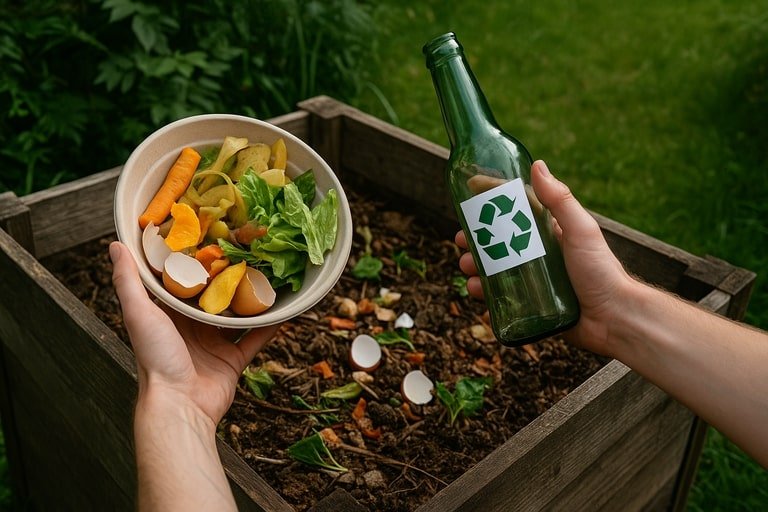
Applying recycle nature tips at home often starts with mindful choices. Composting food scraps mirrors the decomposition cycle in forests, converting waste into nutrient-rich soil that nourishes gardens. Choosing products made from recycled materials reduces the need for raw resource extraction, lowering pressure on forests, oceans, and mineral reserves. These everyday decisions illustrate how personal actions connect with global systems, proving that sustainable living is built one choice at a time. By aligning household habits with the logic of natural recycling, families contribute directly to the regeneration of ecological systems.
Beyond households, recycling nature principles extend into agriculture. Conventional farming often relies on chemical fertilizers and pesticides that disrupt soil health and water systems. In contrast, sustainable farming incorporates crop rotation, composting, and organic amendments that restore soil fertility naturally. Such practices not only improve yields over time but also mimic the resilience of natural ecosystems. By integrating recycle nature tips into farming, humanity safeguards food security while minimizing environmental harm. Farmers thus become stewards of the land, bridging traditional knowledge with modern sustainability.
Energy systems also reflect the importance of recycling principles. Fossil fuels embody a linear model of extraction, use, and waste, leading to greenhouse gas emissions and pollution. Renewable energy, however, mirrors nature’s cycles: solar panels capture sunlight as plants do, while wind turbines harness atmospheric flows akin to natural processes. By shifting energy systems toward renewable sources, societies adopt recycling nature strategies on a grand scale, reducing carbon footprints and promoting harmony with planetary cycles.
Water conservation provides another example of recycle nature tips in action. Rainwater harvesting systems mimic natural watersheds by capturing and reusing water rather than allowing it to flow wastefully away. Greywater recycling extends the cycle further, turning household wastewater into irrigation for gardens. These practices conserve one of Earth’s most precious resources, ensuring availability in times of drought while reducing pressure on municipal systems. By learning from natural hydrological cycles, societies can secure water sustainability for both people and ecosystems.
Educational initiatives highlight how recycle nature tips inspire future generations. When schools incorporate composting, recycling programs, and eco-friendly projects, children internalize the value of sustainable living. They witness firsthand how their actions influence broader systems, fostering a sense of responsibility and empowerment. By embedding recycling nature into education, communities cultivate citizens who are better prepared to lead in times of ecological challenge, ensuring that sustainable practices remain embedded across generations.
Community projects further amplify the impact of recycling nature ideas. Urban gardens, shared composting facilities, and repair workshops bring people together around sustainability. These initiatives foster collaboration, reduce waste, and create greener spaces that improve mental and physical health. Just as ecosystems thrive on interconnectedness, human communities grow stronger when sustainability becomes a shared mission. The social dimension of recycle nature tips demonstrates that environmental action also enriches human bonds, blending ecological and cultural renewal.
Corporate responsibility also plays a pivotal role in embedding recycle nature strategies. Companies that adopt sustainable packaging, invest in recycling infrastructure, and design products with end-of-life reuse in mind align themselves with the principles of natural cycles. Beyond reputation, these efforts reduce operational costs, attract environmentally conscious consumers, and contribute to global environmental goals. Businesses therefore carry both ethical and strategic incentives to integrate recycling nature tips into their operations, proving that profitability and sustainability can coexist.
Global cooperation remains essential to scaling recycle nature ideas. While individuals and communities play vital roles, systemic change requires policies that incentivize sustainable design, penalize wasteful practices, and promote innovation in recycling technologies. International treaties addressing plastic pollution, electronic waste, and carbon emissions embody collective efforts to realign humanity with natural cycles. By embedding recycle nature tips into global governance, nations demonstrate the recognition that environmental stewardship transcends borders.
Ultimately, recycle nature tips highlight a profound truth: sustainability is not about creating new systems but about rediscovering and imitating the wisdom of natural ones. From soil fertility to water conservation, from renewable energy to community initiatives, the essence of recycling is already embedded in nature. By learning, adapting, and applying these lessons, humanity gains a blueprint for a future in which ecological balance and human prosperity reinforce each other. The path forward lies in harmonizing human progress with nature’s cycles, ensuring that Earth remains a thriving home for generations yet to come.
Recycle Nature Tips and Benefits of Recycling Nature
Recycling nature represents not only a set of practices but also a philosophy of living that sees humanity as part of Earth’s cycles rather than as separate from them. Understanding the benefits of recycling nature starts with recognizing that every action has ecological consequences. When societies adopt recycling practices modeled on nature, they mitigate waste, conserve energy, and reduce pollution, thereby strengthening ecosystems and human well-being. This perspective elevates recycling from a chore into a guiding principle of sustainability.
A key benefit of recycling nature is resource conservation. By reusing metals, plastics, glass, and paper, societies reduce the need to extract virgin resources, protecting forests, oceans, and landscapes from destructive industries. This not only preserves biodiversity but also lowers greenhouse gas emissions associated with mining, logging, and manufacturing. Recycling nature therefore acts as a form of ecological insurance, ensuring that future generations inherit a planet still rich in natural wealth.
Energy efficiency represents another benefit. Producing items from recycled materials often requires significantly less energy than manufacturing them from raw resources. For example, recycled aluminum requires only a fraction of the energy needed to process new ore. Such efficiencies echo nature’s own processes, where energy is conserved through efficient cycles. By embracing recycling, societies mimic this economy of energy, reducing emissions while ensuring long-term sustainability.
Pollution reduction further demonstrates the value of recycling nature. Landfills and incinerators release harmful substances into the air, water, and soil, threatening human health and ecological stability. Recycling diverts waste from these destructive endpoints, transforming it into resources for new production. In this way, recycling nature tips address pollution at its source, contributing to cleaner air, purer water, and safer communities. The health benefits extend far beyond environmental preservation, improving quality of life for millions.
Recycling also creates economic opportunities. Industries devoted to recycling materials generate jobs, stimulate innovation, and foster entrepreneurship. From large-scale facilities to local artisans who upcycle materials, the recycling sector exemplifies how environmental responsibility can align with economic vitality. By treating waste as a resource, societies create new value streams that support livelihoods while reinforcing sustainability. These synergies reflect the broader benefits of aligning human systems with natural cycles.
Educational and cultural benefits arise as well. Communities that embrace recycling nurture values of stewardship, responsibility, and interconnection. Children raised in such environments grow with an awareness that their actions matter, fostering generations that prioritize ecological well-being. Recycling nature becomes not merely a technical solution but a cultural ethic, weaving sustainability into the fabric of daily life. The long-term benefits of such cultural shifts are immeasurable, influencing consumer habits, political will, and community resilience.
Recycling nature also strengthens resilience to climate change. By conserving resources, reducing emissions, and limiting pollution, recycling helps societies adapt to and mitigate the challenges of a warming planet. Furthermore, by maintaining ecological integrity, recycling supports the very systems — forests, wetlands, oceans — that act as buffers against extreme weather and environmental degradation. This resilience becomes a shared benefit, protecting not only ecosystems but also human infrastructure and livelihoods.
Spiritual and psychological benefits are often overlooked but profound. Engaging in recycling connects individuals with a sense of purpose and responsibility. Knowing that one’s actions contribute to planetary well-being fosters hope and empowerment in times of ecological anxiety. This sense of connection reflects the deeper truth that recycling nature is not only about physical resources but also about nurturing a healthy relationship between humanity and the environment.
The benefits of recycling extend to global equity. Resource extraction often exploits marginalized communities, exposing them to environmental hazards while providing little in return. By reducing demand for new resources, recycling alleviates these injustices, ensuring a more equitable distribution of environmental costs and benefits. Recycling nature thus intersects with human rights, proving that sustainability cannot be separated from social justice.
On a systemic level, the benefits of recycling nature culminate in the vision of a circular economy, where waste is eliminated, resources are conserved, and ecological health is prioritized. This model echoes nature’s own cycles, where death feeds life and nothing is lost. By embracing such a model, societies align economic growth with ecological stewardship, ensuring that prosperity does not come at the cost of planetary health.
In conclusion, the benefits of recycling nature span ecological, economic, social, and spiritual dimensions. They highlight the profound interconnectedness between human systems and natural cycles, reminding us that sustainability is not a distant goal but a practical pathway grounded in everyday choices. Recycling nature tips show that by aligning our lives with Earth’s wisdom, we can restore balance, nurture resilience, and secure a thriving future for all life forms.
Recycle Nature Tips and How to Recycle Better for the Planet
Learning how to recycle better is central to putting recycle nature tips into action. While many societies already practice basic recycling, improving these systems requires deeper alignment with natural cycles. Recycling better means reducing contamination in recycling streams, expanding the range of materials reused, and designing products with end-of-life reuse in mind. It is about integrating ecological wisdom into every step of the production and consumption process, ensuring that human systems replicate nature’s seamless efficiency.
At the household level, recycling better starts with knowledge. Many recycling systems fail because individuals are unsure which materials can be recycled or how to prepare them. Simple actions — such as rinsing containers, avoiding contamination with food waste, and separating materials properly — dramatically increase recycling efficiency. These practices mirror the clarity of natural cycles, where each process fulfills a precise role without disruption.
On a community scale, improving recycling involves infrastructure and accessibility. Well-designed collection systems, local recycling centers, and clear communication empower communities to participate effectively. Investment in technology that sorts and processes materials more efficiently enhances capacity. These efforts demonstrate that recycling better is not only about individual responsibility but also about collective organization that mirrors the cooperation found in ecosystems.
Industry innovations also play a critical role in recycling better. Companies can design packaging that is easier to recycle, eliminate unnecessary plastics, and use materials with high recyclability. Extended producer responsibility policies encourage manufacturers to account for the entire life cycle of their products, aligning economic incentives with sustainability. These measures ensure that recycling becomes embedded into the design phase, echoing nature’s principle that waste is simply the beginning of another cycle.
Global cooperation is essential in making recycling better for the planet. Many nations export waste, creating inequities and inefficiencies. Establishing international standards, sharing technology, and promoting fair trade in recycled materials ensures that recycling contributes positively worldwide. Such collaboration mirrors the interconnectedness of natural systems, where actions in one region influence outcomes elsewhere. Recycling better requires recognizing that waste is a global issue demanding shared solutions.
Education and culture again play transformative roles. When societies celebrate recycling as a norm rather than an exception, behavior shifts at scale. Public campaigns, school programs, and media narratives that highlight success stories cultivate pride and collective motivation. Recycling better becomes not merely about efficiency but about identity, shaping cultures that define themselves by their commitment to sustainability.
Technological breakthroughs are reshaping what it means to recycle better. Advanced sorting systems, chemical recycling of plastics, and innovations in biodegradable materials expand possibilities. Such technologies align with nature’s adaptability, where cycles evolve in response to new challenges. By investing in these breakthroughs, societies expand the scope of recycling, reducing reliance on landfills and minimizing ecological footprints.
Recycling better also involves reducing waste at its source. By embracing minimalism, reusing materials, and prioritizing durability, consumers shift the focus from end-of-life recycling to prevention. This mirrors nature’s efficiency, where energy and resources are conserved from the beginning. In this sense, recycling better integrates prevention with recovery, creating systems that honor resources at every stage.
Policy frameworks strengthen these efforts by providing structure and accountability. Regulations that ban single-use plastics, incentivize biodegradable alternatives, and penalize wasteful practices drive systemic change. Just as ecosystems rely on natural laws to maintain balance, human societies rely on governance to enforce sustainable practices. These policies ensure that recycling better is not optional but essential, fostering collective responsibility.
Ultimately, learning how to recycle better means adopting a holistic approach. It requires attention to personal habits, community systems, industry innovation, and global collaboration. By integrating these levels, societies replicate the efficiency, resilience, and adaptability of natural cycles. Recycling better is thus not simply about reducing waste but about reshaping humanity’s relationship with the planet, ensuring that every action reinforces sustainability.
In closing, recycle nature tips show that recycling better is not a technical challenge alone but a moral and cultural imperative. By aligning with the wisdom of natural systems, humanity can transform waste into opportunity, conserve resources, and foster a sustainable future. The path to recycling better begins with awareness, expands through collaboration, and flourishes through innovation. Just as nature has perfected the art of recycling, so too can humanity, ensuring that the planet remains vibrant, resilient, and abundant for generations to come.
Protecting the environment often begins with small, daily habits that reduce waste and conserve resources. For individuals and communities, practical guidance can make a difference, which is why recycle nature tips are so valuable. They remind us that sustainability is not about radical change overnight but about consistent, thoughtful actions. By following simple approaches, we can reduce our ecological footprint, keep ecosystems healthier, and pass on a cleaner world to future generations.
One of the most important recycle nature tips is to reduce reliance on single-use plastics. Bags, bottles, and packaging make up a significant portion of global waste, much of which ends up in oceans and forests where it harms wildlife. Switching to reusable alternatives such as cloth bags, stainless steel bottles, and glass containers not only cuts plastic waste but also saves money over time. Every item reused is one less item polluting the planet.
Composting is another powerful tool for sustainability. Food scraps and garden waste account for a large share of household garbage, yet they are also valuable resources. When composted, they break down into nutrient-rich soil that can nourish gardens and reduce reliance on chemical fertilizers. Among the most practical recycle nature tips is starting a compost bin at home. It keeps organic waste out of landfills, where it would otherwise generate methane, a potent greenhouse gas.
Energy conservation is closely tied to recycling because reducing energy use means lowering demand for resources in the first place. Turning off lights when not needed, switching to energy-efficient appliances, and insulating homes properly all reduce strain on natural systems. Some of the best recycle nature tips also involve rethinking energy sources, such as installing solar panels or supporting renewable energy programs. Conservation at home translates into a lighter impact on the environment globally.
Upcycling offers another creative approach to recycling. Instead of discarding old furniture, clothes, or containers, upcycling transforms them into new, useful items. A glass jar can become a planter, an old ladder a bookshelf, or worn-out jeans a shopping bag. These recycle nature tips encourage creativity while extending the life of objects, reducing the need for raw materials, and minimizing waste. Upcycling is proof that sustainability can also be stylish and imaginative.
Water conservation is deeply connected to the idea of recycling natural resources. Collecting rainwater for gardens, fixing leaky taps, and installing low-flow fixtures are straightforward but effective strategies. These recycle nature tips preserve one of Earth’s most precious resources, ensuring ecosystems remain resilient during times of drought or climate stress. By thinking carefully about how we use water, individuals contribute to maintaining the balance of natural systems.
Electronics recycling deserves special attention. E-waste is one of the fastest-growing waste streams in the world, filled with toxic materials that harm soil and water. Proper disposal through certified recycling centers prevents pollution and allows valuable metals to be recovered for reuse. One of the most impactful recycle nature tips is to resist frequent upgrades and instead extend the life of devices. Choosing refurbished products and responsibly recycling old ones reduces environmental harm significantly.
Sustainable transportation practices also link back to recycling principles. Carpooling, biking, and using public transit minimize fuel consumption, while maintaining vehicles ensures they run efficiently. Recycle nature tips can even extend to creative reuse, such as converting old bicycles into stationary exercise equipment. By reducing emissions and reimagining how we use resources, we contribute to healthier air, quieter cities, and stronger ecosystems.
Gardening with sustainability in mind highlights another set of useful practices. Planting native species reduces the need for pesticides and fertilizers while supporting pollinators like bees and butterflies. Using compost instead of synthetic chemicals closes the loop between waste and growth. These recycle nature tips demonstrate how even small patches of land can contribute to biodiversity conservation, turning backyards and balconies into sanctuaries for wildlife.
Community initiatives amplify the power of individual efforts. Organizing recycling drives, clothing swaps, and local clean-ups encourages people to act collectively. Schools and workplaces can promote awareness campaigns, ensuring recycle nature tips reach wider audiences. By working together, neighborhoods can reduce landfill waste, improve green spaces, and create stronger bonds between people and nature. Community action proves that environmental protection thrives when it becomes a shared responsibility.
Technology is providing new opportunities to make recycling more efficient. Apps now guide people to the nearest recycling centers, while smart bins help sort materials automatically. Businesses are adopting circular economy models, reusing byproducts to create new goods. These innovations reflect how recycle nature tips are evolving with modern needs, showing that sustainability is not just about tradition but also about forward-thinking solutions.
Ultimately, protecting the planet comes down to awareness and action. The simplest recycle nature tips remind us that every choice matters — whether it’s refusing single-use plastic, composting leftovers, conserving energy, or planting trees. These steps, repeated across millions of households, create momentum toward a cleaner, healthier world. By committing to practical, everyday habits, people everywhere can ensure that nature’s resources are preserved for generations to come. Sustainability begins with individual responsibility but grows into collective impact when we all participate.